Archive for the ‘Debugging’ Category

AERA (Automated Error Reporting and Analysis)

Monday, June 16th, 2008

Due to a request I opened AERA subforum:

http://www.dumpanalysis.org/forum/viewforum.php?f=29

Everyone is welcome to comment and add thoughts.

IBCDAS code name has been changed to AERA :-)

- Dmitry Vostokov @ DumpAnalysis.org

Crash Dump File Examples

Thursday, June 12th, 2008

I decided to post selected crash dumps for some case studies and patterns after getting feedback from readers of my MDAA book. They are custom made from my toy programs and preprocessed to clear sensitive information that might have leaked from my home computers otherwise. They can be found at the following public FTP address:

ftp://dumpanalysis.org/pub/

The first example was published today for Missing Component (static linking) pattern. I also created the following page to list them all including the ones that I add for some previously published patterns:

Memory Dump File Samples

- Dmitry Vostokov @ DumpAnalysis.org -

Crash Dump Analysis Patterns (Part 59b)

Thursday, June 12th, 2008

Previously I introduced Missing Component pattern where the example and emphasis was on dynamically loaded modules. In this part I cover statically linked modules. Failure for a loader to find one of them results in a software exception. The most frequent of them are (numbers were taken from Google search):

C0000142 918
C0000143 919
C0000145 1,530
C0000135 24,900

0:001> !error c0000142
Error code: (NTSTATUS) 0xc0000142 (3221225794) - {DLL Initialization Failed}  Initialization of the dynamic link library %hs failed. The process is terminating abnormally.

0:001> !error c0000143
Error code: (NTSTATUS) 0xc0000143 (3221225795) - {Missing System File}  The required system file %hs is bad or missing.

0:001> !error c0000145
Error code: (NTSTATUS) 0xc0000145 (3221225797) - {Application Error}  The application failed to initialize properly (0x%lx). Click on OK to terminate the application.

0:000> !error c0000135
Error code: (NTSTATUS) 0xc0000135 (3221225781) - {Unable To Locate Component}  This application has failed to start because %hs was not found. Re-installing the application may fix this problem.

In this part I only consider user mode exceptions. If we have a default debugger configured it will usually save a crash dump. To model this problem I modified one of my applications by changing all occurrences of KERNEL32.DLL to  KERNEL32.DL using Visual Studio Binary Editor. CDB was configured as a default postmortem debugger (see Custom postmortem debuggers on Vista). When the application was launched CDB attached to it and saved a crash dump. If we open it in WinDbg we get characteristic Special Stack Trace involving loader functions:

Loading Dump File [C:\UserDumps\CDAPatternMissingComponent.dmp]
User Mini Dump File with Full Memory: Only application data is available

Symbol search path is: srv*c:\mss*http://msdl.microsoft.com/download/symbols
Executable search path is:
Windows Vista Version 6000 MP (2 procs) Free x86 compatible
Product: WinNt, suite: SingleUserTS
Debug session time: Thu Jun 12 12:03:28.000 2008 (GMT+1)
System Uptime: 1 days 8:46:23.167
Process Uptime: 0 days 0:00:48.000

This dump file has an exception of interest stored in it.
The stored exception information can be accessed via .ecxr.
(da4.f60): Wake debugger - code 80000007 (first/second chance not available)
eax=00000000 ebx=77c4a174 ecx=75ce3cf9 edx=00000000 esi=7efde028 edi=7efdd000
eip=77bcf1d1 esp=0017fca4 ebp=0017fd00 iopl=0         nv up ei pl zr na pe nc
cs=0023  ss=002b  ds=002b  es=002b  fs=0053  gs=002b             efl=00000246
ntdll!_LdrpInitialize+0x6d:
77bcf1d1 8b45b8          mov     eax,dword ptr [ebp-48h] ss:002b:0017fcb8=7efde000

0:000> kL
ChildEBP RetAddr 
0017fd00 77b937ea ntdll!_LdrpInitialize+0×6d
0017fd10 00000000 ntdll!LdrInitializeThunk+0×10

Verbose analysis command doesn’t give us an indication of what had happened so we need to dig further:

0:000> !analyze -v
[...]

FAULTING_IP:
+0
00000000 ??              ???

EXCEPTION_RECORD:  ffffffff -- (.exr 0xffffffffffffffff)
ExceptionAddress: 00000000
   ExceptionCode: 80000007 (Wake debugger)
  ExceptionFlags: 00000000
NumberParameters: 0

BUGCHECK_STR:  80000007

PROCESS_NAME:  StackOverflow.exe

ERROR_CODE: (NTSTATUS) 0x80000007 - {Kernel Debugger Awakened}  the system debugger was awakened by an interrupt.

NTGLOBALFLAG:  400

APPLICATION_VERIFIER_FLAGS:  0

DERIVED_WAIT_CHAIN: 

Dl Eid Cid     WaitType
-- --- ------- --------------------------
   0   da4.f60 Unknown               

WAIT_CHAIN_COMMAND:  ~0s;k;;

BLOCKING_THREAD:  00000f60

DEFAULT_BUCKET_ID:  APPLICATION_HANG_BusyHang

PRIMARY_PROBLEM_CLASS:  APPLICATION_HANG_BusyHang

LAST_CONTROL_TRANSFER:  from 77b937ea to 77bcf1d1

FAULTING_THREAD:  00000000

STACK_TEXT: 
0017fd00 77b937ea 0017fd24 77b60000 00000000 ntdll!_LdrpInitialize+0x6d
0017fd10 00000000 0017fd24 77b60000 00000000 ntdll!LdrInitializeThunk+0x10

FOLLOWUP_IP:
ntdll!_LdrpInitialize+6d
77bcf1d1 8b45b8          mov     eax,dword ptr [ebp-48h]

SYMBOL_STACK_INDEX:  0

SYMBOL_NAME:  ntdll!_LdrpInitialize+6d

FOLLOWUP_NAME:  MachineOwner

MODULE_NAME: ntdll

IMAGE_NAME:  ntdll.dll

DEBUG_FLR_IMAGE_TIMESTAMP:  4549bdf8

STACK_COMMAND:  ~0s ; kb

BUCKET_ID:  80000007_ntdll!_LdrpInitialize+6d

FAILURE_BUCKET_ID:  ntdll.dll!_LdrpInitialize_80000007_APPLICATION_HANG_BusyHang

Followup: MachineOwner

Last event and error code are not helpful too: 

0:000> .lastevent
Last event: da4.f60: Wake debugger - code 80000007 (first/second chance not available)
  debugger time: Thu Jun 12 15:04:38.917 2008 (GMT+1)

0:000> !gle
LastErrorValue: (Win32) 0 (0) - The operation completed successfully.
LastStatusValue: (NTSTATUS) 0 - STATUS_WAIT_0

Let’s search thread raw stack data for any signs of exceptions:

0:000> !teb
TEB at 7efdd000
    ExceptionList:        0017fcf0
    StackBase:            00180000
    StackLimit:           0017e000

    SubSystemTib:         00000000
    FiberData:            00001e00
    ArbitraryUserPointer: 00000000
    Self:                 7efdd000
    EnvironmentPointer:   00000000
    ClientId:             00000da4 . 00000f60
    RpcHandle:            00000000
    Tls Storage:          00000000
    PEB Address:          7efde000
    LastErrorValue:       0
    LastStatusValue:      0
    Count Owned Locks:    0
    HardErrorMode:        0

0:000> dds 0017e000 00180000
[...]
0017f8d8  7efdd000
0017f8dc  0017f964
0017f8e0  77c11c78 ntdll!_except_handler4
0017f8e4  00000000
0017f8e8  0017f988
0017f8ec  0017f900
0017f8f0  77ba1ddd ntdll!RtlCallVectoredContinueHandlers+0x15
0017f8f4  0017f988
0017f8f8  0017f9d8
0017f8fc  77c40370 ntdll!RtlpCallbackEntryList
0017f900  0017f970
0017f904  77ba1db5 ntdll!RtlDispatchException+0×11f
0017f908  0017f988
0017f90c  0017f9d8
0017f910  7efde028
0017f914  00000001
0017f918  77630000 kernel32!_imp___aullrem <PERF> (kernel32+0×0)
0017f91c  00000001
0017f920  776ced81 kernel32!_DllMainCRTStartupForGS2+0×10
0017f924  0017f938
0017f928  7765d4d9 kernel32!BaseDllInitialize+0×18
0017f92c  76042340 user32!$$VProc_ImageExportDirectory
0017f930  00000001
0017f934  00000000
0017f938  0017f9e0
0017f93c  77b8f890 ntdll!LdrpSnapThunk+0xc9
0017f940  0040977a StackOverflow+0×977a
0017f944  0000030b
0017f948  76030000 user32!_imp__RegSetValueExW <PERF> (user32+0×0)
0017f94c  76042f94 user32!$$VProc_ImageExportDirectory+0xc54
0017f950  77bb8881 ntdll!LdrpSnapThunk+0×40d
0017f954  0017bb30
0017f958  00409770 StackOverflow+0×9770
0017f95c  00881a50
0017f960  004098b2 StackOverflow+0×98b2
0017f964  77bac282 ntdll!ZwRaiseException+0×12
0017f968  00180000
0017f96c  0017fc48
0017f970  0017fd00
0017f974  77bac282 ntdll!ZwRaiseException+0×12
0017f978  77b7ee72 ntdll!KiUserExceptionDispatcher+0×2a

0017f97c  0017f988 ; exception record
0017f980  0017f9d8 ; exception context
0017f984  00000000
0017f988  c0000135
0017f98c  00000001
0017f990  00000000
0017f994  77bcf1d1 ntdll!_LdrpInitialize+0×6d
0017f998  00000000
0017f99c  77c11c78 ntdll!_except_handler4
0017f9a0  77b8dab8 ntdll!RtlpRunTable+0×218
0017f9a4  fffffffe
0017f9a8  77ba2515 ntdll!vDbgPrintExWithPrefixInternal+0×214
0017f9ac  77ba253b ntdll!DbgPrintEx+0×1e
0017f9b0  77b7f356 ntdll! ?? ::FNODOBFM::`string’
0017f9b4  00000055
0017f9b8  00000003
0017f9bc  77b809c2 ntdll! ?? ::FNODOBFM::`string’
0017f9c0  0017fc9c
0017f9c4  00000001
0017f9c8  0017fd00
0017f9cc  77bcf28e ntdll!_LdrpInitialize+0×12a
0017f9d0  00000055
0017f9d4  75ce3cf9
0017f9d8  0001003f
0017f9dc  00000000
0017f9e0  00000000
0017f9e4  00000000
0017f9e8  00000000
0017f9ec  00000000
0017f9f0  00000000
0017f9f4  0000027f
[…]

We see exception dispatching calls highlighted above. One of their parameters is an exception record and we try to get one:

0:000> .exr 0017f988
ExceptionAddress: 77bcf1d1 (ntdll!_LdrpInitialize+0x0000006d)
   ExceptionCode: c0000135
  ExceptionFlags: 00000001
NumberParameters: 0

Error c0000135 means that the loader was unable to locate a component. Now we try to examine the same raw stack data for any string patterns. For example, the following UNICODE pattern is clearly visible:

0017f2fc  00000000
0017f300  00880ec4
0017f304  77b910d7 ntdll!RtlpDosPathNameToRelativeNtPathName_Ustr+0x344
0017f308  00000000
0017f30c  43000043
0017f310  0042002a
0017f314  0017f33c
0017f318  00000000
0017f31c  00000002
0017f320  00000008
0017f324  00000000
0017f328  0000008c
0017f32c  000a0008
0017f330  77b91670 ntdll!`string'
0017f334  00b92bd6
0017f338  0017f5d4
0017f33c  003a0043
0017f340  0050005c
0017f344  006f0072
0017f348  00720067
0017f34c  006d0061
0017f350  00460020
0017f354  006c0069
0017f358  00730065
0017f35c  00280020
0017f360  00380078
0017f364  00290036
0017f368  0043005c
0017f36c  006d006f
0017f370  006f006d
0017f374  0020006e
0017f378  00690046
0017f37c  0065006c
0017f380  005c0073
0017f384  006f0052
0017f388  00690078
0017f38c  0020006f
0017f390  00680053
0017f394  00720061
0017f398  00640065
0017f39c  0044005c
0017f3a0  004c004c
0017f3a4  00680053
0017f3a8  00720061
0017f3ac  00640065
0017f3b0  004b005c
0017f3b4  00520045
0017f3b8  0045004e
0017f3bc  0033004c
0017f3c0  002e0032
0017f3c4  006c0064

0017f3c8  00000000
0017f3cc  00000000

It is a path to DLL that was probably missing:

0:000> du 0017f33c
0017f33c  "C:\Program Files (x86)\Common Fi"
0017f37c  "les\Roxio Shared\DLLShared\KERNE"
0017f3bc  "L32.dl"

I think the loader was trying to find KERNEL32.dl following the DLL search order and this was the last path element:

0:000> !peb
PEB at 7efde000
    InheritedAddressSpace:    No
    ReadImageFileExecOptions: No
    BeingDebugged:            Yes
    ImageBaseAddress:         00400000
    Ldr                       77c40080
    Ldr.Initialized:          Yes
    Ldr.InInitializationOrderModuleList: 00881ad0 . 008831b8
    Ldr.InLoadOrderModuleList:           00881a50 . 00883dc8
    Ldr.InMemoryOrderModuleList:         00881a58 . 00883dd0
            Base TimeStamp                     Module
[...]
    Environment:  00881de8
[...] 
Path=C:\Windows\system32; C:\Windows; C:\Windows\System32\Wbem; C:\Program Files\ATI Technologies\ATI.ACE; c:\Program Files (x86)\Microsoft SQL Server\90\Tools\binn\; C:\Program Files (x86)\Common Files\Roxio Shared\DLLShared\
[…]

In  similar situations !dlls command might help that shows the load order (-l switch) and points to the last processed DLL:

0:001> !dlls -l

0x004740e8: C:\Program Files\Application\Application.exe
      Base   0x012a0000  EntryPoint  0x012b0903  Size        0x00057000
      Flags  0x00004010  LoadCount   0x0000ffff  TlsIndex    0x00000000
             LDRP_ENTRY_PROCESSED

0x00474158: C:\Windows\SysWOW64\ntdll.dll
      Base   0x77d00000  EntryPoint  0x00000000  Size        0x00160000
      Flags  0x00004014  LoadCount   0x0000ffff  TlsIndex    0x00000000
             LDRP_IMAGE_DLL
             LDRP_ENTRY_PROCESSED

0x00474440: C:\Windows\syswow64\kernel32.dll
      Base   0x77590000  EntryPoint  0x775a1f3e  Size        0x00110000
      Flags  0x00084014  LoadCount   0x0000ffff  TlsIndex    0x00000000
             LDRP_IMAGE_DLL
             LDRP_ENTRY_PROCESSED
             LDRP_PROCESS_ATTACH_CALLED

[…] 

0x00498ff8: C:\Windows\WinSxS\x86_microsoft.windows.common-controls_...\comctl32.dll
      Base   0x74d90000  EntryPoint  0x74dc43e5  Size        0x0019e000
      Flags  0x100c4014  LoadCount   0x00000003  TlsIndex    0x00000000
             LDRP_IMAGE_DLL
             LDRP_ENTRY_PROCESSED
             LDRP_DONT_CALL_FOR_THREADS
             LDRP_PROCESS_ATTACH_CALLED

0x004991b8: C:\Windows\WinSxS\x86_microsoft.vc80.mfcloc_...\MFC80ENU.DLL
      Base   0x71b10000  EntryPoint  0x00000000  Size        0x0000e000
      Flags  0x10004014  LoadCount   0x00000001  TlsIndex    0x00000000
             LDRP_IMAGE_DLL
             LDRP_ENTRY_PROCESSED

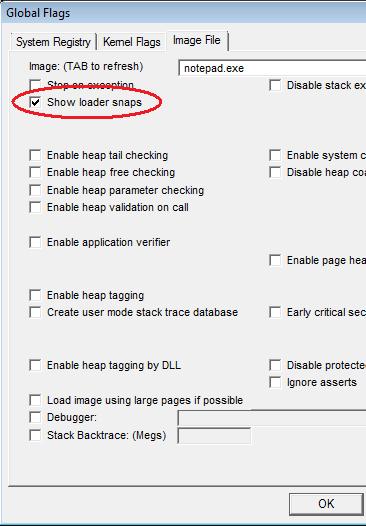
If it is difficult to identify what had really happened in crash dumps we can enable loader snaps using gflags and run the application under a debugger. For example, for notepad.exe we have:
Microsoft (R) Windows Debugger Version 6.8.0004.0 AMD64
Copyright (c) Microsoft Corporation. All rights reserved.

CommandLine: C:\Windows\notepad.exe
Symbol search path is: srv*c:\mss*http://msdl.microsoft.com/download/symbols
Executable search path is:
ModLoad: 00000000`ffac0000 00000000`ffaef000   notepad.exe
ModLoad: 00000000`779b0000 00000000`77b2a000   ntdll.dll
LDR: NEW PROCESS
     Image Path: C:\Windows\notepad.exe (notepad.exe)
     Current Directory: C:\Program Files\Debugging Tools for Windows 64-bit\
     Search Path: C:\Windows; C:\Windows\system32; C:\Windows\system; C:\Windows;.; C:\Program Files\Debugging Tools for Windows 64-bit\winext\arcade; C:\Windows\system32;C:\Windows; C:\Windows\System32\Wbem; C:\Program Files\ATI Technologies\ATI.ACE; c:\Program Files (x86)\Microsoft SQL Server\90\Tools\binn\; C:\Program Files (x86)\Common Files\Roxio Shared\DLLShared\
LDR: LdrLoadDll, loading kernel32.dll from
ModLoad: 00000000`777a0000 00000000`778d1000   C:\Windows\system32\kernel32.dll
LDR: kernel32.dll bound to ntdll.dll
LDR: kernel32.dll has stale binding to ntdll.dll
LDR: Stale Bind ntdll.dll from kernel32.dll
LDR: LdrGetProcedureAddress by NAME - BaseThreadInitThunk
[3d8,1278] LDR: Real INIT LIST for process C:\Windows\notepad.exe pid 984 0x3d8
[3d8,1278]    C:\Windows\system32\kernel32.dll init routine 00000000777DC960
[3d8,1278] LDR: kernel32.dll loaded - Calling init routine at 00000000777DC960
LDR: notepad.exe bound to ADVAPI32.dll
ModLoad: 000007fe`fe520000 000007fe`fe61f000   C:\Windows\system32\ADVAPI32.dll
LDR: ADVAPI32.dll bound to ntdll.dll
LDR: ADVAPI32.dll has stale binding to ntdll.dll
LDR: Stale Bind ntdll.dll from ADVAPI32.dll
LDR: ADVAPI32.dll bound to KERNEL32.dll
LDR: ADVAPI32.dll has stale binding to KERNEL32.dll
LDR: ADVAPI32.dll bound to ntdll.dll via forwarder(s) from kernel32.dll
LDR: ADVAPI32.dll has stale binding to ntdll.dll
LDR: Stale Bind KERNEL32.dll from ADVAPI32.dll
LDR: LdrGetProcedureAddress by NAME - RtlAllocateHeap
LDR: LdrGetProcedureAddress by NAME - RtlReAllocateHeap
LDR: LdrGetProcedureAddress by NAME - RtlEncodePointer
LDR: LdrGetProcedureAddress by NAME - RtlDecodePointer
LDR: LdrGetProcedureAddress by NAME - RtlSizeHeap
LDR: LdrGetProcedureAddress by NAME - RtlDeleteCriticalSection
LDR: LdrGetProcedureAddress by NAME - RtlEnterCriticalSection
LDR: LdrGetProcedureAddress by NAME - RtlLeaveCriticalSection
LDR: ADVAPI32.dll bound to RPCRT4.dll
[...]

This technique only works for native platform loader snaps. For example, it doesn’t show loader snaps for 32-bit modules loaded under WOW64 (to the best of my knowledge):

Microsoft (R) Windows Debugger Version 6.8.0004.0 X86
Copyright (c) Microsoft Corporation. All rights reserved.

CommandLine: C:\Apps\StackOverflow.exe
Symbol search path is: srv*c:\mss*http://msdl.microsoft.com/download/symbols
Executable search path is:
ModLoad: 00400000 00418000   StackOverflow.exe
ModLoad: 77b60000 77cb0000   ntdll.dll
LDR: NEW PROCESS
     Image Path: C:\Apps\StackOverflow.exe (StackOverflow.exe)
[...]
LDR: Loading (STATIC, NON_REDIRECTED) C:\Windows\system32\wow64cpu.dll
LDR: wow64cpu.dll bound to ntdll.dll
LDR: wow64cpu.dll has stale binding to ntdll.dll
LDR: Stale Bind ntdll.dll from wow64cpu.dll
LDR: wow64cpu.dll bound to wow64.dll
LDR: wow64cpu.dll has stale binding to wow64.dll
LDR: Stale Bind wow64.dll from wow64cpu.dll
LDR: wow64.dll has stale binding to wow64cpu.dll
LDR: Stale Bind wow64cpu.dll from wow64.dll
LDR: Refcount wow64cpu.dll (1)
LDR: Refcount wow64.dll (2)
LDR: Refcount wow64win.dll (1)
LDR: Refcount wow64.dll (3)
LDR: LdrGetProcedureAddress by NAME - Wow64LdrpInitialize
[...]
ModLoad: 77630000 77740000   C:\Windows\syswow64\kernel32.dll
ModLoad: 76030000 76100000   C:\Windows\syswow64\USER32.dll
ModLoad: 775a0000 77630000   C:\Windows\syswow64\GDI32.dll
ModLoad: 76d00000 76dbf000   C:\Windows\syswow64\ADVAPI32.dll
ModLoad: 76df0000 76ee0000   C:\Windows\syswow64\RPCRT4.dll
ModLoad: 75d60000 75dc0000   C:\Windows\syswow64\Secur32.dll

(1ec.1290): Unknown exception - code c0000135 (first chance)
(1ec.1290): Unknown exception - code c0000135 (!!! second chance !!!)
eax=00000000 ebx=77c4a174 ecx=75ce3cf9 edx=00000000 esi=7efde028 edi=7efdd000
eip=77bcf1d1 esp=0017fca4 ebp=0017fd00 iopl=0         nv up ei pl zr na pe nc
cs=0023  ss=002b  ds=002b  es=002b  fs=0053  gs=002b             efl=00000246
ntdll!_LdrpInitialize+0×6d:
77bcf1d1 8b45b8          mov     eax,dword ptr [ebp-48h] ss:002b:0017fcb8=7efde000

The dump file that I used was modified to remove sensitive information (see Data Hiding in Crash Dumps for this technique). It can be downloaded from FTP to play with:

ftp://dumpanalysis.org/pub/CDAPatternMissingComponent.zip

- Dmitry Vostokov @ DumpAnalysis.org -

Data Hiding in Crash Dumps

Tuesday, June 10th, 2008

Suppose we want to send a complete memory dump to a vendor but want to remove certain sensitive details or perhaps the whole process or image from it. In this case we can use f WinDbg command (virtual addresses) or fp (physical addresses) to fill pages with zeroes. Let’s open a complete memory dump and erase environment variables for a process:

kd> !process 0 0
**** NT ACTIVE PROCESS DUMP ****
PROCESS fffffadfe7afd8e0
    SessionId: none  Cid: 0004    Peb: 00000000  ParentCid: 0000
    DirBase: 0014a000  ObjectTable: fffffa8000000c10  HandleCount: 730.
    Image: System

PROCESS fffffadfe6edc040
    SessionId: none  Cid: 0130    Peb: 7fffffdf000  ParentCid: 0004
    DirBase: 34142000  ObjectTable: fffffa80009056d0  HandleCount:  19.
    Image: smss.exe

[...]

PROCESS fffffadfe67905a0
    SessionId: 0  Cid: 085c    Peb: 7fffffd4000  ParentCid: 0acc
    DirBase: 232e2000  ObjectTable: fffffa8000917e10  HandleCount:  55.
    Image: SystemDump.exe

kd> .process /r /p fffffadfe7287610
Implicit process is now fffffadf`e7287610
Loading User Symbols

kd> !peb
PEB at 000007fffffd4000
[...]
    Environment:  0000000000010000

kd> dd 10000
00000000`00010000  004c0041 0055004c 00450053 00530052
00000000`00010010  00520050 0046004f 004c0049 003d0045
00000000`00010020  003a0043 0044005c 0063006f 006d0075
00000000`00010030  006e0065 00730074 00610020 0064006e
00000000`00010040  00530020 00740065 00690074 0067006e
00000000`00010050  005c0073 006c0041 0020006c 00730055
00000000`00010060  00720065 002e0073 00320057 0033004b
00000000`00010070  00410000 00500050 00410044 00410054

kd> f 10000 10000+1000 0
Filled 0x1000 bytes

kd> dd 10000
00000000`00010000  00000000 00000000 00000000 00000000
00000000`00010010  00000000 00000000 00000000 00000000
00000000`00010020  00000000 00000000 00000000 00000000
00000000`00010030  00000000 00000000 00000000 00000000
00000000`00010040  00000000 00000000 00000000 00000000
00000000`00010050  00000000 00000000 00000000 00000000
00000000`00010060  00000000 00000000 00000000 00000000
00000000`00010070  00000000 00000000 00000000 00000000

Now we can save the modified complete dump file:

kd> .dump /f c:\Dumps\SecuredDump.dmp

If we want to find and erase read-write pages, for example, we can use !vad WinDbg command to get the description of virtual address ranges:

kd> !process
PROCESS fffffadfe67905a0
    SessionId: 0  Cid: 085c    Peb: 7fffffd4000  ParentCid: 0acc
    DirBase: 232e2000  ObjectTable: fffffa8000917e10  HandleCount:  55.
    Image: SystemDump.exe
    VadRoot fffffadfe6f293e0 Vads 65 Clone 0 Private 388. Modified 84. Locked 0.
    DeviceMap fffffa80020777c0
    Token                             fffffa80008e5b50
    ElapsedTime                       00:00:06.265
    UserTime                          00:00:00.031
    KernelTime                        00:00:00.062
    QuotaPoolUsage[PagedPool]         113464
    QuotaPoolUsage[NonPagedPool]      5152
    Working Set Sizes (now,min,max)  (1429, 50, 345) (5716KB, 200KB, 1380KB)
    PeakWorkingSetSize                1429
    VirtualSize                       61 Mb
    PeakVirtualSize                   63 Mb
    PageFaultCount                    1555
    MemoryPriority                    BACKGROUND
    BasePriority                      8
    CommitCharge                      471

kd> !vad fffffadfe6f293e0
VAD             level      start      end    commit
fffffadfe682bdf0 ( 6)         10       10         1 Private      READWRITE
fffffadfe73a0e10 ( 5)         20       20         1 Private      READWRITE
fffffadfe73a0dd0 ( 4)         30      12f         8 Private      READWRITE
fffffadfe71a4770 ( 5)        130      134         0 Mapped       READONLY
fffffadfe781bbe0 ( 3)        140      141         0 Mapped       READONLY
[…]
fffffadfe772d630 (-2)   7fffffdc 7fffffdd         2 Private      READWRITE
fffffadfe788e180 (-1)   7fffffde 7fffffdf         2 Private      READWRITE

Total VADs:    65  average level: 66076419  maximum depth: -1

In the output start and end columns refer to virtual page numbers (VPN). To get an address we need to multiply by 0×1000, for example,  7fffffde000

Filling memory with zeroes to hide data with subsequent saving of a modified crash dump is applicable to user dumps too. Please also check for additional security-related flags in .dump command:

WinDbg is privacy-aware

Another application for data hiding and modification could be the creation of the customized crash dumps for digital forensics exercises and contests.

- Dmitry Vostokov @ DumpAnalysis.org -
Crash Dump Analysis Patterns (Part 16b)

Tuesday, June 10th, 2008

I’ve just found that although I covered Stack Overflow in kernel mode I didn’t do this for user mode. In fact this is one of the simplest patterns to see in crash dumps. It has its own characteristic exception code and stack trace:

FAULTING_IP:
StackOverflow!SoFunction+27
00401317 6a00            push    0

EXCEPTION_RECORD:  ffffffff -- (.exr 0xffffffffffffffff)
ExceptionAddress: 00401300 (StackOverflow!SoFunction+0x00000010)
   ExceptionCode: c00000fd (Stack overflow)
  ExceptionFlags: 00000000
NumberParameters: 2
   Parameter[0]: 00000001
   Parameter[1]: 00082ffc

0:000> kL
ChildEBP RetAddr 
00083000 00401317 StackOverflow!SoFunction+0x10
00083010 00401317 StackOverflow!SoFunction+0×27
00083020 00401317 StackOverflow!SoFunction+0×27
00083030 00401317 StackOverflow!SoFunction+0×27
00083040 00401317 StackOverflow!SoFunction+0×27
00083050 00401317 StackOverflow!SoFunction+0×27
00083060 00401317 StackOverflow!SoFunction+0×27
00083070 00401317 StackOverflow!SoFunction+0×27
00083080 00401317 StackOverflow!SoFunction+0×27
00083090 00401317 StackOverflow!SoFunction+0×27
000830a0 00401317 StackOverflow!SoFunction+0×27
000830b0 00401317 StackOverflow!SoFunction+0×27
000830c0 00401317 StackOverflow!SoFunction+0×27
000830d0 00401317 StackOverflow!SoFunction+0×27
000830e0 00401317 StackOverflow!SoFunction+0×27
000830f0 00401317 StackOverflow!SoFunction+0×27
00083100 00401317 StackOverflow!SoFunction+0×27
00083110 00401317 StackOverflow!SoFunction+0×27
00083120 00401317 StackOverflow!SoFunction+0×27
00083130 00401317 StackOverflow!SoFunction+0×27

There could be thousands of stack frames:

0:000> kL 2000
[...]
000a2fa0 00401317 StackOverflow!SoFunction+0x27
000a2fb0 00401317 StackOverflow!SoFunction+0x27
000a2fc0 00401317 StackOverflow!SoFunction+0x27
000a2fd0 00401317 StackOverflow!SoFunction+0x27
000a2fe0 00401317 StackOverflow!SoFunction+0x27
000a2ff0 00401317 StackOverflow!SoFunction+0x27

To reach the bottom and avoid over scrolling we can dump the raw stack data, search for the end of the repeating pattern of StackOverflow!SoFunction+0×27 and try to manually reconstruct the bottom of the stack trace:

0:000> !teb
TEB at 7efdd000
    ExceptionList:        0017fdf0
    StackBase:            00180000
    StackLimit:           00081000

    SubSystemTib:         00000000
    FiberData:            00001e00
    ArbitraryUserPointer: 00000000
    Self:                 7efdd000
    EnvironmentPointer:   00000000
    ClientId:             00001dc4 . 00001b74
    RpcHandle:            00000000
    Tls Storage:          7efdd02c
    PEB Address:          7efde000
    LastErrorValue:       0
    LastStatusValue:      c0000034
    Count Owned Locks:    0
    HardErrorMode:        0

0:000> dds 00081000 00180000
[...]
0017fc74  00401317 StackOverflow!SoFunction+0×27
0017fc78  00000000
0017fc7c  a3a8ea65
0017fc80  0017fc90
0017fc84  00401317 StackOverflow!SoFunction+0×27
0017fc88  10001843
0017fc8c  a3a8ea95
0017fc90  0017fca0
0017fc94  00401317 StackOverflow!SoFunction+0×27
0017fc98  0017fcb8
0017fc9c  a3a8ea85
0017fca0  0017fcb0
0017fca4  00401317 StackOverflow!SoFunction+0×27
0017fca8  00000003
0017fcac  a3a8eab5
0017fcb0  0017fcc0
0017fcb4  00401317 StackOverflow!SoFunction+0×27
0017fcb8  76c68738 user32!_EndUserApiHook+0×11
0017fcbc  a3a8eaa5
0017fcc0  0017fcd0
0017fcc4  00401317 StackOverflow!SoFunction+0×27
0017fcc8  76c6a6cc user32!DefWindowProcW+0×94
0017fccc  a3a8ead5
0017fcd0  0017fce0
0017fcd4  00401317 StackOverflow!SoFunction+0×27
0017fcd8  0037311e
0017fcdc  a3a8eac5
0017fce0  0017fcf0
0017fce4  00401317 StackOverflow!SoFunction+0×27
0017fce8  0017fcd0
0017fcec  a3a8eaf5
0017fcf0  0017fd00
0017fcf4  00401317 StackOverflow!SoFunction+0×27
0017fcf8  76c6ad0f user32!NtUserBeginPaint+0×15
0017fcfc  a3a8eae5
0017fd00  0017fd5c
0017fd04  00401272 StackOverflow!WndProc+0xe2
0017fd08  00401190 StackOverflow!WndProc
0017fd0c  00000003
0017fd10  cf017ada
[…]

We use the extended version of k WinDbg command and supply EBP, ESP and EIP to see in what function it started:

0:000> r
eax=a3b739e5 ebx=00000000 ecx=ac430000 edx=ffefd944 esi=0037311e edi=00000000
eip=00401300 esp=00082ff8 ebp=00083000 iopl=0         nv up ei ng nz na po nc
cs=0023  ss=002b  ds=002b  es=002b  fs=0053  gs=002b             efl=00010282
StackOverflow!SoFunction+0×10:
00401300 89442404        mov     dword ptr [esp+4],eax ss:002b:00082ffc=00000000

0:000> k L=0017fcf0 00082ff8 00401300
ChildEBP RetAddr 
0017fcb0 00401317 StackOverflow!SoFunction+0×10
0017fd00 00401272 StackOverflow!SoFunction+0×27

0017fd5c 76c687af StackOverflow!WndProc+0xe2
0017fd88 76c68936 user32!InternalCallWinProc+0×23
0017fe00 76c6a571 user32!UserCallWinProcCheckWow+0×109
0017fe5c 76c6a5dd user32!DispatchClientMessage+0xe0
0017fe98 77ccee2e user32!__fnDWORD+0×2b
0017fedc 0040107d ntdll!KiUserCallbackDispatcher+0×2e
0017ff08 0040151e StackOverflow!wWinMain+0×7d
00402ba0 20245c8b StackOverflow!__tmainCRTStartup+0×176

- Dmitry Vostokov @ DumpAnalysis.org -
Review of Memory Analysis album

Friday, June 6th, 2008

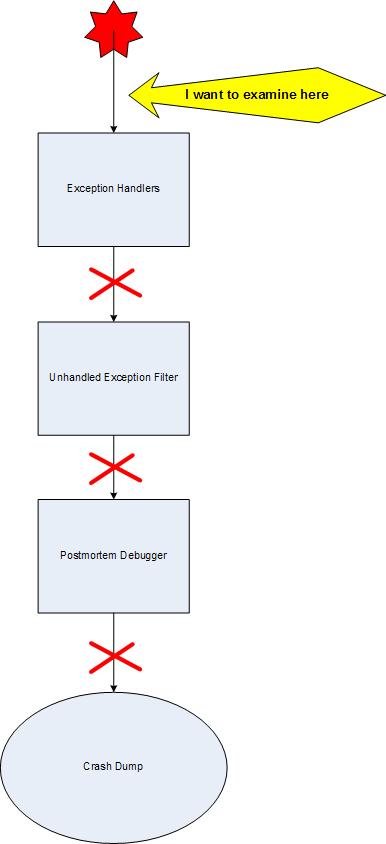
If you remember I promised to review this CD:

 The first Memory Analysis CD album

Finally it arrived by post and here it is:

I’ve just finished listening to it. It is wonderful! Clearly belongs to my Music for Debugging collection. Here is my commentary (italics) on track titles:

1. Chameleon 
   It crashes then hangs then spikes then leaks. You never know what happens next…
2. Silence Before The Storm 
   Waiting for the problem to start dumping memory
3. Appearances 
   Multiple occurrences of the issue ease crash dump collection
4. Memory Analysis 
   Memory dump analysis activity
5. Voices From Heaven 
   It’s my blog full of crash dump analysis patterns
6. Figure In The Fog 
   It’s that DLL! I see it clearly!!!
7. Diamond Tear 
   Customer is happy
8. The Toy Soldier 
   WinDbg
9. Tears In Dragon’s Eyes 
   Operating system vendor is happy too
10. Forgotten Song 
   No pasaran (bugs)
11. Skies
   We are debugging gods!

Enjoy :-) 

- Dmitry Vostokov @ DumpAnalysis.org -
PFD lectures are available in PDF format

Thursday, June 5th, 2008

Due to the request from blog readers I made my old Practical Foundations of Debugging lectures available in PDF format:

  1. Memory, registers and simple arithmetic
  2. Number representations and pointers
  3. Bytes, words, double words and pointers to memory
  4. Instruction pointer and disassembling a program with pointers
  5. Memory and stacks
  6. Frame pointer and local variables (Part 1)
  7. Frame pointer and local variables (Part 2)
  8. Function parameters
  9. Function pointer parameters (Part 1)
  10. Function pointer parameters (Part 2)
  11. Virtual Memory, Processes and Threads (Part 1)
  12. Virtual Memory, Processes and Threads (Part 2)
  13. Arrays and structures in memory (Part 1)
  14. Arrays and structures in memory (Part 2)

x64 version:

  1. Memory, registers and simple arithmetic
  2. Number representations and pointers

I keep both versions (HTMP and PDF) on the following pages where updates or corrections will be posted in the future:

Practical Foundations of Debugging (x86)
Practical Foundations of Debugging (x64)

- Dmitry Vostokov @ DumpAnalysis.org -

Software Debugging book from China

Thursday, June 5th, 2008

Just discovered that China has its own 1000 page Windows debugging book:

ISBN: 9787121064074 (June, 2008)

Author is Zhang Yinkui (Raymond Zhang).

Google translation is quite impressive:

Automatically translated

Automatically translated Table of Contents

Original

- Dmitry Vostokov @ DumpAnalysis.org -

The Science of Dr. Watson

Tuesday, June 3rd, 2008

Motivated by The Science of Sherlock Holmes I plan to write a book about the history of debugging with the following preliminary product details and tentative release date (which may come earlier if I have enough time):

  • Title: The Science of Dr. Watson: An Illustrated History of Debugging
  • Author: Dmitry Vostokov
  • Publisher: Opentask (01 September 2010)
  • Language: English
  • Product Dimensions: 22.86 x 15.24
  • ISBN-13: 978-1-906717-07-0
  • Paperback: 256 pages

- Dmitry Vostokov @ DumpAnalysis.org -

Who opened that file?

Friday, May 30th, 2008

Sometimes certain files are opened but not closed when not needed and this prevents other applications and users from using, deleting or replacing them. Sometimes on behalf of certain API calls another process opens them. One of the questions I was asked recently is how to find that process. The answer that I found is very simple: just list all handles from all processes and search for that file name there. This works in kernel and complete memory dumps and also in live kernel debugging session including its local kernel debugging variant. The following WinDbg command lists all objects (we need to open a log because the output is usually of several megabytes):

3: kd> !for_each_process "!handle 0 3 @#Process"

!handle 0 3 @#Process
processor number 3, process 8a392818
PROCESS 8a392818  SessionId: none  Cid: 0004    Peb: 00000000  ParentCid: 0000
    DirBase: bfc51000  ObjectTable: e1001e00  HandleCount: 2650.
    Image: System

Handle table at e16a3000 with 2650 Entries in use
0004: Object: 8a392818  GrantedAccess: 001f0fff Entry: e1004008
Object: 8a392818  Type: (8a392e70) Process
    ObjectHeader: 8a392800 (old version)
        HandleCount: 3  PointerCount: 235

0008: Object: 8a391db0  GrantedAccess: 00000000 Entry: e1004010
Object: 8a391db0  Type: (8a392ca0) Thread
    ObjectHeader: 8a391d98 (old version)
        HandleCount: 1  PointerCount: 1

000c: Object: e101bca0  GrantedAccess: 00000000 Entry: e1004018
Object: e101bca0  Type: (8a37db00) Key
    ObjectHeader: e101bc88 (old version)
        HandleCount: 1  PointerCount: 3
        Directory Object: 00000000  Name: \REGISTRY

[...]

1fac: Object: 88ec72b0  GrantedAccess: 00000003 (Protected) Entry: e1ed7f58
Object: 88ec72b0  Type: (8a36f900) File
    ObjectHeader: 88ec7298 (old version)
        HandleCount: 1  PointerCount: 2
        Directory Object: 00000000  Name: \Documents and Settings\MyUserName\NTUSER.DAT {HarddiskVolume1}

[...]

07fc: Object: e1000768  GrantedAccess: 00000003 Entry: e2fefff8
Object: e1000768  Type: (8a387e70) KeyedEvent
    ObjectHeader: e1000750 (old version)
        HandleCount: 273  PointerCount: 274
        Directory Object: e1001a48  Name: CritSecOutOfMemoryEvent

processor number 3, process 8873f3b8
PROCESS 8873f3b8  SessionId: 6  Cid: 4c1c    Peb: 7ffdf000  ParentCid: 42bc
    DirBase: 49dbb000  ObjectTable: e325f788  HandleCount:  90.
    Image: PROFLWIZ.EXE

Handle table at e36c3000 with 90 Entries in use
0004: Object: e1000768  GrantedAccess: 00000003 Entry: e36c3008
Object: e1000768  Type: (8a387e70) KeyedEvent
    ObjectHeader: e1000750 (old version)
        HandleCount: 273  PointerCount: 274
        Directory Object: e1001a48  Name: CritSecOutOfMemoryEvent

[...]

- Dmitry Vostokov @ DumpAnalysis.org -

.NET Managed Code Analysis in Complete Memory Dumps

Wednesday, May 28th, 2008

While working on WDN book I noticed that it is possible to analyze managed code in complete memory dumps. We just need to switch to the process in question and load SOS DLL (if memory dumps are from 64-bit Windows we need to run 64-bit WinDbg because it needs to load 64-bit SOS from Microsoft.NET \ Framework64 \ vX.X.XXXXX folder).

Here is some command output from a complete memory dump generated from SystemDump when running TestDefaultDebugger.NET application where we try to find and disassemble IL code for this function:

namespace WindowsApplication1
{
  public partial class Form1 : Form
  {
[...]
  private void button1_Click(object sender, EventArgs e)
  {
  System.Collections.Stack stack = new System.Collections.Stack();
stack.Pop();
  }
  }
}

Loading Dump File [C:\W2K3\MEMORY_NET.DMP]
Kernel Complete Dump File: Full address space is available

Symbol search path is: srv*c:\mss*http://msdl.microsoft.com/download/symbols
Executable search path is:
Windows Server 2003 Kernel Version 3790 (Service Pack 2) UP Free x64
Product: Server, suite: Enterprise TerminalServer
Built by: 3790.srv03_sp2_gdr.070321-2337
Kernel base = 0xfffff800`01000000 PsLoadedModuleList = 0xfffff800`01198b00

kd> !process 0 0
**** NT ACTIVE PROCESS DUMP ****
[...]
PROCESS fffffadfe7287610
    SessionId: 0  Cid: 0ad8    Peb: 7fffffdf000  ParentCid: 0acc
    DirBase: 12cd9000  ObjectTable: fffffa800163c260  HandleCount: 114.
    Image: TestDefaultDebugger.NET.exe

PROCESS fffffadfe67905a0
    SessionId: 0  Cid: 085c    Peb: 7fffffd4000  ParentCid: 0acc
    DirBase: 232e2000  ObjectTable: fffffa8000917e10  HandleCount:  55.
    Image: SystemDump.exe

kd> .process /r /p fffffadfe7287610
Implicit process is now fffffadf`e7287610
Loading User Symbols

kd> .loadby sos mscorwks

kd> !threads

ThreadCount: 2
UnstartedThread: 0
BackgroundThread: 1
PendingThread: 0
DeadThread: 0
Hosted Runtime: no
                                              PreEmptive                                                Lock
       ID OSID        ThreadOBJ     State   GC     GC Alloc Context                  Domain           Count APT Exception
       1  a94 0000000000161150      6020 Enabled  0000000000000000:0000000000000000 000000000014ccb0     0 STA
       2  604 00000000001688b0      b220 Enabled  0000000000000000:0000000000000000 000000000014ccb0     0 MTA (Finalizer)

kd> !process fffffadfe7287610 4
PROCESS fffffadfe7287610
    SessionId: 0  Cid: 0ad8    Peb: 7fffffdf000  ParentCid: 0acc
    DirBase: 12cd9000  ObjectTable: fffffa800163c260  HandleCount: 114.
    Image: TestDefaultDebugger.NET.exe

        THREAD fffffadfe668cbf0  Cid 0ad8.0a94  Teb: 000007fffffdd000 Win32Thread: fffff97ff4df2830 WAIT
        THREAD fffffadfe727e6d0  Cid 0ad8.0f54  Teb: 000007fffffdb000 Win32Thread: 0000000000000000 WAIT
        THREAD fffffadfe72d5bf0  Cid 0ad8.0604  Teb: 000007fffffd9000 Win32Thread: 0000000000000000 WAIT
        THREAD fffffadfe679cbf0  Cid 0ad8.06b0  Teb: 000007fffffd7000 Win32Thread: 0000000000000000 WAIT
        THREAD fffffadfe67d23d0  Cid 0ad8.0b74  Teb: 000007fffffd5000 Win32Thread: fffff97ff4b99010 WAIT

kd> !EEHeap -gc
Number of GC Heaps: 1
generation 0 starts at 0x0000000002a41030
generation 1 starts at 0x0000000002a41018
generation 2 starts at 0x0000000002a41000
ephemeral segment allocation context: (0x0000000002a8d528, 0x0000000002a8dfe8)
         segment            begin         allocated             size
00000000001a1260 0000064274e28f60  0000064274e5f610 0x00000000000366b0(222896)
00000000001a1070 000006427692ffe8  000006427695af20 0x000000000002af38(175928)
0000000000164f60 00000642787c7380  0000064278809150 0x0000000000041dd0(269776)
0000000002a40000 0000000002a41000  0000000002a8dfe8 0x000000000004cfe8(315368)
Large object heap starts at 0x0000000012a41000
         segment            begin         allocated             size
0000000012a40000 0000000012a41000  0000000012a4e738 0x000000000000d738(55096)
Total Size           0xfdad8(1039064)
------------------------------
GC Heap Size           0xfdad8(1039064)

kd> !gchandles
Bad MethodTable for Obj at 0000000002a7a7b8
Bad MethodTable for Obj at 0000000002a7a750
Bad MethodTable for Obj at 0000000002a445b0
GC Handle Statistics:
Strong Handles: 25
Pinned Handles: 7
Async Pinned Handles: 0
Ref Count Handles: 1
Weak Long Handles: 30
Weak Short Handles: 63
Other Handles: 0
Statistics:
              MT    Count    TotalSize Class Name
[...]
0000064280016580        1          464 WindowsApplication1.Form1
[…]

kd> !dumpmt -md 0000064280016580
EEClass: 0000064280143578
Module: 0000064280012e00
Name: WindowsApplication1.Form1
mdToken: 02000002  (C:\TestDefaultDebugger.NET.exe)
BaseSize: 0×1d0
ComponentSize: 0×0
Number of IFaces in IFaceMap: 15
Slots in VTable: 375
————————————–
MethodDesc Table
           Entry       MethodDesc      JIT Name
[…]
0000064280150208 00000642800164d0      JIT WindowsApplication1.Form1.InitializeComponent()
0000064280150210 00000642800164e0      JIT WindowsApplication1.Form1..ctor()
0000064280150218 00000642800164f0     NONE WindowsApplication1.Form1.button1_Click(System.Object, System.EventArgs)

kd> !dumpil 00000642800164f0
ilAddr = 00000000004021bc
IL_0000: newobj System.Collections.Stack::.ctor
IL_0005: stloc.0
IL_0006: ldloc.0
IL_0007: callvirt System.Collections.Stack::Pop
IL_000c: pop
IL_000d: ret

- Dmitry Vostokov @ DumpAnalysis.org -

10 Common Mistakes in Memory Analysis (Part 1)

Tuesday, May 27th, 2008

Mistake #1 - Not looking at full stack traces

By default WinDbg cuts off stack traces after 20th line and an analyst misses essential information when looking at Stack Trace or Stack Trace Collection. Consider this thread stack trace taken from a user process dump where runaway information was not saved but customers reported CPU spikes:

0:000> ~3kvL
ChildEBP RetAddr
0290f864 773976f2 user32!_SEH_prolog+0xb
0290f86c 0047f9ec user32!EnableMenuItem+0xf
0290f884 00488f6d Application!Close+0x142c
0290f8a4 0047a9c6 Application!EnableMenu+0x5d
0290f8b8 0048890d Application!EnableWindows+0x106
0290f8d0 0048cc2b Application!SetHourGlass+0xbd
0290f8fc 0046327a Application!WriteDataStream+0x24b
0290f924 0048d8f9 Application!WriteDataStream+0x21a
0290fa68 00479811 Application!WriteDataStream+0xcb9
0290fadc 5b5e976c Application!OnWrite+0x3c1
0290fb70 5b60e0b0 mfc71!CWnd::OnWndMsg+0x4f2
0290fb90 5b60e14f mfc71!CWnd::WindowProc+0x22
0290fbf0 5b60e1b8 mfc71!AfxCallWndProc+0x91
0290fc10 00516454 mfc71!AfxWndProc+0x46
0290fc3c 7739c3b7 Application!ExitCheck+0x28f34
0290fc68 7739c484 user32!InternalCallWinProc+0x28
0290fce0 77395563 user32!UserCallWinProcCheckWow+0x151
0290fd10 773ad03f user32!CallWindowProcAorW+0x98
0290fd30 0047a59a user32!CallWindowProcA+0x1b

We can see that it uses MFC libraries and window messaging API but was it caught accidentally? Is it a typical message loop like idle message loops in Passive Thread pattern using GetMessage or it is an active GUI message pump using PeekMessage? If we expand stack trace we would see that the thread is actually MFC GUI thread that spins according to MFC source code:

int CWinThread::Run()
{
  for (;;)
  {
    while (bIdle &&
      !::PeekMessage(&(pState->m_msgCur), 
         NULL, NULL, NULL, PM_NOREMOVE))
     {

0:000> ~3kvL 100
ChildEBP RetAddr
0290f864 773976f2 user32!_SEH_prolog+0xb
0290f86c 0047f9ec user32!EnableMenuItem+0xf
0290f884 00488f6d Application!Close+0x142c
0290f8a4 0047a9c6 Application!EnableMenu+0x5d
0290f8b8 0048890d Application!EnableWindows+0x106
0290f8d0 0048cc2b Application!SetHourGlass+0xbd
0290f8fc 0046327a Application!WriteDataStream+0x24b
0290f924 0048d8f9 Application!WriteDataStream+0x21a
0290fa68 00479811 Application!WriteDataStream+0xcb9
0290fadc 5b5e976c Application!OnWrite+0x3c1
0290fb70 5b60e0b0 mfc71!CWnd::OnWndMsg+0x4f2
0290fb90 5b60e14f mfc71!CWnd::WindowProc+0x22
0290fbf0 5b60e1b8 mfc71!AfxCallWndProc+0x91
0290fc10 00516454 mfc71!AfxWndProc+0x46
0290fc3c 7739c3b7 Application!ExitCheck+0x28f34
0290fc68 7739c484 user32!InternalCallWinProc+0x28
0290fce0 77395563 user32!UserCallWinProcCheckWow+0x151
0290fd10 773ad03f user32!CallWindowProcAorW+0x98
0290fd30 0047a59a user32!CallWindowProcA+0x1b
0290fdb0 7739c3b7 Application!OnOK+0x77a
0290fddc 7739c484 user32!InternalCallWinProc+0x28
0290fe54 7739c73c user32!UserCallWinProcCheckWow+0x151
0290febc 7738e406 user32!DispatchMessageWorker+0x327
0290fecc 5b609076 user32!DispatchMessageA+0xf
0290fedc 5b60913e mfc71!AfxInternalPumpMessage+0x3e
0290fef8 004ba7cf mfc71!CWinThread::Run+0×54
0290ff04 5b61b30c Application!CMyThread::Run+0xf
0290ff84 5b869565 mfc71!_AfxThreadEntry+0×100
0290ffb8 77e66063 msvcr71!_endthreadex+0xa0
0290ffec 00000000 kernel32!BaseThreadStart+0×34

There is also WinDbg .kframes meta-command that can change default stack trace depth:

2: kd> .kframes 0n100
Default stack trace depth is 0n100 frames

- Dmitry Vostokov @ DumpAnalysis.org -

WDN Sample Chapter: Process Heap in UML

Sunday, May 25th, 2008

It now becomes a tradition to publish a sample chapter about heap. As promised here are two draft pages from the forthcoming Windows® Debugging Notebook:

05 (0×05): Heap / Pool / Paged / NonPaged

- Dmitry Vostokov @ DumpAnalysis.org -

Memory Analysis (Part 1)

Friday, May 23rd, 2008

Recently being interested in forensic science and intelligence I decided to elaborate on memory analysis classification and came up with the following division:

- Memory Analysis Forensics

Answering questions related to a committed computer crime. The suspect may be a human or a software / hardware component. Incident response, troubleshooting and debugging belong to this category. Postmortem memory analysis is usually analysis of dump files saved and detached from the original system or operating conditions.

- Memory Analysis Intelligence

Monitoring memory state for behavioural and structural patterns to prevent certain events from occurring. Usually done in situ. However digital dumpster divers and spies may also collect and analyze memory data that was detached from the original computer system.

Each category can be further subdivided into:

– Functional Memory Analysis

Tracing of events.

Memoretics 

Analysis of memory states and their evolution.

The latter can be subdivided into: 

Static Memory Analysis

Traditional memory dump analysis.

Dynamic Memory Analysis

Live debugging.

- Dmitry Vostokov @ DumpAnalysis.org -

Demystifying first-chance exceptions (Part 1)

Thursday, May 22nd, 2008

There is a bit of confusion around the division of exceptions between the first- and second-chance. For example, I am often asked whether saving crash dumps on first-chance exceptions should be disabled or enabled. So I decided to clarify this issue.

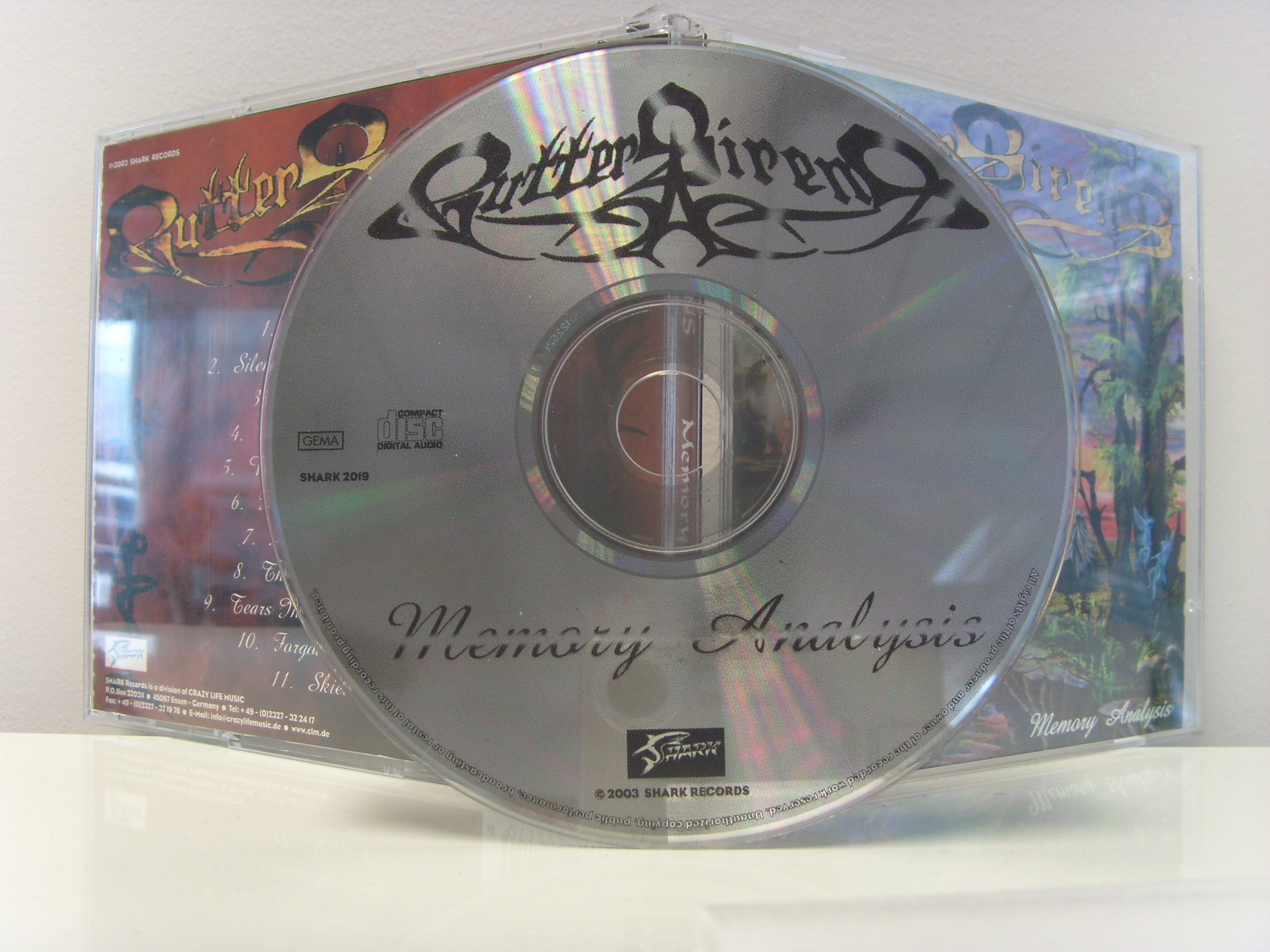
First, let me say that the concept of first-chance exceptions is purely a debugger-related. There is only one exception that happens when we access an invalid address, for example. However, that exception may be handled or may not be handled by exception handlers. Or it might be handled in peculiar way and terminate the thread that caused the exception, for example. And if it was not handled then an unhandled exception filter might be called. The default one might launch a postmortem debugger (or any process that can read process memory) to save a postmortem memory dump. Any thread can replace the default filter with a custom exception filter that might also do peculiar things and quietly terminate or exit. Even the properly configured postmortem debugger can fail to save a dump file. Therefore we have this question: how can we catch the exception and examine the process state as earlier as possible, before the execution flow goes through the exception handling mechanism?

Here we have the concept of the first chance exception dispatched to the attached user-mode debugger. if it wasn’t handled we have the same exception but called the second chance that is dispatched to the same debugger again. We see that it has nothing to do with the postmortem debugger although the attached live debugger can save crash dump files too, which what ADPlus does, for example.

- Dmitry Vostokov @ DumpAnalysis.org -

MDAA Volume 1 is available on Google Search

Thursday, May 22nd, 2008

The book has finally made it through Google Search program and is available for search here:

http://www.google.com/books?id=RR5whfK1BYsC

Also, yesterday I approved the hardcover version for distribution on Amazon and it should be available there in a week or so.

- Dmitry Vostokov @ DumpAnalysis.org -

Crash Dump Analysis Patterns (Part 61)

Tuesday, May 20th, 2008

Invalid Handle exception (0xC0000008) can frequently be seen in crash dumps. It results from an invalid handle value passed to CloseHandle and other Win32 API or when a handle or return status is checked manually for validity and the same exception is raised via RaiseException or internally via RtlRaiseStatus. Therefore it merits its own separate crash dump analysis pattern with the same name.

For example, critical sections are implemented using events and invalid event handle can result in this exception:

STACK_TEXT:
025bff00 7c94243c c0000008 7c9010ed 00231af0 ntdll!RtlRaiseStatus+0×26
025bff80 7c90104b 0015b4ac 77e76a6f 0015b4ac ntdll!RtlpWaitForCriticalSection+0×204
025bff88 77e76a6f 0015b4ac 010d2040 00000000 ntdll!RtlEnterCriticalSection+0×46
025bffa8 77e76c0a 0015b420 025bffec 7c80b683 rpcrt4!BaseCachedThreadRoutine+0xad
025bffb4 7c80b683 001feae8 010d2040 00000000 rpcrt4!ThreadStartRoutine+0×1a
025bffec 00000000 77e76bf0 001feae8 00000000 kernel32!BaseThreadStart+0×37

By default, unless raised manually, this exception doesn’t result in a default postmortem debugger called to save a crash dump. In order to do this we need to run the application under a debugger and save a crash dump upon this exception or use exception monitoring tools that save first-chance exceptions like Debug Diagnostics, ADPlus or Exception Monitor (see Early Crash Dump pattern):

0:002> g
(7b0.d1c): Invalid handle - code c0000008 (first chance)
First chance exceptions are reported before any exception handling.
This exception may be expected and handled.
eax=00000001 ebx=00000000 ecx=00000000 edx=00000000 esi=7d999906 edi=00403378
eip=7d61c92d esp=0012ff68 ebp=0012ff70 iopl=0 nv up ei pl nz na po nc
cs=0023 ss=002b ds=002b es=002b fs=0053 gs=002b efl=00000202
ntdll!NtClose+0×12:
7d61c92d c20400          ret     4

0:000> g
(7b0.d1c): Invalid handle - code c0000008 (!!! second chance !!!)
eax=00000001 ebx=00000000 ecx=00000000 edx=00000000 esi=7d999906 edi=00403378
eip=7d61c92d esp=0012ff68 ebp=0012ff70 iopl=0 nv up ei pl nz na po nc
cs=0023 ss=002b ds=002b es=002b fs=0053 gs=002b efl=00000202
ntdll!NtClose+0×12:
7d61c92d c20400          ret     4

In order to catch it using postmortem debuggers we can use Application Verifier and configure its basic checks to include invalid handles. Then we will have crash dumps if a postmortem debugger or WER is properly configured. The typical stack might look like this and pointing straight to the problem component:

EXCEPTION_RECORD:  ffffffff -- (.exr 0xffffffffffffffff)
ExceptionAddress: 6b006369
   ExceptionCode: 80000003 (Break instruction exception)
  ExceptionFlags: 00000000
NumberParameters: 1
   Parameter[0]: 00000000

DEFAULT_BUCKET_ID:  STATUS_BREAKPOINT

0:000> kL
ChildEBP RetAddr 
0301ff44 0489a480 ntdll!NtClose+0x12
WARNING: Stack unwind information not available. Following frames may be wrong.
0301ff54 7d4d8e4f vfbasics+0xa480
0301ff60 04894df9 kernel32!CloseHandle+0×59
0301ff70 00401022 vfbasics+0×4df9
0301ffc0 7d4e7d2a BadHandle+0×1022
0301fff0 00000000 kernel32!BaseProcessStart+0×28

or like this:

0:000> kL
Child-SP          RetAddr           Call Site
00000000`0012ed58 00000000`01f9395a ntdll!DbgBreakPoint
00000000`0012ed60 00000000`023e29a7 vrfcore!VerifierStopMessageEx+0×846
00000000`0012f090 00000000`023d9384 vfbasics+0×129a7
00000000`0012f0f0 00000000`77f251ec vfbasics+0×9384
00000000`0012f180 00000000`77ee5f36 ntdll!RtlpCallVectoredHandlers+0×26f
00000000`0012f210 00000000`77ee6812 ntdll!RtlDispatchException+0×46
00000000`0012f8c0 00000000`77ef325a ntdll!RtlRaiseException+0xae
00000000`0012fe00 00000000`77d6e314 ntdll!KiRaiseUserExceptionDispatcher+0×3a
00000000`0012fed0 00000001`40001028 kernel32!CloseHandle+0×5f
00000000`0012ff00 00000001`40001294 BadHandle+0×1028
00000000`0012ff30 00000000`77d5964c BadHandle+0×1294
00000000`0012ff80 00000000`00000000 kernel32!BaseProcessStart+0×29

vfbasics and vrfcore are Application Verifier DLLs that might translate an invalid handle exception to a breakpoint exception and therefore trigger the launch of a postmortem debugger from an unhandled exception filter. Application Verifier version (x64 or x86) must match the application platform (64-bit or 32-bit).

If invalid handle exception is raised manually we get the status code and possibly problem component immediately from !analyze command:

FAULTING_IP:
kernel32!RaiseException+53
7d4e2366 5e              pop     esi

EXCEPTION_RECORD:  ffffffff -- (.exr 0xffffffffffffffff)
ExceptionAddress: 7d4e2366 (kernel32!RaiseException+0x00000053)
   ExceptionCode: c0000008 (Invalid handle)
  ExceptionFlags: 00000000
NumberParameters: 0
Thread tried to close a handle that was invalid or illegal to close

DEFAULT_BUCKET_ID:  STATUS_INVALID_HANDLE

PROCESS_NAME:  BadHandle.exe

ERROR_CODE: (NTSTATUS) 0xc0000008 - An invalid HANDLE was specified.

STACK_TEXT: 
0012ff64 00401043 c0000008 00000000 00000000 kernel32!RaiseException+0×53
WARNING: Stack unwind information not available. Following frames may be wrong.
0012ffc0 7d4e7d2a 00000000 00000000 7efde000 BadHandle+0×1043
0012fff0 00000000 004012f9 00000000 00000000 kernel32!BaseProcessStart+0×28

FAULTING_THREAD:  00000b64

PRIMARY_PROBLEM_CLASS:  STATUS_INVALID_HANDLE

BUGCHECK_STR:  APPLICATION_FAULT_STATUS_INVALID_HANDLE

Because we have WinDbg warning about stack unwind we can double check the disassembly of RaiseException return address:

0:000> ub 00401043
BadHandle+0×1029:
00401029 push    offset BadHandle+0×212c (0040212c)
0040102e push    0
00401030 call    esi
00401032 push    0
00401034 push    0
00401036 push    0
00401038 push    0C0000008h
0040103d call    dword ptr [BadHandle+0×2004 (00402004)]

0:000> dps 00402004 l1
00402004  7d4e2318 kernel32!RaiseException

Beware that in such cases the real problem might have been memory corruption overwriting stored valid handle values.

- Dmitry Vostokov @ DumpAnalysis.org -

Win32 Exception Frequencies

Tuesday, May 20th, 2008

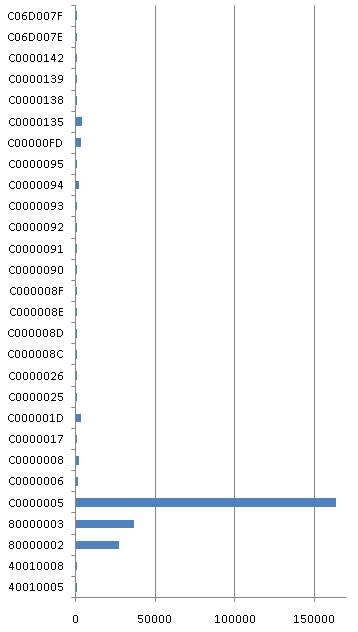
After Bug Check Frequencies post I was curious enough to do the same Google counting procedure for exceptions. Here are my results for exceptions listed in Visual C++ Debug \ Exceptions dialog:

Control-C

40010005

43

Control-Break

40010008

7

Datatype misalignment

80000002

27300

Breakpoint

80000003

36400

Access violation

C0000005

164000

In page error

C0000006

1210

Invalid handle

C0000008

1670

Not enough quota

C0000017

176

Illigal instruction

C000001D

3400

Cannot continue

C0000025

804

Invalid exception disposition

C0000026

121

Array bounds exceeded

C000008C

100

Floating-point denormal operand

C000008D

84

Floating-point division by zero

C000008E

523

Floating-point inexact result

C000008F

401

Floating-point invalid operation

C0000090

509

Floating-point overflow

C0000091

121

Floating-point stack check

C0000092

102

Floating-point underflow

C0000093

138

Integer division by zero

C0000094

1610

Integer overflow

C0000095

99

Stack overflow

C00000FD

3110

Unable to locate component

C0000135

3970

Ordinal not found

C0000138

43

Entry point not found

C0000139

724

DLL initialization failed

C0000142

918

Module not found

C06D007E

171

Procedure not found

C06D007F

248

The corresponding graph:

- Dmitry Vostokov @ DumpAnalysis.org -

The Glory of Debugging

Tuesday, May 20th, 2008

Continuing Music for Debugging post I would like to recommend the following album that I used to listen to long time ago and have just found buried in the old corner. In it various movements correspond to different debugging sessions, some glorious and some filled with tension and worries, gradually building up the ultimate problem resolution. I think almost all Vangelis music is very suitable to accompany debugging.

El Greco

Buy from Amazon

- Dmitry Vostokov @ DumpAnalysis.org -

Application Verifier on x64 platforms

Tuesday, May 20th, 2008

A small note from the field. Sometimes on x64 Windows platform we set a default postmortem debugger or configure WER and then install Microsoft Application Verifier to do some checks. However no crash dump files are saved. The reason for this might be that we installed and configured amd64 bit version of Application Verifier but the problem application was 32-bit. For this application we need to install and configure x86 version of Application Verifier.

 - Dmitry Vostokov @ DumpAnalysis.org -