Archive for the ‘Evolution’ Category
Wednesday, February 1st, 2012
On natural pointers vs. pointers that are not natural, like a NULL, wild or dangling pointer.
Thus, a man who intends keeping pointers naturally tries to get as good debuggers as he can … .
Charles Darwin, On the Origin of Species
- Dmitry Vostokov @ DumpAnalysis.org + TraceAnalysis.org -
Posted in Bugtations, Debugging, Evolution, Fun with Debugging | No Comments »
Friday, December 17th, 2010
As the new decade is approaching (2011-2020) we would like to make a few previews and predictions:
- Increased complexity of software will bring more methods from biological, social sciences and humanities in addition to existing methods of automated debugging and computer science techniques
- Focus on first fault software problem solving (when aspect)
- Focus on pattern-driven software problem solving (how aspect)
- Fusion of debugging and malware analysis into a unified structural and behavioral pattern framework
- Visual debugging, memory and software trace visualization techniques
- Software maintenance certification
- Focus on domain-driven troubleshooting and debugging tools as a service (debugware TaaS)
- Focus on security issues related to memory dumps and software traces
- New scripting languages and programming language extensions for debugging
- The maturation of the science of memory snapshots and software traces (memoretics)
Imagining is not not limited to the above and more to come and explain in the forthcoming parts.
- Dmitry Vostokov @ DumpAnalysis.org + TraceAnalysis.org -
Posted in Announcements, Anthropology, Archaeology of Computer Memory, Biology, Certification, Computer Science, Countefactual Debugging, Crash Analysis Report Environment (CARE), Crash Dump Analysis, Crash Dump Patterns, DebugWare Patterns, Debugging, Debugging Industry, Debugging Methodology, Debugging Trends, Dublin School of Security, EasyDbg, Economics, Escalation Engineering, Evolution, First Fault Problem Solving, Futuristic Memory Dump Analysis, General Memory Analysis, General Science, Geography, Hardware, Hermeneutics of Memory Dumps and Traces, History, Humanities, Language, Laws of Troubleshooting and Debugging, Logic, Malware Analysis, Malware Patterns, Mathematics of Debugging, Memiotics (Memory Semiotics), Memoretics, Memory Analysis Forensics and Intelligence, Memory Analysis Report System, Memory Dump Analysis and History, Memory Systems Language, Memory Visualization, Paleo-debugging, Pattern Models, Pattern Prediction, Physics, Psychology, Publishing, Science of Memory Dump Analysis, Science of Software Tracing, Security, Social Media, Social Sciences, Software Architecture, Software Behavior Patterns, Software Chorography, Software Chorology, Software Defect Construction, Software Engineering, Software Generalist, Software Maintenance Institute, Software Narrative Fiction, Software Narratology, Software Technical Support, Software Trace Analysis, Software Trace Analysis and History, Software Trace Deconstruction, Software Trace Linguistics, Software Trace Visualization, Software Troubleshooting Patterns, Software Victimology, Statistics, Structural Memory Analysis and Social Sciences, Structural Memory Patterns, Structural Trace Patterns, Systems Thinking, Testing, Tools, Trace Analysis Patterns, Troubleshooting Methodology, Unified Debugging Patterns, Uses of UML, Victimware, Virtualization, Visual Dump Analysis, Windows System Administration, Workaround Patterns | No Comments »
Thursday, September 30th, 2010
The title of these blog post series was motivated by a book I enjoyed reading this summer:
The Altenberg 16: An Exposé of the Evolution Industry
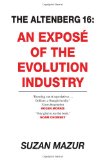
Finally, after thinking and keeping silence (this blog post was in draft folder for several months) I plan an interview next month for a start.
- Dmitry Vostokov @ DumpAnalysis.org + TraceAnalysis.org -
Posted in Announcements, Books, Crash Dump Analysis, Debugging, Debugging Industry, Evolution, Interviews | No Comments »
Thursday, July 15th, 2010
While reading evolution books ranging from popular like Darwin’s Dangerous Idea to specialized like Evolution: The First Four Billion Years and Encyclopedia of Evolution I felt the need to read Darwin’s biography. My first encounter with Darwin was even before a primary school when I was looking at illustrations to his voyages in a library. Later, during my school years in Soviet Union, I saw a movie about him. I vividly remember a Wilberforce and FitzRoy scene. So you might imaging that I was very keen to read 680 page book (not counting notes and bibliography). Unfortunately I found it a bit boring and written in a difficult language compared to other biographies I read in English. May be the language was chosen deliberately to emulate Victorian epoch?
Almost in the middle of reading this book I stumbled across another book: The Darwin Conspiracy: Origins of a Scientific Crime and reading the latter (it’s like a thriller and you can download the free PDF from www.darwin-conspiracy.co.uk) gave me an impulse to continue reading Darwin’s biography with a critical eye. Looking at the same facts your can always interpret them differently and the conspiracy book reminded me to read behind the lines more carefully and remember about politics in science and class issues in society. I’m very interested in memetic engineering Darwin used to delicately arrange and propagate his ideas. The biography mentions Wallace in passing a few times but there is no discussion about the priority and the crucial Linnean Society meeting is not in the focus and doesn’t grab any attention.
One fact I didn’t know before reading this biography is that Darwin was always sick. Now “tormented evolutionist” phrase acquires the new meaning to me. I also got the feeling that Darwin’s hesitation to publish his ideas (if he had any to publish) was caused by sickness as well. Actually the sickness was the main focus of the book. However I really wonder how could such a sick man (as described) could write that huge amount of correspondence, do research and write many books.
One quote I found at the end of the book says that Darwin would not approve anti-religious stance of Dawkins and Co.:
“Moreover though I am a strong advocate for free thought on all subjects, yet it appears to me (whether rightly or wrongly) that direct arguments against christianity & theism produce hardly any effect on the public; & freedom of thought is best promoted by the gradual illumination of men’s minds, which follows from the advance of science. It has, therefore, been always my object to avoid writing on religion, & I have confined myself to science. I may, however, have been unduly biassed by the pain which it would give some members of my family, if I aided in any way direct attacks on religion.”
http://www.darwinproject.ac.uk/entry-12757
The quote got my attention probably because I recently read another book: The Selfish Genius.
Darwin: The Life of a Tormented Evolutionist

- Dmitry Vostokov @ LiterateScientist.com -
Posted in Biographies, Biology, Evolution, From Cover To Cover, Politics, Reading List 2010, Religion, Reviewed on Amazon | No Comments »
Thursday, April 29th, 2010
Yesterday I discovered the blog j00ru//vx where I was pleased to see another memory visualization approach which I classify as synthetic:
x86 Kernel Memory Space Visualization (KernelMAP v0.0.1)
So far now I put a bit more extended (but in no way complete) classification with links (based on my previous blog post where every category is presented in chronological order of my encounter with links):
1. Synthetic
2. Natural
a. Static
b. Semi-dynamic
c. Dynamic
Please let me know any other approaches or links you know.
PS. I’m currently a big fan of artificial evolution and recommend this fantastic full-color book that has good ideas about expression-based visualization:
The Art of Artificial Evolution: A Handbook on Evolutionary Art and Music (Natural Computing Series)

- Dmitry Vostokov @ DumpAnalysis.org + TraceAnalysis.org -
Posted in Books, Computer Science, Evolution, Memory Space Art, Memory Visualization, Tools | 2 Comments »
Friday, December 18th, 2009
I read this book in just one day from cover to cover. I’m not a professional biologist and learnt about evolution 25 - 30 years ago from Marxist perspective. My understanding of evolution has greatly improved this year after reading Darwin’s Dangerous Idea, This Is Biology, Breaking the Spell, Evolution: The First Four Billion Years and The 10,000 Year Explosion books. I’ve also started reading (and listening to its unabridged version on CDs simultaneously) the latest Dawkins’ book “The Greatest Show on Earth” (to be reviewed as soon as I finish) after the thought “Who’s that guy?” finally tipped. I noticed the partnership of D. Dennett and R. Dawkins when reading books and also rants from religious camps when reading reviews. So I was very keen to read the promised history of Dawkins thought in “The Selfish Genius” book and I really enjoyed it. Judged from the background knowledge I acquired while reading various books about evolution “The Selfish Genius” seems fair and balanced. Sometimes it reminded me the similar problem in Physics: String Theory vs. Others (Not Even Wrong and the Trouble With Physics). When I put “The Selfish Genius” and resumed reading “The Greatest Show on Earth” I immediately noticed a footnote on page 216 (ISBN 978-1-4165-9478-9): “epigenetics, a modish buzz-word now enjoying its fifteen minutes” and if you are curious about the source of this anger read “The Selfish Genius” book. I also like the point of the book that for different people with different backgrounds “Evolution” means different things. For me it is about evolution of software but mainly about evolution of software defects: Darwinian Debugging and I even bugtated Dawkins’ meme: Bugtation No.108.
The Selfish Genius: How Richard Dawkins Rewrote Darwin’s Legacy

- Dmitry Vostokov @ LiterateScientist.com -
Posted in Biology, Evolution, From Cover To Cover, History, Reading List 2009, Reviewed on Amazon | No Comments »
Friday, August 7th, 2009
This is an encyclopedic work I bought in a local book shop and finally finished reading today. It took me a year to read from cover to cover and pages were falling out of the glue but I continued to read. Highly recommended for education and another view on human history. The review of Freud was enlightening to me because I didn’t know about the recent scholarship criticizing his work. In fact, I so liked this book that just bought it again in a hardcover version from Folio Society and start rereading it again soon.
Ideas: A History of Thought and Invention, from Fire to Freud

The second encyclopedic book seems was written before the previous one but looks like the logical sequel to it. I’m starting reading it next week.
The Modern Mind: An Intellectual History of the 20th Century

- Dmitry Vostokov @ LiterateScientist.com -
Posted in Anthropology, Art, Biology, Chemistry, Economics, Ethics, Evolution, From Cover To Cover, General Science, Geography, History, Humanities, Ideas, Language, Medicine, Philosophy, Physics, Politics, Psychology, Reading List 2009, Religion, Reviewed on Amazon, Social Sciences, Statistics, Theology | No Comments »