December 12th, 2011
This is another stack trace related pattern that we call Empty Stack Trace. Here we might need to do manual stack trace reconstruction like in the following example:
0:002> ~2s

eax=00000070 ebx=0110fb94 ecx=00000010 edx=005725d8 esi=0110fe58 edi=00000d80

eip=7c82847c esp=0110efe0 ebp=0110eff0 iopl=0  nv up ei pl zr na pe nc

cs=001b  ss=0023  ds=0023  es=0023  fs=003b  gs=0000      efl=00000246

ntdll!KiFastSystemCallRet:

7c82847c c3              ret
0:002> kL

ChildEBP RetAddr

0110efdc 00000000 ntdll!KiFastSystemCallRet
0:002> !teb

TEB at 7ffdc000

ExceptionList:        0110f980

StackBase:            01110000

StackLimit:           0110d000

SubSystemTib:         00000000

FiberData:            00001e00

ArbitraryUserPointer: 00000000

Self:                 7ffdc000

EnvironmentPointer:   00000000

ClientId:             00000b04 . 00000bd0

RpcHandle:            00000000

Tls Storage:          00000000

PEB Address:          7ffda000

LastErrorValue:       87

LastStatusValue:      c000000d

Count Owned Locks:    0

HardErrorMode:        0
0:002> dps 0110d000 01110000

0110d000  00000000

0110d004  00000000

[...]

0110f63c  00001000

0110f640  0110f64c

0110f644  02b91ea8

0110f648  00001000

0110f64c  00000004

0110f650  0110f6f0

0110f654  0374669d DbgHelp!WriteFullMemory+0×3cd

0110f658  ffffffff

0110f65c  0110d000

0110f660  00000000

0110f664  0480f5c0

0110f668  00003000

0110f66c  0110f7b0

0110f670  0110d000

0110f674  00000000

0110f678  00000065

0110f67c  00003000

0110f680  0110d000

0110f684  00000000

0110f688  01010000

0110f68c  00000000

0110f690  00000004

0110f694  00060002

0110f698  00003000

0110f69c  00000000

0110f6a0  00001000

0110f6a4  00000004

0110f6a8  00020000

0110f6ac  00040004

0110f6b0  7ffe0000 SharedUserData

0110f6b4  00000000

0110f6b8  00001000

0110f6bc  00000000

0110f6c0  0480f5c0

0110f6c4  00000000

0110f6c8  04c4a000

0110f6cc  00000000

0110f6d0  000003c7

0110f6d4  00000000

0110f6d8  00023b17

0110f6dc  00000000

0110f6e0  01110000

0110f6e4  00000000

0110f6e8  0099f000

0110f6ec  00000000

0110f6f0  0110f704

0110f6f4  037469d6 DbgHelp!WriteDumpData+0×206

0110f6f8  0110f738

0110f6fc  0110f7b0

0110f700  00000000

0110f704  0110f868

0110f708  03747449 DbgHelp!MiniDumpProvideDump+0×359

0110f70c  0110f738

0110f710  0110f7b0

0110f714  02b91fb0

0110f718  00000000

0110f71c  00000000

0110f720  00000000

0110f724  02b91fb0

0110f728  00000000

0110f72c  00000000

[…]

0110ff1c  00000001

0110ff20  00000008

0110ff24  0000000a

0110ff28  33017f51 ModuleA!Run+0xde

0110ff2c  00000001

0110ff30  0110ff74

0110ff34  00f08898

0110ff38  00000000

0110ff3c  00f082a8

0110ff40  00000000

0110ff44  00000001

0110ff48  33017e33 ModuleA!ThreadProc+0×2c

0110ff4c  a9b21e1e

0110ff50  00000000

0110ff54  00000000

0110ff58  00f08898

0110ff5c  0110ff4c

0110ff60  0110ffac

0110ff64  0110ff9c

0110ff68  33054245

0110ff6c  9ba52ad2

0110ff70  00000000

0110ff74  0110ffac

0110ff78  78543433 msvcr90!_endthreadex+0×44

0110ff7c  00f082a8

0110ff80  a9b2b0d3

0110ff84  00000000

0110ff88  00000000

0110ff8c  00f08898

0110ff90  0110ff80

0110ff94  0110ff80

0110ff98  0110ffdc

0110ff9c  0110ffdc

0110ffa0  7858cf5e msvcr90!_except_handler4

0110ffa4  d0f887df

0110ffa8  00000000

0110ffac  0110ffb8

0110ffb0  785434c7 msvcr90!_endthreadex+0xd8

0110ffb4  00000000

0110ffb8  0110ffec

0110ffbc  77e6482f kernel32!BaseThreadStart+0×34

0110ffc0  00f08898

0110ffc4  00000000

0110ffc8  00000000

0110ffcc  00f08898

0110ffd0  00000000

0110ffd4  0110ffc4

0110ffd8  80833bcc

0110ffdc  ffffffff

0110ffe0  77e61a60 kernel32!_except_handler3

0110ffe4  77e64838 kernel32!`string’+0×98

0110ffe8  00000000

0110ffec  00000000

0110fff0  00000000

0110fff4  7854345e msvcr90!_endthreadex+0×6f

0110fff8  00f08898

0110fffc  00000000

01110000  00000130
0:002> k L=0110f650 0110f650  0110f650

ChildEBP RetAddr

WARNING: Frame IP not in any known module. Following frames may be wrong.

0110f650 0374669d 0x110f650

0110f6f0 037469d6 DbgHelp!WriteFullMemory+0x3cd

0110f704 03747449 DbgHelp!WriteDumpData+0x206

0110f868 03747662 DbgHelp!MiniDumpProvideDump+0x359

0110f8dc 33050dd9 DbgHelp!MiniDumpWriteDump+0x1b2

[...]

0110fdfc 33031726 ModuleA!WriteExceptionMiniDump+0x50

0110fea0 33018c81 ModuleA!ThreadHung+0x6c

[...]

0110ff44 33017e33 ModuleA!Run+0xde

00000000 00000000 ModuleA!ThreadProc+0x2c
- Dmitry Vostokov @ DumpAnalysis.org + TraceAnalysis.org -
Posted in Crash Dump Analysis, Crash Dump Patterns, Debugging | 2 Comments »
December 12th, 2011
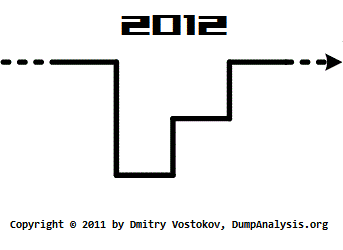
This is a specially commissioned artwork for the first celebration of Memoristmas. Those in the know will instantly recognize processor timing diagram:
- Dmitry Vostokov @ DumpAnalysis.org + TraceAnalysis.org -
Posted in Announcements, Art, Computicart (Computical Art), Memory Analysis Culture, Memory Celebrations | No Comments »
December 12th, 2011
If you are impatient with !analyze -v you can always use a replacement command that shows and sets the context for the current exception so you can quickly get to the possible crashing point (signature):
0:000> .ecxr

eax=00000000 ebx=00000001 ecx=00000000 edx=0018fe40 esi=00426310 edi=00000111

eip=0041ff21 esp=0018f81c ebp=0018f850 iopl=0  nv up ei pl zr na pe nc

cs=0023  ss=002b  ds=002b  es=002b  fs=0053  gs=002b      efl=00010246

*** ERROR: Module load completed but symbols could not be loaded for TestWER.exe

TestWER+0x1ff21:

0041ff21 c7050000000000000000 mov dword ptr ds:[0],0  ds:002b:00000000=????????
0:000> kL

*** Stack trace for last set context - .thread/.cxr resets it

ChildEBP RetAddr

WARNING: Stack unwind information not available. Following frames may be wrong.

0018f850 00403620 TestWER+0x1ff21

0018f860 0040382f TestWER+0x3620

0018f890 00402df6 TestWER+0x382f

0018f8b4 00409ef8 TestWER+0x2df6

0018f904 0040a792 TestWER+0x9ef8

0018f9a0 00406dea TestWER+0xa792

0018f9c0 00409713 TestWER+0x6dea

0018fa28 004097a2 TestWER+0x9713

0018fa48 76f66238 TestWER+0x97a2

0018fa74 76f668ea user32!InternalCallWinProc+0x23

0018faec 76f6cd1a user32!UserCallWinProcCheckWow+0x109

0018fb30 76f6cd81 user32!SendMessageWorker+0x581

0018fb54 74fb4e95 user32!SendMessageW+0x7f

0018fb74 74fb4ef7 comctl32!Button_NotifyParent+0x3d

0018fb90 74fb4d89 comctl32!Button_ReleaseCapture+0x113

0018fbf0 76f66238 comctl32!Button_WndProc+0xa18

0018fc1c 76f668ea user32!InternalCallWinProc+0x23

0018fc94 76f67d31 user32!UserCallWinProcCheckWow+0x109

0018fcf4 76f67dfa user32!DispatchMessageWorker+0x3bc

0018fd04 76f82292 user32!DispatchMessageW+0xf

0018fd30 0040618c user32!IsDialogMessageW+0x5f6

0018fd44 004071e2 TestWER+0x618c

0018fd50 00402dd3 TestWER+0x71e2

0018fd64 00408dc1 TestWER+0x2dd3

0018fd78 00403f35 TestWER+0x8dc1

0018fd90 00404090 TestWER+0x3f35

0018fd9c 00403f80 TestWER+0x4090

0018fda8 004040dd TestWER+0x3f80

0018fde0 00403440 TestWER+0x40dd

0018fe2c 004204ee TestWER+0x3440

0018fee4 0041fdf5 TestWER+0x204ee

0018fef8 0040fc3e TestWER+0x1fdf5

0018ff88 76ce3677 TestWER+0xfc3e

0018ff94 77b89f02 kernel32!BaseThreadInitThunk+0xe

0018ffd4 77b89ed5 ntdll!__RtlUserThreadStart+0x70

0018ffec 00000000 ntdll!_RtlUserThreadStart+0x1b
However, in case of multiple exceptions you still need to do stack trace collection analysis:
0:000> .ecxr

eax=00000030 ebx=7efde000 ecx=750d2dd9 edx=00000000 esi=00000000 edi=00000000

eip=770d280c esp=0037f828 ebp=0037f870 iopl=0  nv up ei pl nz na po nc

cs=0023  ss=002b  ds=002b  es=002b  fs=0053  gs=002b      efl=00000202

KERNELBASE!DebugBreak+0x2:

770d280c cc              int     3
0:000> ~*k 6
.  0  Id: f00.f04 Suspend: 0 Teb: 7efdd000 Unfrozen

ChildEBP RetAddr

0037f1a4 770d0bdd ntdll!NtWaitForMultipleObjects+0x15

0037f240 7529162d KERNELBASE!WaitForMultipleObjectsEx+0x100

0037f288 75291921 kernel32!WaitForMultipleObjectsExImplementation+0xe0

0037f2a4 752b9b2d kernel32!WaitForMultipleObjects+0x18

0037f310 752b9bca kernel32!WerpReportFaultInternal+0x186

0037f324 752b98f8 kernel32!WerpReportFault+0×70
1  Id: f00.f18 Suspend: 1 Teb: 7efda000 Unfrozen

ChildEBP RetAddr

0080f9ac 770d31bb ntdll!NtDelayExecution+0x15

0080fa14 770d3a8b KERNELBASE!SleepEx+0x65

0080fa24 752d28dd KERNELBASE!Sleep+0xf

0080fa38 752b98f8 kernel32!WerpReportFault+0×3f

0080fa48 752b9875 kernel32!BasepReportFault+0×20

0080fad4 77b10df7 kernel32!UnhandledExceptionFilter+0×1af
2  Id: f00.f1c Suspend: 1 Teb: 7efd7000 Unfrozen

ChildEBP RetAddr

00abf640 770d31bb ntdll!NtDelayExecution+0x15

00abf6a8 770d3a8b KERNELBASE!SleepEx+0x65

00abf6b8 752d28dd KERNELBASE!Sleep+0xf

00abf6cc 752b98f8 kernel32!WerpReportFault+0×3f

00abf6dc 752b9875 kernel32!BasepReportFault+0×20

00abf768 77b10df7 kernel32!UnhandledExceptionFilter+0×1af
- Dmitry Vostokov @ DumpAnalysis.org + TraceAnalysis.org -
Posted in Crash Dump Analysis, Debugging, WinDbg Tips and Tricks | 1 Comment »
December 12th, 2011
More than 4 years passed since I provided a longer structuralist definition. Recently I came to recognize a pattern-driven iterative and incremental nature of memory and software trace analysis and post-construction software problem solving in general and therefore a one sentence definition became necessary:
“Recognition and interpretation of patterns of software behavior”
- Dmitry Vostokov @ DumpAnalysis.org + TraceAnalysis.org -
Posted in Announcements, Crash Dump Analysis, Crash Dump Patterns, Malware Analysis, Malware Patterns, Memiotics (Memory Semiotics), Memoretics, Memory Analysis Forensics and Intelligence, Science of Memory Dump Analysis, Science of Software Tracing, Software Behavior Patterns, Software Narratology, Software Problem Solving, Software Trace Analysis, Structural Memory Patterns, Structural Trace Patterns, Trace Analysis Patterns, Victimware | No Comments »
December 12th, 2011
This is an annual celebration at the overflow boundary 31 - 32 [1] (December - January). Its date is kept coincidental with The New Year to allow backward and legacy compatibility. It is an official celebration in memory religion, Memorianity, but it is also an open one and not particularly tied to it similar to other religious celebrations that became secular holidays. A series of special artistic images and pictures have been commissioned for the first Memoristmas, so stay tuned (listen to memory for news). If you are curious about etymology of this new word please take a note that -mas suffix denotes memory analysis service.
Dmitry Vostokov,
Memoriarch
- Dmitry Vostokov @ DumpAnalysis.org + TraceAnalysis.org -
Posted in Announcements, Memory Celebrations, Memory Holidays, Memory Religion (Memorianity), New Words, Religion | No Comments »
December 11th, 2011
When doing software behavior artifact collection, live debugging or postmortem memory dump analysis we must also take into consideration the possibility of Debugger Bugs. I classify them into hard and soft bugs. The former are those software defects and behavioral problems that result in further abnormal software behavior incidents like crashes and hangs. One example is this Microsoft KB article about DebugDiag. Soft debugger bugs usually manifest themselves as glitches in data output, nonsense or false positive diagnostics, for example, this excessive non-paged pool usage message in the output from !vm WinDbg command (see the corresponding MS KB article):
1: kd> !vm
*** Virtual Memory Usage ***

Physical Memory:     1031581 (   4126324 Kb)

Page File: \??\C:\pagefile.sys

Current:   4433524 Kb  Free Space:   4433520 Kb

Minimum:   4433524 Kb  Maximum:     12378972 Kb

Unimplemented error for MiSystemVaTypeCount

Available Pages:      817652 (   3270608 Kb)

ResAvail Pages:       965229 (   3860916 Kb)

Locked IO Pages:           0 (         0 Kb)

Free System PTEs:   33555714 ( 134222856 Kb)

Modified Pages:        15794 (     63176 Kb)

Modified PF Pages:     15793 (     63172 Kb)

NonPagedPool Usage: 88079121 ( 352316484 Kb)

NonPagedPoolNx Usage:  12885 (     51540 Kb)

NonPagedPool Max:     764094 (   3056376 Kb)

********** Excessive NonPaged Pool Usage *****

PagedPool 0 Usage:     35435 (    141740 Kb)

PagedPool 1 Usage:      3620 (     14480 Kb)

PagedPool 2 Usage:       573 (      2292 Kb)

PagedPool 3 Usage:       535 (      2140 Kb)

PagedPool 4 Usage:       538 (      2152 Kb)

PagedPool Usage:       40701 (    162804 Kb)

PagedPool Maximum:  33554432 ( 134217728 Kb)

Session Commit:         9309 (     37236 Kb)

Shared Commit:          6460 (     25840 Kb)

Special Pool:              0 (         0 Kb)

Shared Process:         5760 (     23040 Kb)

PagedPool Commit:      40765 (    163060 Kb)

Driver Commit:          2805 (     11220 Kb)

Committed pages:      212472 (    849888 Kb)

Commit limit:        2139487 (   8557948 Kb)
- Dmitry Vostokov @ DumpAnalysis.org + TraceAnalysis.org -
Posted in Crash Dump Analysis, Crash Dump Patterns, Debugging, Live Debugging, Software Behavior Patterns, Tools | 7 Comments »
December 5th, 2011
On the portal I published my vision of software tools as a service in the context of post-construction software problem solving. The main part is software problem description language (SPDL) which was previously introduced as Riemann programming language. I have decided to keep the name.
- Dmitry Vostokov @ DumpAnalysis.org + TraceAnalysis.org -
Posted in Announcements, Debugging, Debugging Methodology, Riemann Programming Language, SPDL, Software Problem Solving, Software Technical Support, TaaS, Tool Objects, Tools | No Comments »
December 5th, 2011
Sometimes we have a value or a pointer or a handle and would like to know all memory addresses that reference it. This can be done by virtual memory search (s WinDbg command). If you look for references in code (for example, or pool tags please see this case study) you can combine search with !for_each_module WinDbg extension command. There is also !search command for physical pages. We cover this Value References pattern in the forthcoming Advanced Windows Memory Dump Analysis training with a step-by-step complete memory dump analysis exercise. For object references there is also recently added !obtrace command with good examples in WinDbg help.
- Dmitry Vostokov @ DumpAnalysis.org + TraceAnalysis.org -
Posted in Crash Dump Analysis, Crash Dump Patterns, Debugging, WinDbg Tips and Tricks | 4 Comments »
December 4th, 2011
This is a variant of Self-Diagnosis (kernel mode) pattern for system configuration database (registry). Sometimes it is possible to see which part of it (hive) caused the problem. Here’s an example involving possibly corrupt user profiles:
REGISTRY_ERROR (51)

Something has gone badly wrong with the registry.  If a kernel debugger is available, get a stack trace. It can also indicate that the registry got an I/O error while trying to read one of its files, so it can be caused by hardware problems or filesystem corruption. It may occur due to a failure in a refresh operation, which is used only in by the security system, and then only when resource limits are encountered.

Arguments:

Arg1: 00000003, (reserved)

Arg2: 00000004, (reserved)

Arg3: e82372f8, depends on where Windows bugchecked, may be pointer to hive

Arg4: 00000000, depends on where Windows bugchecked, may be return code of HvCheckHive if the hive is corrupt.
0: kd> !reg hivelist
-------------------------------------------------------------------------------------------------------------

| HiveAddr |Stable Length|Stable Map|Volatile Length|Volatile Map|MappedViews|PinnedViews|U(Cnt)| BaseBlock | FileName

-------------------------------------------------------------------------------------------------------------

| e1008a68 |      13000  | e1008ac8 |       1000    |  e1008c04  |        0  |        0  |     0| e1015000  | <NONAME>

| e101a4e0 |     901000  | e1023000 |      40000    |  e101a67c  |      202  |        0  |     0| e101e000  | SYSTEM

| e1938188 |       d000  | e19381e8 |       4000    |  e1938324  |        0  |        0  |     0| e193a000  | <NONAME>

| e1968290 |       8000  | e19682f0 |          0    |  00000000  |        3  |        0  |     0| e1d39000  | \SystemRoot\System32\Config\SAM

| e1cab270 |      3d000  | e1cab2d0 |       1000    |  e1cab40c  |       16  |        0  |     0| e1d32000  | emRoot\System32\Config\SECURITY

| e1c9f448 |    3f70000  | e1e37000 |       1000    |  e1c9f5e4  |      256  |        0  |     0| e1d71000  | temRoot\System32\Config\DEFAULT

| e1d75a80 |    7d5d000  | e1ee3000 |      23000    |  e1d75c1c  |      254  |       12  |     0| e1d37000  | emRoot\System32\Config\SOFTWARE

| e1ba30d0 |      37000  | e1ba3130 |       1000    |  e1ba326c  |       17  |        0  |     0| e1b9e000  | tings\NetworkService\ntuser.dat

| e1ba8060 |       1000  | e1ba80c0 |          0    |  00000000  |        1  |        0  |     0| e1b8e000  | \Microsoft\Windows\UsrClass.dat

| e1afc068 |      3b000  | e1afc0c8 |       1000    |  e1afc204  |       17  |        0  |     0| e1b3d000  | ettings\LocalService\ntuser.dat

| e1d6e2a0 |       1000  | e1d6e300 |          0    |  00000000  |        1  |        0  |     0| e1b39000  | \Microsoft\Windows\UsrClass.dat

[...]

| e82372f8 |     106000  | e8237358 |          0    |  00000000  |       55  |        4  |     0| e514c000  | ings\User123\NTUSER.DAT

[…]

————————————————————————————————————-
0: kd> dt _CMHIVE e82372f8

nt!_CMHIVE

   +0x000 Hive             : _HHIVE

   +0x2d0 FileHandles      : [3] 0x80002234 Void

   +0x2dc NotifyList       : _LIST_ENTRY [ 0x0 - 0x0 ]

   +0x2e4 HiveList         : _LIST_ENTRY [ 0xe7a38d64 - 0xe4d9fc9c ]

   +0x2ec HiveLock         : _EX_PUSH_LOCK

   +0x2f0 ViewLock         : 0x877b0120 _KGUARDED_MUTEX

   +0x2f4 WriterLock       : _EX_PUSH_LOCK

   +0x2f8 FlusherLock      : _EX_PUSH_LOCK

   +0x2fc SecurityLock     : _EX_PUSH_LOCK

   +0x300 LRUViewListHead  : _LIST_ENTRY [ 0xe6160170 - 0xe3d71978 ]

   +0x308 PinViewListHead  : _LIST_ENTRY [ 0xe2714fe0 - 0xe108d9e0 ]

   +0x310 FileObject       : 0x89ecf310 _FILE_OBJECT

   +0x314 FileFullPath     : _UNICODE_STRING "\Device\HarddiskVolumeX\Documents and Settings\User123\NTUSER.DAT"

   +0×31c FileUserName     : _UNICODE_STRING “\??\E:\Documents and Settings\User123\NTUSER.DAT”

   +0×324 MappedViews      : 0×37

   +0×326 PinnedViews      : 4

   +0×328 UseCount         : 0

   +0×32c SecurityCount    : 9

   +0×330 SecurityCacheSize : 9

   +0×334 SecurityHitHint  : 0n0

   +0×338 SecurityCache    : 0xe74d5008 _CM_KEY_SECURITY_CACHE_ENTRY

   +0×33c SecurityHash     : [64] _LIST_ENTRY [ 0xe3f80228 - 0xe5901ef0 ]

   +0×53c UnloadEvent      : (null)

   +0×540 RootKcb          : (null)

   +0×544 Frozen           : 0 ”

   +0×548 UnloadWorkItem   : (null)

   +0×54c GrowOnlyMode     : 0 ”

   +0×550 GrowOffset       : 0

   +0×554 KcbConvertListHead : _LIST_ENTRY [ 0xe823784c - 0xe823784c ]

   +0×55c KnodeConvertListHead : _LIST_ENTRY [ 0xe8237854 - 0xe8237854 ]

   +0×564 CellRemapArray   : (null)

   +0×568 Flags            : 1

   +0×56c TrustClassEntry  : _LIST_ENTRY [ 0xe8237864 - 0xe8237864 ]

   +0×574 FlushCount       : 0

   +0×578 CreatorOwner     : (null)
- Dmitry Vostokov @ DumpAnalysis.org + TraceAnalysis.org -
Posted in Bugchecks Depicted, Crash Dump Analysis, Crash Dump Patterns | No Comments »
December 4th, 2011
Certain System Objects can be found in object directory and can be useful to see additional system and other product activity. For example, in a complete memory dump from Accelerated .NET Memory Dump Analysis training we see that LowCommitCondition event is signalled:
1: kd> !object \KernelObjects

Object: 85a08030  Type: (82b38ed0) Directory

    ObjectHeader: 85a08018 (old version)

    HandleCount: 0  PointerCount: 19

    Directory Object: 85a074c0  Name: KernelObjects
    Hash Address  Type          Name

    ---- -------  ----          ----

     02  82b7b0b8 Event         HighCommitCondition

     04  82b7b780 Event         HighMemoryCondition

     10  82b7b178 Event         LowNonPagedPoolCondition

     11  82b7b138 Event         HighNonPagedPoolCondition

     17  82b7b0f8 Event         LowCommitCondition

     20  82b78d08 Event         SuperfetchParametersChanged

         82b6eb58 Event         BootLoaderTraceReady

     23  84bfdd58 Session       Session0

         82b78c88 Event         PrefetchTracesReady

     24  84b7d1f8 Session       Session1

     25  82b78cc8 Event         SuperfetchScenarioNotify

         82b7b740 Event         LowPagedPoolCondition

     26  82b7b1b8 Event         HighPagedPoolCondition

         82b7a030 Event         MemoryErrors

     28  82b78c48 Event         SuperfetchTracesReady

     32  82b7b7c0 Event         LowMemoryCondition

         85a09d00 KeyedEvent    CritSecOutOfMemoryEvent

     34  82b7b078 Event         MaximumCommitCondition
1: kd> dt _DISPATCHER_HEADER 82b7b0f8

ntdll!_DISPATCHER_HEADER

   +0x000 Type             : 0 ''

   +0x001 Abandoned        : 0 ''

   +0x001 Absolute         : 0 ''

   +0x001 NpxIrql          : 0 ''

   +0x001 Signalling       : 0 ''

   +0x002 Size             : 0x4 ''

   +0x002 Hand             : 0x4 ''

   +0x003 Inserted         : 0 ''

   +0x003 DebugActive      : 0 ''

   +0x003 DpcActive        : 0 ''

   +0x000 Lock             : 0n262144

   +0×004 SignalState      : 0n1

   +0×008 WaitListHead     : _LIST_ENTRY [ 0×82b7b100 - 0×82b7b100 ]
If we check virtual memory statistics we see lots of free space for the currrent physical memory and pagefile:
1: kd> !vm
*** Virtual Memory Usage ***

 Physical Memory:      261872 (   1047488 Kb)

 Page File: \??\C:\pagefile.sys

   Current:   1354688 Kb  Free Space:     53120 Kb

   Minimum:   1354688 Kb  Maximum:      4194304 Kb

 Available Pages:      180984 (    723936 Kb)

 ResAvail Pages:       216475 (    865900 Kb)

 Locked IO Pages:           0 (         0 Kb)

 Free System PTEs:     352925 (   1411700 Kb)

 Modified Pages:          129 (       516 Kb)

 Modified PF Pages:        94 (       376 Kb)

 NonPagedPool Usage:        0 (         0 Kb)

 NonPagedPoolNx Usage:  16894 (     67576 Kb)

 NonPagedPool Max:     192350 (    769400 Kb)

 PagedPool 0 Usage:      5957 (     23828 Kb)

 PagedPool 1 Usage:      3218 (     12872 Kb)

 PagedPool 2 Usage:       965 (      3860 Kb)

 PagedPool 3 Usage:      1311 (      5244 Kb)

 PagedPool 4 Usage:      1064 (      4256 Kb)

 PagedPool Usage:       12515 (     50060 Kb)

 PagedPool Maximum:    523264 (   2093056 Kb)

 Session Commit:         5021 (     20084 Kb)

 Shared Commit:         15023 (     60092 Kb)

 Special Pool:              0 (         0 Kb)

 Shared Process:         1938 (      7752 Kb)

 PagedPool Commit:      12523 (     50092 Kb)

 Driver Commit:          2592 (     10368 Kb)

 Committed pages:      402494 (   1609976 Kb)

 Commit limit:         589254 (   2357016 Kb)

[...]
Another example is from Windows 7 memory dump I used for Fundamentals of Complete Crash and Hang Memory Dump Analysis presentation. Here we can find WER reporting mutant in session 1 object directory and get problem PID from its name:
0: kd> !object \Sessions\1\BaseNamedObjects\

Object: fffff8a0016eb290  Type: (fffffa800426df30) Directory

    ObjectHeader: fffff8a0016eb260 (new version)

    HandleCount: 57  PointerCount: 217

    Directory Object: fffff8a0016e9220  Name: BaseNamedObjects
    Hash Address          Type          Name

    ---- -------          ----          ----

     00  fffffa8008437670 Event         STOP_HOOKING64

[...]

    08  fffffa80044baa40 Mutant        WERReportingForProcess1788

[…]
0: kd> !process 0n1788 1

Searching for Process with Cid == 6fc

Cid handle table at fffff8a00180b000 with 21248 entries in use
PROCESS fffffa8004364060

    SessionId: 1  Cid: 06fc    Peb: 7fffffd4000  ParentCid: 0840

    DirBase: 5fbc2000  ObjectTable: fffff8a004c8e930  HandleCount:  16.

    Image: ApplicationD.exe

    VadRoot fffffa8009d85170 Vads 34 Clone 0 Private 206. Modified 0. Locked 0.

    DeviceMap fffff8a001ce6b90

    Token                             fffff8a003eab060

    ElapsedTime                       00:01:51.543

    UserTime                          00:00:00.000

    KernelTime                        00:00:00.000

    QuotaPoolUsage[PagedPool]         0

    QuotaPoolUsage[NonPagedPool]      0

    Working Set Sizes (now,min,max)  (483, 50, 345) (1932KB, 200KB, 1380KB)

    PeakWorkingSetSize                483

    VirtualSize                       13 Mb

    PeakVirtualSize                   13 Mb

    PageFaultCount                    481

    MemoryPriority                    BACKGROUND

    BasePriority                      8

    CommitCharge                      231
- Dmitry Vostokov @ DumpAnalysis.org + TraceAnalysis.org -
Posted in Crash Dump Analysis, Crash Dump Patterns, Debugging, Memory Dump Analysis Services, Training and Seminars, Windows 7 | No Comments »
December 3rd, 2011
In addition to functions we also have module variables like nt!MmPagedPoolCommit in Windows 7:
0: kd> x nt!MmPagedPool*

fffff800`031148d0 nt!MmPagedPoolInfo = <no type information>

fffff800`03092d20 nt!MmPagedPoolCommit = <no type information>

fffff800`031141a0 nt!MmPagedPoolEnd = <no type information>

fffff800`031175c0 nt!MmPagedPoolWs = <no type information>
If we are not sure whether we have a function or Module Variable we can try to disassemble:
0: kd> u nt!MmPagedPoolCommit

nt!MmPagedPoolCommit:

fffff800`03092d20 e3b2            jrcxz   nt!MmTotalNonPagedPoolQuota+0x4 (fffff800`03092cd4)

fffff800`03092d22 0000            add     byte ptr [rax],al

fffff800`03092d24 0000            add     byte ptr [rax],al

fffff800`03092d26 0000            add     byte ptr [rax],al

fffff800`03092d28 0000            add     byte ptr [rax],al

fffff800`03092d2a 0000            add     byte ptr [rax],al

fffff800`03092d2c 0000            add     byte ptr [rax],al

fffff800`03092d2e 0000            add     byte ptr [rax],al
Here the value is probably in pages so we multiply by 4 to get Kb value and compare to the output of !vm command:
0: kd> dp nt!MmPagedPoolCommit

fffff800`03092d20  00000000`0000b2e3 00000000`00000000

fffff800`03092d30  00000000`00000000 00000000`00000000

fffff800`03092d40  00000000`00000001 00000000`00000000

fffff800`03092d50  00000000`00000000 00000000`00060107

fffff800`03092d60  fffff800`03092d60 fffff800`03092d60

fffff800`03092d70  00000000`00000000 00000000`0001e972

fffff800`03092d80  fffff900`c0000000 00000000`00000002

fffff800`03092d90  fffff880`071dc0a8 fffff880`057340a8
0: kd> ? b2e3 * 4

Evaluate expression: 183180 = 00000000`0002cb8c
0: kd> !vm
*** Virtual Memory Usage ***

 Physical Memory:     1035228 (   4140912 Kb)

 Page File: \??\C:\pagefile.sys

   Current:   4448112 Kb  Free Space:   4448108 Kb

   Minimum:   4448112 Kb  Maximum:     12422736 Kb

Unimplemented error for MiSystemVaTypeCount

 Available Pages:      594029 (   2376116 Kb)

 ResAvail Pages:       889795 (   3559180 Kb)

 Locked IO Pages:           0 (         0 Kb)

 Free System PTEs:   33556870 ( 134227480 Kb)

 Modified Pages:        20079 (     80316 Kb)

 Modified PF Pages:     19441 (     77764 Kb)

 NonPagedPool Usage: 50865104 ( 203460416 Kb)

 NonPagedPoolNx Usage:  28163 (    112652 Kb)

 NonPagedPool Max:     763396 (   3053584 Kb)

 ********** Excessive NonPaged Pool Usage *****

 PagedPool 0 Usage:     39420 (    157680 Kb)

 PagedPool 1 Usage:      5194 (     20776 Kb)

 PagedPool 2 Usage:       367 (      1468 Kb)

 PagedPool 3 Usage:       338 (      1352 Kb)

 PagedPool 4 Usage:       440 (      1760 Kb)

 PagedPool Usage:       45759 (    183036 Kb)

 PagedPool Maximum:  33554432 ( 134217728 Kb)

 Session Commit:         8112 (     32448 Kb)

 Shared Commit:         31802 (    127208 Kb)

 Special Pool:              0 (         0 Kb)

 Shared Process:        10765 (     43060 Kb)

 PagedPool Commit:      45795 (    183180 Kb)

 Driver Commit:         13773 (     55092 Kb)

 Committed pages:      540998 (   2163992 Kb)

 Commit limit:        2146794 (   8587176 Kb)

[…]
Knowledge of available module variables is useful because some of them are not included in WinDbg extension command output. For their list please consult Windows Internals book. Also useful variables can be found in other modules as well, for example, srv!srvcomputername:
0: kd> dS srv!srvcomputername

fffff8a0`0344b090  "MYNOTEBOOK"
- Dmitry Vostokov @ DumpAnalysis.org + TraceAnalysis.org -
Posted in Assembly Language, Crash Dump Analysis, Crash Dump Patterns, Debugging, Windows 7 | 1 Comment »
December 3rd, 2011
Sometimes we need to narrow general stack trace collection to a few threads that satisfy some predicate, for example, all threads with kernel time spent greater than some value or all suspended threads or all threads that wait for a specific synchronization object type. We call this pattern variant Stack Trace Collection (predicate). This can be implemented using WinDbg scripts and / or debugger extensions.
- Dmitry Vostokov @ DumpAnalysis.org + TraceAnalysis.org -
Posted in Crash Dump Analysis, Crash Dump Patterns, Debugging, WinDbg Scripts | 3 Comments »
December 3rd, 2011
If not for you then definitely for me because I now diagnose Spiking Thread pattern much faster. One of the readers if this blog asked me whether there is !runaway command equivalent for kernel and complete memory dumps. So, after some thinking I gave it a try especially in the context of WinDbg scripting exercises designed for Advanced Windows Memory Dump Analysis training. As a result I wrote 2 scripts initially that you can try yourself. Their output here is taken from a complete memory dump I used for Fundamentals of Complete Crash and Hang Memory Dump Analysis presentation.
The first one dumps the most CPU consuming threads for user and kernel mode:
$$

$$ krunawaymost.wds

$$ Copyright (c) 2011 Memory Dump Analysis Services

$$ GNU GENERAL PUBLIC LICENSE

$$ http://www.gnu.org/licenses/gpl-3.0.txt

$$

r $t0 = 0

!for_each_thread “r $t1 = dwo( @#Thread + @@c++(#FIELD_OFFSET(nt!_KTHREAD, UserTime)) ); .if (@$t1 > @$t0) {r $t0 = @$t1; r $t2 = @#Thread}”

.echo “The largest UserTime value: ”

? @$t0

!thread @$t2 ff

r $t0 = 0

!for_each_thread “r $t1 = dwo( @#Thread + @@c++(#FIELD_OFFSET(nt!_KTHREAD, KernelTime)) ); .if (@$t1 > @$t0) {r $t0 = @$t1; r $t2 = @#Thread}”

.echo “The largest KernelTime value: ”

? @$t0

!thread @$t2 ff
0: kd> $$><c:\Scripts\krunawaymost.wds

The largest UserTime value:

Evaluate expression: 5470 = 00000000`0000155e

THREAD fffffa800451d720  Cid 1418.17fc  Teb: 000007fffffdc000 Win32Thread: 0000000000000000 RUNNING on processor 2

Not impersonating

DeviceMap                 fffff8a001ce6b90

Owning Process            fffffa800442ab30       Image:         ApplicationE.exe

Attached Process          N/A            Image:         N/A

Wait Start TickCount      22295          Ticks: 0

Context Switch Count      27960

UserTime                  00:01:25.332

KernelTime                00:00:00.015

*** ERROR: Module load completed but symbols could not be loaded for ApplicationE.exe

Win32 Start Address ApplicationE (0×000000013f0f1578)

Stack Init fffff8800723cc70 Current fffff8800723c960

Base fffff8800723d000 Limit fffff88007237000 Call 0

Priority 8 BasePriority 8 UnusualBoost 0 ForegroundBoost 0 IoPriority 2 PagePriority 5

Child-SP          RetAddr           Call Site

00000000`0021f9e0 00000000`00000000 ApplicationE+0×6cd3
The largest KernelTime value:

Evaluate expression: 187 = 00000000`000000bb

THREAD fffffa80098d7b60  Cid 07bc.0a14  Teb: 000007fffffd7000 Win32Thread: fffff900c2ca0c20 WAIT: (UserRequest) KernelMode Non-Alertable

    fffffa8008a4a030  NotificationEvent

Not impersonating

DeviceMap                 fffff8a001ce6b90

Owning Process            fffffa80096beb30       Image:         dwm.exe

Attached Process          N/A            Image:         N/A

Wait Start TickCount      22294          Ticks: 1 (0:00:00:00.015)

Context Switch Count      15473                 LargeStack

UserTime                  00:00:06.801

KernelTime                00:00:02.917

Win32 Start Address dwmcore!CPartitionThread::ThreadMain (0×000007fef8a1f0d8)

Stack Init fffff8800d3d5c70 Current fffff8800d3d5740

Base fffff8800d3d6000 Limit fffff8800d3cf000 Call 0

Priority 15 BasePriority 15 UnusualBoost 0 ForegroundBoost 0 IoPriority 2 PagePriority 5

Child-SP          RetAddr           Call Site

fffff880`0d3d5780 fffff800`02ee6f32 nt!KiSwapContext+0×7a

fffff880`0d3d58c0 fffff800`02ee974f nt!KiCommitThreadWait+0×1d2

fffff880`0d3d5950 fffff880`0fef65b3 nt!KeWaitForSingleObject+0×19f

fffff880`0d3d59f0 fffff960`001fedea dxgkrnl!DxgkWaitForVerticalBlankEvent+0×53f

fffff880`0d3d5ab0 fffff800`02ee0ed3 win32k!NtGdiDdDDIWaitForVerticalBlankEvent+0×12

fffff880`0d3d5ae0 000007fe`ff1d143a nt!KiSystemServiceCopyEnd+0×13 (TrapFrame @ fffff880`0d3d5ae0)

00000000`0287f778 000007fe`f8791da1 GDI32!NtGdiDdDDIWaitForVerticalBlankEvent+0xa

00000000`0287f780 000007fe`f89e1b6e dxgi!CDXGIOutput::WaitForVBlank+0×51

00000000`0287f7c0 000007fe`f89e1ae9 dwmcore!CD3DDeviceLevel1::WaitForVBlank+0×1f9

00000000`0287f810 000007fe`f89e1a9d dwmcore!CHwDisplayRenderTarget::WaitForVBlank+0×39

00000000`0287f850 000007fe`f89e1a4c dwmcore!CDesktopRenderTarget::WaitForVBlank+0×40

00000000`0287f880 000007fe`f89d3513 dwmcore!CSlaveHWndRenderTarget::WaitForVBlank+0×2c

00000000`0287f8c0 000007fe`f89d3584 dwmcore!CRenderTargetManager::WaitForVBlank+0×7d

00000000`0287f900 000007fe`f89d2661 dwmcore!CPartitionVerticalBlankScheduler::WaitForVBlank+0×7c

00000000`0287f950 000007fe`f8a1f0f4 dwmcore!CPartitionVerticalBlankScheduler::Run+0xe5

00000000`0287f9b0 00000000`7719652d dwmcore!CPartitionThread::ThreadMain+0×1c

00000000`0287f9e0 00000000`772cc521 kernel32!BaseThreadInitThunk+0xd

00000000`0287fa10 00000000`00000000 ntdll!RtlUserThreadStart+0×1d
The second script takes two arguments and shows all threads that have UserTime and KernelTime ticks value greater than (you can have the idea of the maximum from the previous script):
$$

$$ krunawaygt.wds

$$ Copyright (c) 2011 Memory Dump Analysis Services

$$ GNU GENERAL PUBLIC LICENSE

$$ http://www.gnu.org/licenses/gpl-3.0.txt

$$

!for_each_thread “r $t1 = dwo( @#Thread + @@c++(#FIELD_OFFSET(nt!_KTHREAD, UserTime)) ); r $t0 = $arg1; .if (@$t1 > @$t0) {!thread @#Thread ff}”

!for_each_thread “r $t1 = dwo( @#Thread + @@c++(#FIELD_OFFSET(nt!_KTHREAD, KernelTime)) ); r $t0 = $arg2; .if (@$t1 > @$t0) {!thread @#Thread ff}”
Using hints from the previous script run (the largest UserTime ticks value is 0×155e) we now get threads that spent more than 0×100 ticks in user mode:
0: kd> $$>a<c:\Scripts\krunawaygt.wds 100 100

THREAD fffffa800843e060  Cid 03f4.0658  Teb: 000007fffff90000 Win32Thread: 0000000000000000 WAIT: (WrQueue) UserMode Non-Alertable

    fffffa800843c2c0  QueueObject

Not impersonating

DeviceMap                 fffff8a000008aa0

Owning Process            fffffa800916b060       Image:         MsMpEng.exe

Attached Process          N/A            Image:         N/A

Wait Start TickCount      21211          Ticks: 1084 (0:00:00:16.910)

Context Switch Count      6028

UserTime                  00:00:10.140

KernelTime                00:00:00.296

Win32 Start Address msvcrt!endthreadex (0×000007feff5173fc)

Stack Init fffff88009d4bc70 Current fffff88009d4b660

Base fffff88009d4c000 Limit fffff88009d46000 Call 0

Priority 9 BasePriority 8 UnusualBoost 0 ForegroundBoost 0 IoPriority 2 PagePriority 5

*** ERROR: Symbol file could not be found.  Defaulted to export symbols for mprtp.dll -

Child-SP          RetAddr           Call Site

fffff880`09d4b6a0 fffff800`02ee6f32 nt!KiSwapContext+0×7a

fffff880`09d4b7e0 fffff800`02ee9f93 nt!KiCommitThreadWait+0×1d2

fffff880`09d4b870 fffff800`031ca647 nt!KeRemoveQueueEx+0×323

fffff880`09d4b930 fffff800`0319cae5 nt!IoRemoveIoCompletion+0×47

fffff880`09d4b9c0 fffff800`02ee0ed3 nt!NtRemoveIoCompletion+0×145

fffff880`09d4ba70 00000000`772f13aa nt!KiSystemServiceCopyEnd+0×13 (TrapFrame @ fffff880`09d4bae0)

00000000`0209fb08 000007fe`fd9e169d ntdll!ZwRemoveIoCompletion+0xa

00000000`0209fb10 00000000`7718a4e1 KERNELBASE!GetQueuedCompletionStatus+0×39

00000000`0209fb70 00000000`748f2c74 kernel32!GetQueuedCompletionStatusStub+0×11

00000000`0209fbb0 00000000`0045cbc0 mprtp!MpPluginSignatureChange+0×3e170

00000000`0209fbb8 000007fe`fbac25ff 0×45cbc0

00000000`0209fbc0 00000000`00466610 FLTLIB!FilterGetMessage+0×2b

00000000`0209fc20 00000000`00000000 0×466610
THREAD fffffa800845c060  Cid 03f4.065c  Teb: 000007fffff8e000 Win32Thread: 0000000000000000 WAIT: (WrQueue) UserMode Non-Alertable

    fffffa800843c2c0  QueueObject

Not impersonating

DeviceMap                 fffff8a000008aa0

Owning Process            fffffa800916b060       Image:         MsMpEng.exe

Attached Process          N/A            Image:         N/A

Wait Start TickCount      21520          Ticks: 775 (0:00:00:12.090)

Context Switch Count      4979

UserTime                  00:00:04.149

KernelTime                00:00:00.156

Win32 Start Address msvcrt!endthreadex (0×000007feff5173fc)

Stack Init fffff88009d52c70 Current fffff88009d52660

Base fffff88009d53000 Limit fffff88009d4d000 Call 0

Priority 8 BasePriority 8 UnusualBoost 0 ForegroundBoost 0 IoPriority 2 PagePriority 5

*** ERROR: Symbol file could not be found.  Defaulted to export symbols for mprtp.dll -

Child-SP          RetAddr           Call Site

fffff880`09d526a0 fffff800`02ee6f32 nt!KiSwapContext+0×7a

fffff880`09d527e0 fffff800`02ee9f93 nt!KiCommitThreadWait+0×1d2

fffff880`09d52870 fffff800`031ca647 nt!KeRemoveQueueEx+0×323

fffff880`09d52930 fffff800`0319cae5 nt!IoRemoveIoCompletion+0×47

fffff880`09d529c0 fffff800`02ee0ed3 nt!NtRemoveIoCompletion+0×145

fffff880`09d52a70 00000000`772f13aa nt!KiSystemServiceCopyEnd+0×13 (TrapFrame @ fffff880`09d52ae0)

00000000`01ccf498 000007fe`fd9e169d ntdll!ZwRemoveIoCompletion+0xa

00000000`01ccf4a0 00000000`7718a4e1 KERNELBASE!GetQueuedCompletionStatus+0×39

00000000`01ccf500 00000000`748f2c74 kernel32!GetQueuedCompletionStatusStub+0×11

00000000`01ccf540 00000000`0045d030 mprtp!MpPluginSignatureChange+0×3e170

00000000`01ccf548 000007fe`fbac25ff 0×45d030

00000000`01ccf550 00000000`004666b0 FLTLIB!FilterGetMessage+0×2b

00000000`01ccf5b0 00000000`00000000 0×4666b0
THREAD fffffa80092b7060  Cid 03f4.1268  Teb: 000007fffff6a000 Win32Thread: 0000000000000000 WAIT: (WrQueue) UserMode Alertable

    fffffa8009299140  QueueObject

Not impersonating

DeviceMap                 fffff8a000008aa0

Owning Process            fffffa800916b060       Image:         MsMpEng.exe

Attached Process          N/A            Image:         N/A

Wait Start TickCount      7762           Ticks: 14533 (0:00:03:46.716)

Context Switch Count      3297

UserTime                  00:00:06.489

KernelTime                00:00:00.499

Win32 Start Address ntdll!TppWorkerThread (0×00000000772bfbc0)

Stack Init fffff8800e620c70 Current fffff8800e620680

Base fffff8800e621000 Limit fffff8800e61b000 Call 0

Priority 8 BasePriority 8 UnusualBoost 0 ForegroundBoost 0 IoPriority 2 PagePriority 5

Child-SP          RetAddr           Call Site

fffff880`0e6206c0 fffff800`02ee6f32 nt!KiSwapContext+0×7a

fffff880`0e620800 fffff800`02ee9f93 nt!KiCommitThreadWait+0×1d2

fffff880`0e620890 fffff800`031ca647 nt!KeRemoveQueueEx+0×323

fffff880`0e620950 fffff800`02ecdb36 nt!IoRemoveIoCompletion+0×47

fffff880`0e6209e0 fffff800`02ee0ed3 nt!NtWaitForWorkViaWorkerFactory+0×285

fffff880`0e620ae0 00000000`772f2c1a nt!KiSystemServiceCopyEnd+0×13 (TrapFrame @ fffff880`0e620ae0)

00000000`0540f998 00000000`772bfe0b ntdll!ZwWaitForWorkViaWorkerFactory+0xa

00000000`0540f9a0 00000000`7719652d ntdll!TppWorkerThread+0×2c9

00000000`0540fca0 00000000`772cc521 kernel32!BaseThreadInitThunk+0xd

00000000`0540fcd0 00000000`00000000 ntdll!RtlUserThreadStart+0×1d
THREAD fffffa80098d7b60  Cid 07bc.0a14  Teb: 000007fffffd7000 Win32Thread: fffff900c2ca0c20 WAIT: (UserRequest) KernelMode Non-Alertable

    fffffa8008a4a030  NotificationEvent

Not impersonating

DeviceMap                 fffff8a001ce6b90

Owning Process            fffffa80096beb30       Image:         dwm.exe

Attached Process          N/A            Image:         N/A

Wait Start TickCount      22294          Ticks: 1 (0:00:00:00.015)

Context Switch Count      15473                 LargeStack

UserTime                  00:00:06.801

KernelTime                00:00:02.917

Win32 Start Address dwmcore!CPartitionThread::ThreadMain (0×000007fef8a1f0d8)

Stack Init fffff8800d3d5c70 Current fffff8800d3d5740

Base fffff8800d3d6000 Limit fffff8800d3cf000 Call 0

Priority 15 BasePriority 15 UnusualBoost 0 ForegroundBoost 0 IoPriority 2 PagePriority 5

Child-SP          RetAddr           Call Site

fffff880`0d3d5780 fffff800`02ee6f32 nt!KiSwapContext+0×7a

fffff880`0d3d58c0 fffff800`02ee974f nt!KiCommitThreadWait+0×1d2

fffff880`0d3d5950 fffff880`0fef65b3 nt!KeWaitForSingleObject+0×19f

fffff880`0d3d59f0 fffff960`001fedea dxgkrnl!DxgkWaitForVerticalBlankEvent+0×53f

fffff880`0d3d5ab0 fffff800`02ee0ed3 win32k!NtGdiDdDDIWaitForVerticalBlankEvent+0×12

fffff880`0d3d5ae0 000007fe`ff1d143a nt!KiSystemServiceCopyEnd+0×13 (TrapFrame @ fffff880`0d3d5ae0)

00000000`0287f778 000007fe`f8791da1 GDI32!NtGdiDdDDIWaitForVerticalBlankEvent+0xa

00000000`0287f780 000007fe`f89e1b6e dxgi!CDXGIOutput::WaitForVBlank+0×51

00000000`0287f7c0 000007fe`f89e1ae9 dwmcore!CD3DDeviceLevel1::WaitForVBlank+0×1f9

00000000`0287f810 000007fe`f89e1a9d dwmcore!CHwDisplayRenderTarget::WaitForVBlank+0×39

00000000`0287f850 000007fe`f89e1a4c dwmcore!CDesktopRenderTarget::WaitForVBlank+0×40

00000000`0287f880 000007fe`f89d3513 dwmcore!CSlaveHWndRenderTarget::WaitForVBlank+0×2c

00000000`0287f8c0 000007fe`f89d3584 dwmcore!CRenderTargetManager::WaitForVBlank+0×7d

00000000`0287f900 000007fe`f89d2661 dwmcore!CPartitionVerticalBlankScheduler::WaitForVBlank+0×7c

00000000`0287f950 000007fe`f8a1f0f4 dwmcore!CPartitionVerticalBlankScheduler::Run+0xe5

00000000`0287f9b0 00000000`7719652d dwmcore!CPartitionThread::ThreadMain+0×1c

00000000`0287f9e0 00000000`772cc521 kernel32!BaseThreadInitThunk+0xd

00000000`0287fa10 00000000`00000000 ntdll!RtlUserThreadStart+0×1d
THREAD fffffa800451d720  Cid 1418.17fc  Teb: 000007fffffdc000 Win32Thread: 0000000000000000 RUNNING on processor 2

Not impersonating

DeviceMap                 fffff8a001ce6b90

Owning Process            fffffa800442ab30       Image:         ApplicationE.exe

Attached Process          N/A            Image:         N/A

Wait Start TickCount      22295          Ticks: 0

Context Switch Count      27960

UserTime                  00:01:25.332

KernelTime                00:00:00.015

*** ERROR: Module load completed but symbols could not be loaded for ApplicationE.exe

Win32 Start Address ApplicationE (0×000000013f0f1578)

Stack Init fffff8800723cc70 Current fffff8800723c960

Base fffff8800723d000 Limit fffff88007237000 Call 0

Priority 8 BasePriority 8 UnusualBoost 0 ForegroundBoost 0 IoPriority 2 PagePriority 5

Child-SP          RetAddr           Call Site

00000000`0021f9e0 00000000`00000000 ApplicationE+0×6cd3
Memory Dump Analysis Services is now working to incorporate client-side WinDbg scripting into their CARE2 architecture.
- Dmitry Vostokov @ DumpAnalysis.org + TraceAnalysis.org -
Posted in Announcements, Complete Memory Dump Analysis, Crash Analysis Report Environment (CARE), Crash Dump Analysis, Crash Dump Patterns, Debugging, Memory Dump Analysis Services, Training and Seminars, WinDbg Scripts, WinDbg Tips and Tricks, x64 Windows | No Comments »
November 29th, 2011
A page to reference all different kinds of exception related patterns is necessary, so I created this post:
I’ll update it as soon as I add more similar patterns.
- Dmitry Vostokov @ DumpAnalysis.org + TraceAnalysis.org -
Posted in Crash Dump Analysis, Crash Dump Patterns, Debugging | No Comments »
November 29th, 2011
One pattern I missed is called FPU Exception and it sometimes happens where you least expect it. Here’s extract from one crash dump raw stack analysis showing exception context, record and the usage of r WinDbg command variant to display FPU registers:
0:002> dps 056c1000 057c0000

[...]

057bdee0  00000008

057bdee4  00000000

057bdee8  057bed6c

057bdeec  0d6e3130

057bdef0  057c0000

057bdef4  057b9000

057bdef8  006e3138

057bdefc  057be200

057bdf00  7c90e48a ntdll!KiUserExceptionDispatcher+0xe

057bdf04  057bed6c

057bdf08  057bdf2c

057bdf0c  057bdf14

057bdf10  057bdf2c

057bdf14  c0000090

057bdf18  00000010

057bdf1c  00000000

057bdf20  79098cc0 mscorjit!Compiler::FlatFPIsSameAsFloat+0xd

057bdf24  00000001

057bdf28  00000000

057bdf2c  0001003f

057bdf30  00000000

057bdf34  00000000

057bdf38  00000000

057bdf3c  00000000

057bdf40  00000000

057bdf44  00000000

057bdf48  ffff1372

057bdf4c  fffffda1

057bdf50  ffffbfff

[…]
0:002> .cxr 057bdf2c

eax=c0000090 ebx=00000000 ecx=c0000090 edx=00000000 esi=057be244 edi=001d4388

eip=79f5236b esp=057be1f8 ebp=057be200 iopl=0         nv up ei ng nz ac pe cy

cs=001b  ss=0023  ds=0023  es=0023  fs=003b  gs=0000             efl=00010297

mscorwks!SOTolerantBoundaryFilter+0x22:

79f5236b d9059823f579    fld     dword ptr [mscorwks!_real (79f52398)] ds:0023:79f52398=40800000
0:002> .exr 057bdf14

ExceptionAddress: 79098cc0 (mscorjit!Compiler::FlatFPIsSameAsFloat+0x0000000d)

   ExceptionCode: c0000090

  ExceptionFlags: 00000010

NumberParameters: 1

   Parameter[0]: 00000000
0:002> !error c0000090

Error code: (NTSTATUS) 0xc0000090 (3221225616) - {EXCEPTION}  Floating-point invalid operation.
0:002> rMF

Last set context:

eax=c0000090 ebx=00000000 ecx=c0000090 edx=00000000 esi=057be244 edi=001d4388

eip=79f5236b esp=057be1f8 ebp=057be200 iopl=0         nv up ei ng nz ac pe cy

cs=001b  ss=0023  ds=0023  es=0023  fs=003b  gs=0000             efl=00010297

fpcw=1372: rn 64 pu–d-  fpsw=FDA1: top=7 cc=1101 b-p—-i  fptw=BFFF

fopcode=045D  fpip=001b:79098cc0  fpdp=0023:057bea7c

st0=-1.#IND00000000000000000e+0000  st1= 0.006980626232475338220e-4916

st2= 6.543831490564206840810e-4932  st3=-0.003025663186207448300e+2614

st4= 2.000000000000000000000e+0000  st5= 6.291456000000000000000e+0006

st6= 1.000000000000000000000e+0000  st7= 2.500000000000000000000e-0001

mscorwks!SOTolerantBoundaryFilter+0×22:

79f5236b d9059823f579    fld     dword ptr [mscorwks!_real (79f52398)] ds:0023:79f52398=40800000
- Dmitry Vostokov @ DumpAnalysis.org + TraceAnalysis.org -
Posted in Crash Dump Analysis, Crash Dump Patterns, Debugging, WinDbg Tips and Tricks | No Comments »
November 22nd, 2011
If memory is the foundation of everything and the first principle then what about matter? We view matter as curvature of memory (currently metaphorically) and also as a constraining “filter” device that limits (and processes) memories. The latter view of limits is similar to some theories viewing brain (body) as a constraining device for mental reality (consciousness)*.
(*) Irreducible Mind (Kelly & Kelly et al.), pp. 28-29
- Dmitry Vostokov @ DumpAnalysis.org + TraceAnalysis.org -
Posted in Memoidealism, Metaphysics of Memory Worldview, Philosophy | No Comments »
November 22nd, 2011
Frequently we observe that several trace messages form a single semantic unit we call Macrofunction where individual trace messages serve the role of microfunctions. We borrowed this idea and distinction from functionalist linguistics. An example would be a software trace fragment where messages log an attempt to update a database:
#     Module   PID  TID   Time         Message

[...]

42582 DBClient 5492 9476  11:04:33.398 Opening connection

[...]

42585 DBClient 5492 9476  11:04:33.398 Sending SQL command

[...]

42589 DBServer 6480 10288 11:04:33.399 Executing SQL command

[...]

42592 DBClient 5492 9476  11:04:33.400 Closing connection

[...]
Please note that these macrofunctions need not be from the same ATID in the traditional sense like in the example above unless we form adjoint threads from certain fragments like “DB”.
- Dmitry Vostokov @ DumpAnalysis.org + TraceAnalysis.org -
Posted in Debugging, Software Narratology, Software Trace Analysis, Software Trace Linguistics, Trace Analysis Patterns | No Comments »
November 17th, 2011
LoL - Law of Large
Examples: Q. How did you resolve this support case? A. LoL number!
Explanation: The more support incidents you get, the larger their tracking numbers. So at some stage the law of large numbers comes into effect: there is always a similar incident in the past. Don’t confuse with LOL.
- Dmitry Vostokov @ DumpAnalysis.org + TraceAnalysis.org -
Posted in Debugging, Debugging Slang, Escalation Engineering, Fun with Debugging, Laws of Troubleshooting and Debugging, Mathematics of Technical Support, Software Technical Support | No Comments »
November 14th, 2011
This is a new exiting book project I’m working on now scheduled for release in 2012 with ISBN 978-1908043337. If your company would like to have its programs considered for inclusion please let me know and send a copy just in case I would need to include screenshots. I’ll update about this project soon.
Posted in Announcements, Books, Software and History | No Comments »