Archive for the ‘Code Reading’ Category

Forthcoming Memory Dump Analysis Anthology, Volume 3

Saturday, September 26th, 2009

This is a revised, edited, cross-referenced and thematically organized volume of selected DumpAnalysis.org blog posts about crash dump analysis and debugging written in October 2008 - June 2009 for software engineers developing and maintaining products on Windows platforms, quality assurance engineers testing software on Windows platforms and technical support and escalation engineers dealing with complex software issues. The third volume features:

- 15 new crash dump analysis patterns
- 29 new pattern interaction case studies
- Trace analysis patterns
- Updated checklist
- Fully cross-referenced with Volume 1 and Volume 2
- New appendixes

Product information:

  • Title: Memory Dump Analysis Anthology, Volume 3
  • Author: Dmitry Vostokov
  • Language: English
  • Product Dimensions: 22.86 x 15.24
  • Paperback: 404 pages
  • Publisher: Opentask (20 December 2009)
  • ISBN-13: 978-1-906717-43-8
  • Hardcover: 404 pages
  • Publisher: Opentask (30 January 2010)
  • ISBN-13: 978-1-906717-44-5

Back cover features 3D computer memory visualization image.

- Dmitry Vostokov @ DumpAnalysis.org -

Counterfactual Debugging: Data Ordering

Tuesday, September 15th, 2009

Having discussed dereference fixpoints we come back to the quiz code and see what happens when we execute it after compilation as default Debug target with Debug Information Format set to Program Database to avoid extra stack space allocation:

int _tmain(int argc, _TCHAR* argv[])
{
   char c;
   char* pc = &c;
   while(1)
   {
     *pc = 0;
     pc++;
   }


   return 0;
}

Expecting crashes I created the following key HKEY_LOCAL_MACHINE \ SOFTWARE \ Microsoft \ Windows \ Windows Error Reporting \ LocalDumps with the following values: DumpFolder (REG_EXPAND_SZ) and DumpType (2, Full).

When running the compiled program I noticed that it crashed according to my expectations. The saved dump StackErasure.exe.2096.dmp confirmed that the crash was due to the stack underflow when it hit the base address:

0:000> r
eax=002c0000 ebx=7efde000 ecx=00000001 edx=002c0000 esi=00000000 edi=00000000
eip=00e11039 esp=002bf7c4 ebp=002bf7d4 iopl=0         nv up ei pl nz na po nc
cs=0023  ss=002b  ds=002b  es=002b  fs=0053  gs=002b             efl=00010202
StackErasure!wmain+0x29:
00e11039 c60200          mov     byte ptr [edx],0           ds:002b:002c0000=??

0:000> !teb
TEB at 7efdd000
    ExceptionList:        002bf810
    StackBase:            002c0000
    StackLimit:           002be000
    SubSystemTib:         00000000
    FiberData:            00001e00
    ArbitraryUserPointer: 00000000
    Self:                 7efdd000
    EnvironmentPointer:   00000000
    ClientId:             00000830 . 00000a78
    RpcHandle:            00000000
    Tls Storage:          7efdd02c
    PEB Address:          7efde000
    LastErrorValue:       0
    LastStatusValue:      0
    Count Owned Locks:    0
    HardErrorMode:        0

The loop from source code is highlighted in blue:

0:000> uf wmain
StackErasure!wmain:
00e11010 push    ebp
00e11011 mov     ebp,esp
00e11013 sub     esp,10h
00e11016 mov     eax,0CCCCCCCCh
00e1101b mov     dword ptr [ebp-10h],eax
00e1101e mov     dword ptr [ebp-0Ch],eax
00e11021 mov     dword ptr [ebp-8],eax
00e11024 mov     dword ptr [ebp-4],eax
00e11027 lea     eax,[ebp-5]
00e1102a mov     dword ptr [ebp-10h],eax

StackErasure!wmain+0x1d:
00e1102d mov     ecx,1
00e11032 test    ecx,ecx
00e11034 je      StackErasure!wmain+0x37 (00e11047)

StackErasure!wmain+0x26:
00e11036 mov     edx,dword ptr [ebp-10h]
00e11039 mov     byte ptr [edx],0
00e1103c mov     eax,dword ptr [ebp-10h]
00e1103f add     eax,1
00e11042 mov     dword ptr [ebp-10h],eax
00e11045 jmp     StackErasure!wmain+0x1d (00e1102d)

StackErasure!wmain+0x37:
00e11047 xor     eax,eax
00e11049 push    edx
00e1104a mov     ecx,ebp
00e1104c push    eax
00e1104d lea     edx,[StackErasure!wmainCRTStartup+0x10 (00e11060)]
00e11053 call    StackErasure!__tmainCRTStartup+0x50 (00e110c0)
00e11058 pop     eax
00e11059 pop     edx
00e1105a mov     esp,ebp
00e1105c pop     ebp
00e1105d ret

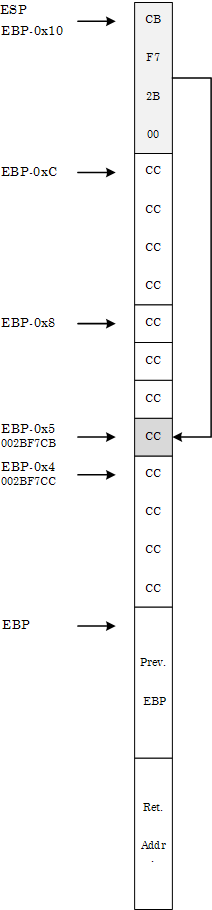
We see that our char variable ‘c’ is located at EBP-5 and the pointer ‘pc’ is located at EBP-10 (in another words ‘c’ follows ‘pc’ in memory):

00e11027 lea     eax,[ebp-5]
00e1102a mov     dword ptr [ebp-10h],eax

Both locations were initialized to 0xCCCCCCCC:

00e11016 mov     eax,0CCCCCCCCh
00e1101b mov     dword ptr [ebp-10h],eax
00e1101e mov     dword ptr [ebp-0Ch],eax
00e11021 mov     dword ptr [ebp-8],eax  ; this ends with EBP-5
00e11024 mov     dword ptr [ebp-4],eax

The memory layout before the start of the loop is depicted on the following diagram in the style of Windows Debugging: Practical Foundations book:
At the crash point we have the following final memory layout:
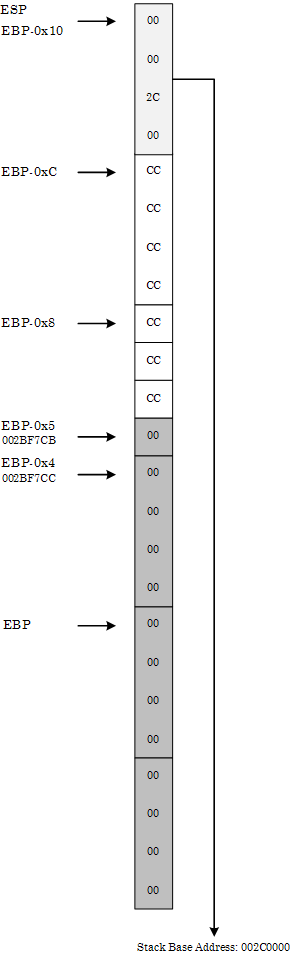
We can see it from the raw stack:

0:000> db esp
002bf7c4  00 00 2c 00 cc cc cc cc-cc cc cc 00 00 00 00 00
002bf7d4  00 00 00 00 00 00 00 00-00 00 00 00 00 00 00 00
002bf7e4  00 00 00 00 00 00 00 00-00 00 00 00 00 00 00 00
002bf7f4  00 00 00 00 00 00 00 00-00 00 00 00 00 00 00 00
002bf804  00 00 00 00 00 00 00 00-00 00 00 00 00 00 00 00
002bf814  00 00 00 00 00 00 00 00-00 00 00 00 00 00 00 00
002bf824  00 00 00 00 00 00 00 00-00 00 00 00 00 00 00 00
002bf834  00 00 00 00 00 00 00 00-00 00 00 00 00 00 00 00

or in pointer-sized (double word) values where we can see little endian effects (compare 00 00 2c 00  with 002c0000):

0:000> dp esp
002bf7c4  002c0000 cccccccc 00cccccc 00000000
002bf7d4  00000000 00000000 00000000 00000000
002bf7e4  00000000 00000000 00000000 00000000
002bf7f4  00000000 00000000 00000000 00000000
002bf804  00000000 00000000 00000000 00000000
002bf814  00000000 00000000 00000000 00000000
002bf824  00000000 00000000 00000000 00000000
002bf834  00000000 00000000 00000000 00000000

The loop code erases stack starting from EBP-5 until it hits the base address. 

Now we change Basic Runtime Checks in Code Generation properties to Default, recompile and launch the project. Suddenly it no longer crashes but loops infinitely (shown in blue):

0:000> bp wmain

0:000> g
[...]

0:000> uf wmain
StackErasure!wmain:
00d01010 push    ebp
00d01011 mov     ebp,esp
00d01013 sub     esp,8
00d01016 lea     eax,[ebp-5]
00d01019 mov     dword ptr [ebp-4],eax

StackErasure!wmain+0xc:
00d0101c mov     ecx,1
00d01021 test    ecx,ecx
00d01023 je      StackErasure!wmain+0x26 (00d01036)

StackErasure!wmain+0x15:
00d01025 mov     edx,dword ptr [ebp-4]
00d01028 mov     byte ptr [edx],0
00d0102b mov     eax,dword ptr [ebp-4]
00d0102e add     eax,1
00d01031 mov     dword ptr [ebp-4],eax
00d01034 jmp     StackErasure!wmain+0xc (00d0101c)

StackErasure!wmain+0x26:
00d01036 xor     eax,eax
00d01038 mov     esp,ebp
00d0103a pop     ebp
00d0103b ret

At first it looks strange but if we look at the stack memory layout we would see that ‘pc’ pointer follows ‘c’ (the opposite to the memory layout discussed above):

00d01016 lea     eax,[ebp-5]
00d01019 mov     dword ptr [ebp-4],eax
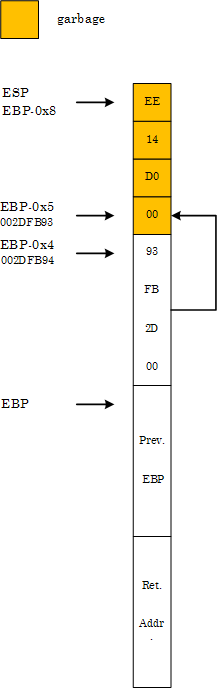
0:000> dp esp
002dfb90 00d014ee 002dfb93 002dfbe4 00d01186
002dfba0 00000001 00081d70 00081df8 5a16a657
002dfbb0 00000000 00000000 7ffdb000 00000000
002dfbc0 00000000 00000000 00000000 002dfbac
002dfbd0 000001bb 002dfc28 00d06e00 5aed06eb
002dfbe0 00000000 002dfbec 00d0105f 002dfbf8
002dfbf0 77844911 7ffdb000 002dfc38 7791e4b6
002dfc00 7ffdb000 705b3701 00000000 00000000

Therefore, when the pointer at EBP-4 is incremented by 1 during the first loop iteration it becomes a dereference fixpoint:

0:000> bp 00d0101c

0:000> g
Breakpoint 1 hit
eax=002dfb93 ebx=7ffdb000 ecx=00000001 edx=00081df8 esi=00000000 edi=00000000
eip=00d0101c esp=002dfb90 ebp=002dfb98 iopl=0         nv up ei pl nz na pe nc
cs=001b  ss=0023  ds=0023  es=0023  fs=003b  gs=0000             efl=00000206
StackErasure!wmain+0xc:
00d0101c b901000000      mov     ecx,1

0:000> t
eax=002dfb93 ebx=7ffdb000 ecx=00000001 edx=00081df8 esi=00000000 edi=00000000
eip=00d01021 esp=002dfb90 ebp=002dfb98 iopl=0         nv up ei pl nz na pe nc
cs=001b  ss=0023  ds=0023  es=0023  fs=003b  gs=0000             efl=00000206
StackErasure!wmain+0x11:
00d01021 85c9            test    ecx,ecx

0:000> t
eax=002dfb93 ebx=7ffdb000 ecx=00000001 edx=00081df8 esi=00000000 edi=00000000
eip=00d01023 esp=002dfb90 ebp=002dfb98 iopl=0         nv up ei pl nz na po nc
cs=001b  ss=0023  ds=0023  es=0023  fs=003b  gs=0000             efl=00000202
StackErasure!wmain+0x13:
00d01023 7411            je      StackErasure!wmain+0x26 (00d01036)      [br=0]

0:000> t
eax=002dfb93 ebx=7ffdb000 ecx=00000001 edx=00081df8 esi=00000000 edi=00000000
eip=00d01025 esp=002dfb90 ebp=002dfb98 iopl=0         nv up ei pl nz na po nc
cs=001b  ss=0023  ds=0023  es=0023  fs=003b  gs=0000             efl=00000202
StackErasure!wmain+0x15:
00d01025 8b55fc          mov     edx,dword ptr [ebp-4] ss:0023:002dfb94=002dfb93

0:000> t
eax=002dfb93 ebx=7ffdb000 ecx=00000001 edx=002dfb93 esi=00000000 edi=00000000
eip=00d01028 esp=002dfb90 ebp=002dfb98 iopl=0         nv up ei pl nz na po nc
cs=001b  ss=0023  ds=0023  es=0023  fs=003b  gs=0000             efl=00000202
StackErasure!wmain+0x18:
00d01028 c60200          mov     byte ptr [edx],0           ds:0023:002dfb93=00

0:000> t
eax=002dfb93 ebx=7ffdb000 ecx=00000001 edx=002dfb93 esi=00000000 edi=00000000
eip=00d0102b esp=002dfb90 ebp=002dfb98 iopl=0         nv up ei pl nz na po nc
cs=001b  ss=0023  ds=0023  es=0023  fs=003b  gs=0000             efl=00000202
StackErasure!wmain+0x1b:
00d0102b 8b45fc          mov     eax,dword ptr [ebp-4] ss:0023:002dfb94=002dfb93

0:000> t
eax=002dfb93 ebx=7ffdb000 ecx=00000001 edx=002dfb93 esi=00000000 edi=00000000
eip=00d0102e esp=002dfb90 ebp=002dfb98 iopl=0         nv up ei pl nz na po nc
cs=001b  ss=0023  ds=0023  es=0023  fs=003b  gs=0000             efl=00000202
StackErasure!wmain+0x1e:
00d0102e 83c001          add     eax,1

0:000> t
eax=002dfb94 ebx=7ffdb000 ecx=00000001 edx=002dfb93 esi=00000000 edi=00000000
eip=00d01031 esp=002dfb90 ebp=002dfb98 iopl=0         nv up ei pl nz na po nc
cs=001b  ss=0023  ds=0023  es=0023  fs=003b  gs=0000             efl=00000202
StackErasure!wmain+0x21:
00d01031 8945fc          mov     dword ptr [ebp-4],eax ss:0023:002dfb94=002dfb93

0:000> t
eax=002dfb94 ebx=7ffdb000 ecx=00000001 edx=002dfb93 esi=00000000 edi=00000000
eip=00d01034 esp=002dfb90 ebp=002dfb98 iopl=0         nv up ei pl nz na po nc
cs=001b  ss=0023  ds=0023  es=0023  fs=003b  gs=0000             efl=00000202
StackErasure!wmain+0x24:
00d01034 ebe6            jmp     StackErasure!wmain+0xc (00d0101c)

0:000> dp ebp-4 l1
002dfb94  002dfb94
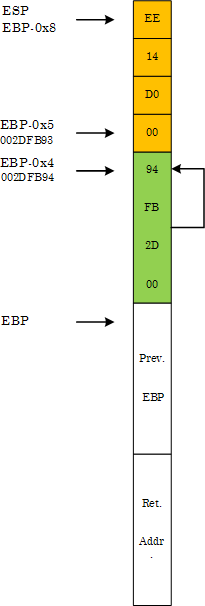
During the second iteration the assignment of zero to ‘*pc’ clears the first byte of ‘pc’:

0:000> t
Breakpoint 1 hit
eax=002dfb94 ebx=7ffdb000 ecx=00000001 edx=002dfb93 esi=00000000 edi=00000000
eip=00d0101c esp=002dfb90 ebp=002dfb98 iopl=0         nv up ei pl nz na po nc
cs=001b  ss=0023  ds=0023  es=0023  fs=003b  gs=0000             efl=00000202
StackErasure!wmain+0xc:
00d0101c b901000000      mov     ecx,1

0:000> t
eax=002dfb94 ebx=7ffdb000 ecx=00000001 edx=002dfb93 esi=00000000 edi=00000000
eip=00d01021 esp=002dfb90 ebp=002dfb98 iopl=0         nv up ei pl nz na po nc
cs=001b  ss=0023  ds=0023  es=0023  fs=003b  gs=0000             efl=00000202
StackErasure!wmain+0x11:
00d01021 85c9            test    ecx,ecx

0:000> t
eax=002dfb94 ebx=7ffdb000 ecx=00000001 edx=002dfb93 esi=00000000 edi=00000000
eip=00d01023 esp=002dfb90 ebp=002dfb98 iopl=0         nv up ei pl nz na po nc
cs=001b  ss=0023  ds=0023  es=0023  fs=003b  gs=0000             efl=00000202
StackErasure!wmain+0x13:
00d01023 7411            je      StackErasure!wmain+0x26 (00d01036)      [br=0]

0:000> t
eax=002dfb94 ebx=7ffdb000 ecx=00000001 edx=002dfb93 esi=00000000 edi=00000000
eip=00d01025 esp=002dfb90 ebp=002dfb98 iopl=0         nv up ei pl nz na po nc
cs=001b  ss=0023  ds=0023  es=0023  fs=003b  gs=0000             efl=00000202
StackErasure!wmain+0x15:
00d01025 8b55fc          mov     edx,dword ptr [ebp-4] ss:0023:002dfb94=002dfb94

0:000> t
eax=002dfb94 ebx=7ffdb000 ecx=00000001 edx=002dfb94 esi=00000000 edi=00000000
eip=00d01028 esp=002dfb90 ebp=002dfb98 iopl=0         nv up ei pl nz na po nc
cs=001b  ss=0023  ds=0023  es=0023  fs=003b  gs=0000             efl=00000202
StackErasure!wmain+0x18:
00d01028 c60200          mov     byte ptr [edx],0           ds:0023:002dfb94=94

0:000> t
eax=002dfb94 ebx=7ffdb000 ecx=00000001 edx=002dfb94 esi=00000000 edi=00000000
eip=00d0102b esp=002dfb90 ebp=002dfb98 iopl=0         nv up ei pl nz na po nc
cs=001b  ss=0023  ds=0023  es=0023  fs=003b  gs=0000             efl=00000202
StackErasure!wmain+0x1b:
00d0102b 8b45fc          mov     eax,dword ptr [ebp-4] ss:0023:002dfb94=002dfb00

0:000> dp esp
002dfb90  00d014ee 002dfb00 002dfbe4 00d01186
002dfba0  00000001 00081d70 00081df8 5a16a657
002dfbb0  00000000 00000000 7ffdb000 00000000
002dfbc0  00000000 00000000 00000000 002dfbac
002dfbd0  000001bb 002dfc28 00d06e00 5aed06eb
002dfbe0  00000000 002dfbec 00d0105f 002dfbf8
002dfbf0  77844911 7ffdb000 002dfc38 7791e4b6
002dfc00  7ffdb000 705b3701 00000000 00000000
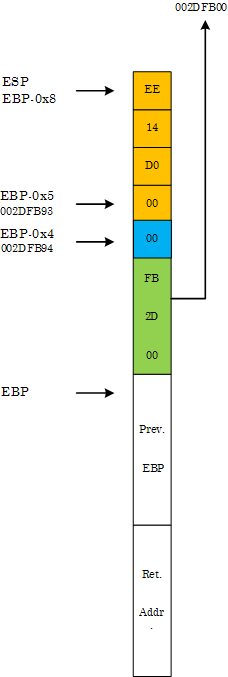
The new ‘pc’ pointer points to the following region of the stack:

0:000> dp 002dfb00 l100/4
002dfb00  002dfb0c 00000004 00000000 5c008ede
002dfb10  002dfb28 00d0634a 0008128c 5aed018b
002dfb20  000807f8 7790fb66 00000000 7ffdb000
002dfb30  00000000 002dfb40 00d089a6 00d68ab8
002dfb40  002dfb4c 00d019bc 00000008 002dfb84
002dfb50  00d07520 00d07519 5a16a637 00000000
002dfb60  00000000 7ffdb000 00d02b10 00000004
002dfb70  00000002 002dfbd4 00d06e00 5aed007b
002dfb80  fffffffe 002dfb90 00d0769e 002dfba0
002dfb90  00d014ee 002dfb00 002dfbe4 00d01186
002dfba0  00000001 00081d70 00081df8 5a16a657
002dfbb0  00000000 00000000 7ffdb000 00000000
002dfbc0  00000000 00000000 00000000 002dfbac
002dfbd0  000001bb 002dfc28 00d06e00 5aed06eb
002dfbe0  00000000 002dfbec 00d0105f 002dfbf8
002dfbf0  77844911 7ffdb000 002dfc38 7791e4b6

The loop code now starts clearing this region until the pointer becomes the fixpoint again after successive increments and therefore continues to loop indefinitely:

0:000> bc 0 1

0:000> g
(1238.c9c): Break instruction exception - code 80000003 (first chance)
eax=7ffde000 ebx=00000000 ecx=00000000 edx=7796d094 esi=00000000 edi=00000000
eip=77927dfe esp=00a4ff30 ebp=00a4ff5c iopl=0         nv up ei pl zr na pe nc
cs=001b  ss=0023  ds=0023  es=0023  fs=003b  gs=0000             efl=00000246
ntdll!DbgBreakPoint:
77927dfe cc              int     3

0:001> dp 002dfb00 l100/4
002dfb00  0000000c 00000000 00000000 00000000
002dfb10  00000000 00000000 00000000 00000000
002dfb20  00000000 00000000 00000000 00000000
002dfb30  00000000 00000000 00000000 00000000
002dfb40  00000000 00000000 00000000 00000000
002dfb50  00000000 00000000 00000000 00000000
002dfb60  00000000 00000000 00000000 00000000
002dfb70  00000000 00000000 00000000 00000000
002dfb80  00000000 00000000 00000000 00000000
002dfb90  00000000
002dfb1f 002dfbe4 00d01186
002dfba0  00000001 00081d70 00081df8 5a16a657
002dfbb0  00000000 00000000 7ffdb000 00000000
002dfbc0  00000000 00000000 00000000 002dfbac
002dfbd0  000001bb 002dfc28 00d06e00 5aed06eb
002dfbe0  00000000 002dfbec 00d0105f 002dfbf8
002dfbf0  77844911 7ffdb000 002dfc38 7791e4b6

StackErasure that loops indefinitely is available for download

- Dmitry Vostokov @ DumpAnalysis.org -

Counterfactual Debugging: Dereference Fixpoints

Friday, September 11th, 2009

Imagine we have the following arrangements in memory:

address: value

where value == address, so we have effectively:

address: address

So when we dereference the address we get the address value. If we name the dereference function as p(address) we get

p(address) = address

That gave me an idea to name after the mathematical notion of a function fixpoint (fixed point).

In C++ we can write the following code to initialize a fixpoint:

void *pc = &pc;

in assembly language:

lea      eax, [pc]
mov      dword ptr [pc], eax

or using local variables:

lea      eax, [ebp-4]
mov      dword ptr [ebp-4], eax

Dereference of a fixpoint pointer gives us the same value as its address, for example, using old style conversion:

int *pc = (int *)&pc;

if (pc == (int *)*pc) {
 // TRUE

or for C++ purists:

int *pc = reinterpret_cast<int *>(&pc);

if (pc == reinterpret_cast<int *>(*pc)) {
 // TRUE

In x86 assembly language we have this comparison:

mov         eax,dword ptr [pc]
mov         ecx,dword ptr [pc]
cmp         ecx,dword ptr [eax]

or using local variables:

mov         eax,dword ptr [ebp-4]
mov         ecx,dword ptr [ebp-4]
cmp         ecx,dword ptr [eax]

Now, having discussed fixpoints, let me ask the question to ponder over this weekend. What would this code do?

int _tmain(int argc, _TCHAR* argv[])
{
   char c;
   char* pc = &c;

   while(1)
   {
     *pc = 0;
     pc++;
   }
 

   return 0;
}

Would it produce stack overflow with an exception, or stack underflow with an exception or loop indefinitely? The C++ Standard answer of compiler and platform dependence is not acceptable. I plan to elaborate on this topic on Monday.

The notion of counterfactual debugging (”what if” debugging) was inspired by the so called counterfactual history.

- Dmitry Vostokov @ DumpAnalysis.org -

Manual parameter reconstruction on x64 Windows systems

Friday, September 4th, 2009

Although the first 2 parameters are passed via registers RCX and RDX they are saved on a stack as the part of a function prolog (as can be seen in many examples from my book x64 Windows Debugging: Practical Foundations):

0:000> uf arithmetic
FunctionParameters!arithmetic [c:\dumps\wdpf-x64\functionparameters\arithmetic.cpp @ 2]:
    2 00000001`40001020 mov     dword ptr [rsp+10h],edx
    2 00000001`40001024 mov     dword ptr [rsp+8],ecx

    2 00000001`40001028 push    rdi
    3 00000001`40001029 mov     eax,dword ptr [rsp+10h]
    3 00000001`4000102d mov     ecx,dword ptr [rsp+18h]
    3 00000001`40001031 add     ecx,eax
    3 00000001`40001033 mov     eax,ecx
    3 00000001`40001035 mov     dword ptr [rsp+18h],eax
    4 00000001`40001039 mov     eax,dword ptr [rsp+10h]
    4 00000001`4000103d add     eax,1
    4 00000001`40001040 mov     dword ptr [rsp+10h],eax
    5 00000001`40001044 mov     eax,dword ptr [rsp+10h]
    5 00000001`40001048 imul    eax,dword ptr [rsp+18h]
    5 00000001`4000104d mov     dword ptr [rsp+18h],eax
    7 00000001`40001051 mov     eax,dword ptr [rsp+18h]
    8 00000001`40001055 pop     rdi
    8 00000001`40001056 ret

Notice that RDI is saved too. This helps us later in a more complex case. If we put a breakpoint at arithmetic entry we see that WinDbg is not able to get parameters from RCX and RDX:

0:000> bp 00000001`40001020

0:000> g
ModLoad: 000007fe`ff4d0000 000007fe`ff5d8000   C:\Windows\system32\ADVAPI32.DLL
ModLoad: 000007fe`fef80000 000007fe`ff0c3000   C:\Windows\system32\RPCRT4.dll
Breakpoint 0 hit
FunctionParameters!arithmetic:
00000001`40001020 89542410        mov     dword ptr [rsp+10h],edx ss:00000000`0012fe88=cccccccc

0:000> kv
Child-SP          RetAddr           : Args to Child                                                           : Call Site
00000000`0012fe78 00000001`400010a5 : cccccccc`cccccccc cccccccc`cccccccc cccccccc`cccccccc cccccccc`cccccccc : FunctionParameters!arithmetic
00000000`0012fe80 00000001`4000137c : 00000000`00000001 00000000`00282960 00000000`00000000 00000000`00000000 : FunctionParameters!main+0×35
00000000`0012fec0 00000001`4000114e : 00000000`00000000 00000000`00000000 00000000`00000000 00000000`00000000 : FunctionParameters!__tmainCRTStartup+0×21c
00000000`0012ff30 00000000`7776be3d : 00000000`00000000 00000000`00000000 00000000`00000000 00000000`00000000 : FunctionParameters!mainCRTStartup+0xe
00000000`0012ff60 00000000`778a6a51 : 00000000`00000000 00000000`00000000 00000000`00000000 00000000`00000000 : kernel32!BaseThreadInitThunk+0xd
00000000`0012ff90 00000000`00000000 : 00000000`00000000 00000000`00000000 00000000`00000000 00000000`00000000 : ntdll!RtlUserThreadStart+0×1d

This seems correct approach in general because at the time of any other breakpoint in the middle of the code parameter passing registers could be already overwritten, for example, RCX at 0000000140001031. However, as soon as we execute the first two MOV instruction one by one, parameters appear on kv output one by one too:

0:000> t
ModLoad: 000007fe`fd810000 000007fe`fd845000   C:\Windows\system32\apphelp.dll
FunctionParameters!arithmetic+0x4:
00000001`40001024 894c2408        mov     dword ptr [rsp+8],ecx ss:00000000`0012fe80=cccccccc

0:000> kv
Child-SP          RetAddr           : Args to Child                                                           : Call Site
00000000`0012fe78 00000001`400010a5 : cccccccc`cccccccc cccccccc`00000001 cccccccc`cccccccc cccccccc`cccccccc : FunctionParameters!arithmetic+0×4
00000000`0012fe80 00000001`4000137c : 00000000`00000001 00000000`00282960 00000000`00000000 00000000`00000000 : FunctionParameters!main+0×35
00000000`0012fec0 00000001`4000114e : 00000000`00000000 00000000`00000000 00000000`00000000 00000000`00000000 : FunctionParameters!__tmainCRTStartup+0×21c
00000000`0012ff30 00000000`7776be3d : 00000000`00000000 00000000`00000000 00000000`00000000 00000000`00000000 : FunctionParameters!mainCRTStartup+0xe
00000000`0012ff60 00000000`778a6a51 : 00000000`00000000 00000000`00000000 00000000`00000000 00000000`00000000 : kernel32!BaseThreadInitThunk+0xd
00000000`0012ff90 00000000`00000000 : 00000000`00000000 00000000`00000000 00000000`00000000 00000000`00000000 : ntdll!RtlUserThreadStart+0×1d

0:000> t
FunctionParameters!arithmetic+0x8:
00000001`40001028 57              push    rdi

0:000> kv
Child-SP          RetAddr           : Args to Child                                                           : Call Site
00000000`0012fe78 00000001`400010a5 : cccccccc`00000001 cccccccc`00000001 cccccccc`cccccccc cccccccc`cccccccc : FunctionParameters!arithmetic+0×8
00000000`0012fe80 00000001`4000137c : 00000000`00000001 00000000`00282960 00000000`00000000 00000000`00000000 : FunctionParameters!main+0×35
00000000`0012fec0 00000001`4000114e : 00000000`00000000 00000000`00000000 00000000`00000000 00000000`00000000 : FunctionParameters!__tmainCRTStartup+0×21c
00000000`0012ff30 00000000`7776be3d : 00000000`00000000 00000000`00000000 00000000`00000000 00000000`00000000 : FunctionParameters!mainCRTStartup+0xe
00000000`0012ff60 00000000`778a6a51 : 00000000`00000000 00000000`00000000 00000000`00000000 00000000`00000000 : kernel32!BaseThreadInitThunk+0xd
00000000`0012ff90 00000000`00000000 : 00000000`00000000 00000000`00000000 00000000`00000000 00000000`00000000 : ntdll!RtlUserThreadStart+0×1d

Now we come to the more complex example:

1: kd> kv
  *** Stack trace for last set context - .thread/.cxr resets it
Child-SP          RetAddr           : Args to Child                                                           : Call Site
fffffa60`166a7020 fffffa60`07e9dbf2 : fffffa80`1dbd8820 00000000`00000000 fffffa80`1ec3b7a8 fffffa60`166a7278 : Driver!DeviceWrite+0xae
fffffa60`166a7050 fffffa60`062ae7cb : 00000000`00000000 fffffa80`1dbd8820 fffffa60`166a7340 fffffa80`1df4f520 : Driver!RawWrite+0×8a
[…]

1: kd> r
Last set context:
rax=000000000083a03b rbx=fffffa801ec3b800 rcx=fffffa8018cdc000
rdx=0000000000000004 rsi=fffffa801ec3b9f0 rdi=0000000005040000
rip=fffffa6007ea006e rsp=fffffa60166a7020 rbp=fffffa801ec3b7a8
 r8=fffff6fd400f61e0  r9=000000000083a03b r10=fffffa801ec3b9f8
r11=fffffa801ec3b9f8 r12=fffffa801e7c9000 r13=0000000000000000
r14=000000000038011b r15=fffffa8019891670
iopl=0         nv up ei ng nz na po cy
cs=0010 ss=0018 ds=002b es=002b fs=0053 gs=002b efl=00010287
Driver!DeviceWrite+0xae:
fffffa60`07ea006e mov     rax,qword ptr [rdi+10h] ds:002b:00000000`05040010=????????????????

We know that the first parameter to Write function is a pointer to some structure we want to explore because we see from the disassembly that some member from that structure was used ([rcx+320h]) and it was used as a pointer (assigned to RDI) that was trapping ([rdi+10h]):

1: kd> .asm no_code_bytes
Assembly options: no_code_bytes

1: kd> u Driver!DeviceWrite Driver!DeviceWrite+0xae+10
Driver!DeviceWrite:
fffffa60`07e9ffc0 mov     qword ptr [rsp+8],rbx
fffffa60`07e9ffc5 mov     qword ptr [rsp+10h],rbp
fffffa60`07e9ffca mov     qword ptr [rsp+18h],rsi
fffffa60`07e9ffcf push    rdi
fffffa60`07e9ffd0 sub     rsp,20h
fffffa60`07e9ffd4 mov     rdi,qword ptr [rcx+320h]
[…]
fffffa60`07ea006e mov     rax,qword ptr [rdi+10h] ; TRAP
[…]

Unfortunately RCX was not saved on the stack and fffffa80`1dbd8820 from kv was just the value of the saved RBX. This can be double-checked by verifying that parameter+320 doesn’t point to RDI value (05040000) at the time of the trap:

1: kd> dq fffffa80`1dbd8820+320 l1
fffffa80`1dbd8b40  00000000`00020000

Looking at DeviceWrite caller we see that RCX was initialized from RDI:

1: kd> ub fffffa60`07e9dbf2
Driver!RawWrite+0x66:
fffffa60`07e9dbce mov     rax,qword ptr [rdi+258h]
fffffa60`07e9dbd5 mov     qword ptr [rcx-18h],rax
fffffa60`07e9dbd9 mov     rax,qword ptr [rdi+260h]
fffffa60`07e9dbe0 mov     qword ptr [rcx-20h],rax
fffffa60`07e9dbe4 mov     dword ptr [rdx+10h],ebp
fffffa60`07e9dbe7 mov     rdx,rsi
fffffa60`07e9dbea mov     rcx,rdi
fffffa60`07e9dbed call    Driver!DeviceWrite (fffffa60`07e9ffc0)

We also see that RDI was saved at the function prolog so we can get our real first parameter from the raw stack bearing in mind that 0×20 was subtracted from RSP too:

1: kd> dq esp
fffffa60`166a7020  fffffa80`1ec3b800 00000000`05040000 ; SUB RSP, 20H
fffffa60`166a7030  fffffa60`07edc5dd fffffa60`07ee6f8f ;
fffffa60`166a7040  fffffa80`1ec3b520 fffffa60`07e9dbf2 ; Saved RDI - Return Address
fffffa60`166a7050  fffffa80`1dbd8820 00000000`00000000 ; Saved RBX and RBP
fffffa60`166a7060  fffffa80`1ec3b7a8 fffffa60`166a7278 ; Saved RSI 
fffffa60`166a7070  fffffa60`166a7250 fffffa60`01ab5180
fffffa60`166a7080  fffffa80`1e2937c8 fffff800`018a928a
fffffa60`166a7090  00000003`0004000d 00000026`0024000d

We see that saved RDI value +320 points to the right expected address:

1: kd> dq fffffa80`1ec3b520+320 l1
fffffa80`1ec3b840  00000000`05040000

Now we can investigate the structure but this is beyond the scope of this post. 

- Dmitry Vostokov @ DumpAnalysis.org -

x64 Windows Debugging: Practical Foundations

Saturday, August 8th, 2009

The digital version of the book is finally available:

x64 Windows Debugging: Practical Foundations

Paperback should be available in 1-2 weeks on Amazon and other stores. When working on the book I fixed errors in the previous x86 version. Errata file for it should be available tomorrow.

- Dmitry Vostokov @ DumpAnalysis.org -

Programming Language Pragmatics (3rd Edition)

Friday, May 8th, 2009

As soon as I wrote my review of the 2nd edition I found out that the 3rd edition was recently published and immediately bought it. I intend to read it from cover to cover again and publish my notes and comments in my reading notebook on Software Generalist blog. The new edition is also bundled with a companion CD.

Programming Language Pragmatics, Third Edition

Buy from Amazon

Hope in one of subsequent editions the author includes my Riemann Programming Language :-)

- Dmitry Vostokov @ DumpAnalysis.org -

Bugtation No.89

Tuesday, April 28th, 2009

On the great divide in modern software factories:

“We have in fact, two kinds of” engineers, “side by side: one that” design, “but do not” code, “and another that” code, “but seldom” design.

Bertrand Russell, Sceptical Essays

- Dmitry Vostokov @ DumpAnalysis.org -

Bugtation No.86

Saturday, April 25th, 2009

“It is easier to know” programming “in general than to understand one” program “in particular.”

François de La Rochefoucauld, Maxims

- Dmitry Vostokov @ DumpAnalysis.org -
Review of Programming Language Pragmatics

Friday, March 6th, 2009

Every debugging engineer needs to know how the code is interpreted or compiled. Debugging complex problems or doing memory analysis on general-purpose operating systems often requires understanding the syntax and semantics of several programming languages and their run-time support. The knowledge of optimization techniques is also important for low-level debugging when the source code is not available. The following book provides an overview of all important concepts and discusses almost 50 languages. I read the first edition 6 years ago and I liked it so much that I’m now reading the second edition.

Programming Language Pragmatics, Second Edition

Buy from Amazon

- Dmitry Vostokov @ DumpAnalysis.org -

Bugtation No.70

Thursday, November 27th, 2008

A pointer “tends to corrupt, and” a direct pointer “corrupts” directly.

John Emerich Edward Dalberg-Acton, 1st Baron Acton, Lord Acton’s dictum

- Dmitry Vostokov @ DumpAnalysis.org -
TOC from Dumps, Bugs and Debugging Forensics Book

Tuesday, November 25th, 2008

I’m pleased to announce that OpenTask has submitted the book Dumps, Bugs and Debugging Forensics: The Adventures of Dr. Debugalov for printing and here is the link to TOC:

Table of Contents

- Dmitry Vostokov @ DumpAnalysis.org

Review of Concurrent Programming on Windows

Wednesday, November 19th, 2008

Got this book yesterday in the post and started reading. Table of contents is amazing for its practical depth and breadth. If you want me to provide a review in a language of concurrency  (I’m reading many books in parallel) I would simply say one word:

Priority!

It simply means priority reading for any Windows software developer and maintainer. Invaluable for any engineer debugging complex software problems and analyzing Windows crash dumps. Simply because Microsoft OS and CLR developers use all this concurrent stuff and best practices described in the book so it is vital to be able recognize them in memory dumps. After reading this book you also get priority boost in your understanding of process and thread dynamics and your ability to plan, architect, design and implement concurrent applications and services.

Concurrent Programming on Windows (Microsoft .NET Development Series)

Buy from Amazon

- Dmitry Vostokov @ DumpAnalysis.org -

The perfect binary Christmas gift!

Wednesday, October 29th, 2008

The perfect binary Christmas gift for your family and friends is soon available on Amazon, B&N and in local bookshops around the world! In the mean time you can view the product information and even order it:

Baby Turing

- Dmitry Vostokov @ DumpAnalysis.org -

Bugtation No.55

Thursday, October 23rd, 2008

[Software] Defects “have a character of their own, but they also partake of” a program “character;” programs “have a character of” their “own, but” they “also partake of the world’s character.”

Oliver Wolf Sacks, Awakenings

- Dmitry Vostokov @ DumpAnalysis.org -

Baby Turing Book Cover

Monday, October 20th, 2008

Finally, previously announced book Baby Turing was released to manufacture. It is co-authored with my daughter and dedicated to my son. The short book annotation:

The genius of Albert Einstein was revolutionary in understanding reality of hardware (semantics of nature) but the genius of Alan Turing was revolutionary in understanding virtuality of software (syntax of computation). This book fills the gap in children’s literature and introduces binary arithmetic to babies.

The front cover:

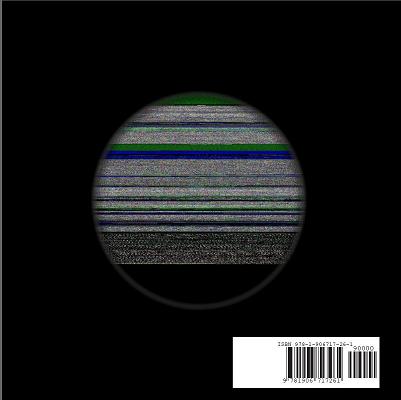
The back cover:

- Dmitry Vostokov @ DumpAnalysis.org -

Bugtation No.41

Monday, October 6th, 2008

Another variation of the previous bugtation No.40:

“Read” code “at whim!”

Randall Jarrell, A Sad Heart at the Supermarket: Essays & Fables

- Dmitry Vostokov @ DumpAnalysis.org -

Bugtation No.34

Thursday, September 25th, 2008

“An excellent precept for” programmers: “have a clear idea of all the” functions “and expressions you need, and you will find them.”

Ximénès Doudan, Pensées et fragments suivis des révolutions du goût

- Dmitry Vostokov @ DumpAnalysis.org -

Bugtation No.33

Wednesday, September 24th, 2008

“The art of not” coding “is extremely important. It consists in our not taking up whatever happens to be occupying the” management “public at the time.”

Arthur Schopenhauer, Parerga and Paralipomena: On Reading and Books

- Dmitry Vostokov @ DumpAnalysis.org -

Bugtation No.32

Tuesday, September 23rd, 2008

“A” code “never — well, hardly ever — shakes off its” legacy “and its formation. In spite of all changes in and extensions of and additions to its” base “, and indeed rather pervading and governing these, there will still persist the old” code.

John Langshaw Austin, Philosophical Papers: A Plea For Excuses

- Dmitry Vostokov @ DumpAnalysis.org -

Bugtation No.25

Tuesday, September 16th, 2008

“The only way to read” code “without being bored is to” browse “it at random and, having found something that interests you, close the” browser “and meditate.”

Charles-Joseph, Prince de Ligne, Mes écarts

- Dmitry Vostokov @ DumpAnalysis.org -