Archive for January, 2008

What is KiFastSystemCallRet?

Thursday, January 10th, 2008

This question was asked hundreds of times in 2007 and here is the short answer. This is a return function address for trap frames created for system calls on x86 post-W2K systems. 

Since Pentium II Microsoft changed OS call dispatching from interrupt driven INT /IRETD mechanism used in Windows NT and Windows 2000 to faster optimized instruction sequence. This is SYSENTER / SYSEXIT pair on x86 32-bit Intel platforms and SYSCALL / SYSRET pair on x64 Intel and AMD platforms.

INT instruction saves a return address but SYSENTER doesn’t. Let’s look at a typical thread call stack from complete memory dump coming from x86 Windows 2003 system:

1: kd> kL
ChildEBP RetAddr 
a5a2ac64 80502d26 nt!KiSwapContext+0x2f
a5a2ac70 804faf20 nt!KiSwapThread+0x8a
a5a2ac98 805a4d6c nt!KeWaitForSingleObject+0x1c2
a5a2ad48 8054086c nt!NtReplyWaitReceivePortEx+0x3dc
a5a2ad48 7c91eb94 nt!KiFastCallEntry+0xfc
00a0fe18 7c91e399 ntdll!KiFastSystemCallRet
00a0fe1c 77e56703 ntdll!NtReplyWaitReceivePortEx+0xc
00a0ff80 77e56c22 RPCRT4!LRPC_ADDRESS::ReceiveLotsaCalls+0xf4
00a0ff88 77e56a3b RPCRT4!RecvLotsaCallsWrapper+0xd
00a0ffa8 77e56c0a RPCRT4!BaseCachedThreadRoutine+0×79
00a0ffb4 7c80b683 RPCRT4!ThreadStartRoutine+0×1a
00a0ffec 00000000 kernel32!BaseThreadStart+0×37

RPC module calls the native function to wait for a reply from an LPC port. Note that we disassemble the return address instead of the symbolic address because of OMAP Code Optimization:

1: kd> ub RPCRT4!LRPC_ADDRESS::ReceiveLotsaCalls+0xf4
                                                    ^ Unable to find valid previous instruction for 'ub RPCRT4!LRPC_ADDRESS::ReceiveLotsaCalls+0xf4'

1: kd> ub 77e56703
RPCRT4!LRPC_ADDRESS::ReceiveLotsaCalls+0xd9:
77e566e8 e8edfeffff      call    RPCRT4!RpcpPurgeEEInfoFromThreadIfNecessary (77e565da)
77e566ed ff75ec          push    dword ptr [ebp-14h]
77e566f0 8d45f0          lea     eax,[ebp-10h]
77e566f3 ff75f4          push    dword ptr [ebp-0Ch]
77e566f6 ff75fc          push    dword ptr [ebp-4]
77e566f9 50              push    eax
77e566fa ff7658          push    dword ptr [esi+58h]
77e566fd ff15b010e577    call    dword ptr [RPCRT4!_imp__NtReplyWaitReceivePortEx (77e510b0)]

1: kd> dps 77e510b0 l1
77e510b0  7c91e38d ntdll!ZwReplyWaitReceivePortEx

NTDLL stub for the native function is small and transitions to level 0 via shared SystemCallSub immediately:

1: kd> uf ntdll!NtReplyWaitReceivePortEx
ntdll!ZwReplyWaitReceivePortEx:
7c91e38d mov     eax,0C4h
7c91e392 mov     edx,offset SharedUserData!SystemCallStub (7ffe0300)
7c91e397 call    dword ptr [edx]

7c91e399 ret     14h

1: kd> dps 7ffe0300 l3
7ffe0300  7c91eb8b ntdll!KiFastSystemCall
7ffe0304  7c91eb94 ntdll!KiFastSystemCallRet
7ffe0308  00000000

1: kd> uf ntdll!KiFastSystemCall
ntdll!KiFastSystemCall:
7c91eb8b mov     edx,esp
7c91eb8d sysenter
7c91eb8f nop
7c91eb90 nop
7c91eb91 nop
7c91eb92 nop
7c91eb93 nop
7c91eb94 ret

Before executing SYSENTER ESP points to the following return address:

1: kd> u 7c91e399
ntdll!NtReplyWaitReceivePortEx+0xc:
7c91e399 ret     14h

SYSENTER instruction changes ESP and EIP to new values contained in machine-specific registers (MSR). As a result EIP points to nt!KiFastCallEntry. After saving a trap frame and checking parameters it calls nt!NtReplyWaitReceivePortEx address from system function table. When the latter function returns KiFastCallEntry proceeds to KiServiceExit and KiSystemCallExit2:

1: kd> ub 8054086c
nt!KiFastCallEntry+0xe2:
80540852 mov     ebx,dword ptr [edi+eax*4]
80540855 sub     esp,ecx
80540857 shr     ecx,2
8054085a mov     edi,esp
8054085c cmp     esi,dword ptr [nt!MmUserProbeAddress (80561114)]
80540862 jae     nt!KiSystemCallExit2+0×9f (80540a10)
80540868 rep movs dword ptr es:[edi],dword ptr [esi]
8054086a call    ebx

1: kd> u
nt!KiFastCallEntry+0x105:
80540875 mov     edx,dword ptr [ebp+3Ch]
80540878 mov     dword ptr [ecx+134h],edx
nt!KiServiceExit:
8054087e cli
8054087f test    dword ptr [ebp+70h],20000h
80540886 jne     nt!KiServiceExit+0x10 (8054088e)
80540888 test    byte ptr [ebp+6Ch],1
8054088c je      nt!KiServiceExit+0x66 (805408e4)
8054088e mov     ebx,dword ptr fs:[124h]

1: kd> u
nt!KiSystemCallExit2+0x12:
80540983 sti
80540984 sysexit

Let’s inspect the trap frame:

1: kd> kv5
ChildEBP RetAddr  Args to Child             
a5a2ac64 80502d26 82ffc090 82ffc020 804faf20 nt!KiSwapContext+0x2f
a5a2ac70 804faf20 e12424b0 8055c0a0 e12424b0 nt!KiSwapThread+0x8a
a5a2ac98 805a4d6c 00000001 00000010 00000001 nt!KeWaitForSingleObject+0x1c2
a5a2ad48 8054086c 000000c8 00a0ff70 00000000 nt!NtReplyWaitReceivePortEx+0x3dc
a5a2ad48 7c91eb94 000000c8 00a0ff70 00000000 nt!KiFastCallEntry+0xfc (TrapFrame @ a5a2ad64)

1: kd> .trap a5a2ad64
ErrCode = 00000000
eax=00000000 ebx=00000000 ecx=00a0fd6c edx=7c91eb94 esi=00159b38 edi=00000100
eip=7c91eb94 esp=00a0fe1c ebp=00a0ff80 iopl=0 nv up ei pl zr na pe nc
cs=001b ss=0023 ds=0023 es=0023 fs=003b gs=0000 efl=00000246
ntdll!KiFastSystemCallRet:
001b:7c91eb94 ret

1: kd> kL
  *** Stack trace for last set context - .thread/.cxr resets it
ChildEBP RetAddr 
00a0fe18 7c91e399 ntdll!KiFastSystemCallRet
00a0fe1c 77e56703 ntdll!NtReplyWaitReceivePortEx+0xc
00a0ff80 77e56c22 RPCRT4!LRPC_ADDRESS::ReceiveLotsaCalls+0xf4
00a0ff88 77e56a3b RPCRT4!RecvLotsaCallsWrapper+0xd
00a0ffa8 77e56c0a RPCRT4!BaseCachedThreadRoutine+0x79
00a0ffb4 7c80b683 RPCRT4!ThreadStartRoutine+0x1a
00a0ffec 00000000 kernel32!BaseThreadStart+0x37

Therefore I believe the dummy ntdll!KiFastSystemCallRet function with one RET instruction is used to create a uniform trap frame across system calls. Otherwise trap frames for different native API calls would contain different return values.

While reading this post I found two related articles. The first one explains old mechanism for Windows NT and the second one explains the new one:

I’ll cover SYSCALL / SYSRET in another blog post.  

- Dmitry Vostokov @ DumpAnalysis.org -
Crash Dump Analysis AntiPatterns (Part 8)

Thursday, January 10th, 2008

This is sometime very funny one. It is called Fooled by Abbreviation. When someone is so presupposed or engaged in identifying Alien Components due to limited time and complexity of issues. For example, “Ctx” abbreviation in function names will most likely mean “Context” in general but can also be a function and data structure prefix used by a company with a similar sounding name. Opposite cases happen too when general is presupposed instead of particular, for example, ”Mms” prefix is read as “Memory Management Subsystem” but belongs to a multimedia system vendor. 

- Dmitry Vostokov @ DumpAnalysis.org -
2007 in Retrospection (Part 2)

Tuesday, January 8th, 2008

Here is the list of 100 most frequent phrases and keywords (out of almost 30,000 unique phrases recorded for 2007) from various search engines that brought people to my blog. Therefore I believe that publishing this list will bring more people searching for the same phrases straight to my blog, some kind of “SEO resonance” :-)

crash dump analysis
vista crash dump
what is kifastsystemcallret
kmode_exception_not_handled
crash dump
windbg commands
crash dump vista
werfault.exe
dump analysis
stressprinters
kernel_mode_exception_not_handled
debugging by thinking
interrupt enable flag asmpedia
fnodobfm
dr watson vista
debugging techniques using windbg
component timestamps crash dump
dumpanalysis
system_thread_exception_not_handled
windbg script
stack trace reconstruction
error inittyperead( teb )
false positive dump
coupled processes windbg
windbg
gs peb teb register
user mode process dumper
windows rootkits drivers rus
minidump analysis
windbg analyze
drwtsn32 vista
crash dumps
debugware.com
ntdll!kifastsystemcallret
csrss crash avoid
kifastsystemcallret
windbg scripts
bugcheck explained
memory dumping mechanism
irql_not_less_or_equal
dump analyzer
vdtw30.dll
vista dr watson
userdump
kei386eoihelper
windbg command
vista memory dump
windows crash kernel analysis
dmitry vostokov
wermgr.exe
kernel32!pnlsuserinfo
userdump.exe
!clrstack
vista crash analysis
xp ntsd .loadby
drwatson vista
how to use windbg
receivelotsacalls
system_thread_exception_not_handled (7e)
pspunhandledexceptioninsystemthread
x64 debugging
dr watson postmortem debugger
werfault.exe vista
wersvc
automate windbg dmp info
windbg tips
faultrep.dll
windbg tutorial
convertticket
windows crash dump analysis
your debugger is not using the correct symbols
werfault
warning: frame ip not in any known module. following frames may be wrong.
windbg !analyze
windbg dump
crash dump analyzer
analyze minidump
crash dump analysis blog
when a process dies silently
windbg crash dump analysis
vista crash dump analysis
dr watson postmortem
frame ip not in any known module
memory dump
windbg crash dump analysis blog
advanced windows debugging
ntsd vista
rtlactivateactivationcontextunsafefast
unable to find module ‘mscorwks’
vista crash dumps
exception_double_fault
vista 64bit post mortem debugger
windows vista crash dump
crash dump analysis tool
what is memory dump
crash dump in vista
double fault + x64
memory dump analysis
symbol file could not be found
systemdump

- Dmitry Vostokov @ DumpAnalysis.org -
What is a Software Defect?

Tuesday, January 8th, 2008

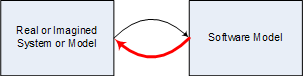
Software can be considered as models of real or imagined systems which may be models themselves. Any modeling act involves a mapping between a system and a model that preserves causal, ordering and inclusion relationships and a mapping from the model to the system that translates emerging relationships and causal structures back to that system. The latter I call modeling expectations and any observed deviations in structure and behavior between the model and the system I call software defects which can be functional failures, error messages, crashes or hangs (red line on diagrams below):

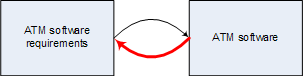
Consider ATM software as a venerable example. It models imagined world of ATM transactions which we call ATM software requirements. The latter specifies ACID (atomic, consistent, isolated and durable) transaction rules. If they are broken by the written software we have the defect:

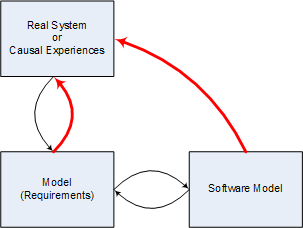
What are software requirements? They are models of real or imagined systems or can be models of past causal and relationship experiences. If requirements are wrong they do not translate back and we still consider software as having a defect:

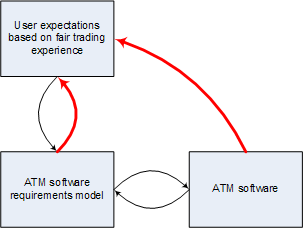
Translating this to ATM example we have:

Another example where the perceived absence of failures can be considered as a defect is the program designed to model memory leaks that might not be leaking due to a defect in its source code.

Now we can answer the question ”What is a memory corruption?” which is the topic of the next post.

- Dmitry Vostokov @ DumpAnalysis.org -
Pooltags from Citrix drivers

Monday, January 7th, 2008

Citrix has recently published the list of their pooltags. Please refer to the following article:

http://support.citrix.com/article/ctx115257

So when you see the following or similar output from !poolused WinDbg command you can update your pooltag.txt file located in your Debugging Tools for Windows  installation \triage folder:

WD   UNKNOWN pooltag 'WD  ', please update pooltag.txt

Please also be aware that ‘Ica’ pooltag doesn’t belong to Citrix drivers although it sounds like “ICA protocol”. It comes from Microsoft termdd.sys driver.

- Dmitry Vostokov @ DumpAnalysis.org -

USHORT vs. ULONG websites

Friday, January 4th, 2008

It is about the number of visits a website has at some point of its evolution. This blog has been visited more than 65,535 times and now belongs to ULONG category (unsigned long type). Has anyone seen ULONGLONG websites?

- Dmitry Vostokov @ DumpAnalysis.org -

ManagementBits update (December, 2007)

Friday, January 4th, 2008

As promised I’m posting here the first monthly summary of my Management Bits and Tips blog where I introduced the port of crash dump analysis patterns to project failure analysis patterns.

- Dmitry Vostokov @ DumpAnalysis.org -

Literate Scientist

Wednesday, January 2nd, 2008

As a voracious reader (half of my book collection) I always wanted to share my book search results (I spend some time researching books on Amazon). Finally I opened my 3rd blog where I intend to review books written by literate scientists that I have read and which are not quite related to crash dump analysis and debugging domain:

http://www.literatescientist.com/

Happy New Year and Happy Reading in 2008  :-)

- Dmitry Vostokov @ DumpAnalysis.org -

How to distinguish between 1st and 2nd chances

Wednesday, January 2nd, 2008

Sometimes we look for Early Crash Dump pattern but information about whether an exception was first-chance or second-chance is missing from a crash dump file name or in a crash dump itself, for example:

This dump file has an exception of interest stored in it.
The stored exception information can be accessed via .ecxr.
(1254.1124): Access violation - code c0000005 (first/second chance not available)
TestDefaultDebugger64!CTestDefaultDebuggerDlg::OnBnClickedButton1:
00000000`00401570 c704250000000000000000 mov dword ptr [0],0 ds:00000000`00000000=????????

If we recall that first-chance exceptions don’t leave any traces on user space thread stacks (see Interrupts and Exceptions Explained, Part 6 for details) then we won’t see any exception codes on thread raw stack:

0:000> !teb
TEB at 000007fffffde000
    ExceptionList:        0000000000000000
    StackBase:            0000000000130000
    StackLimit:           000000000012b000

    SubSystemTib:         0000000000000000
    FiberData:            0000000000001e00
    ArbitraryUserPointer: 0000000000000000
    Self:                 000007fffffde000
    EnvironmentPointer:   0000000000000000
    ClientId:             0000000000001254 . 0000000000001124
    RpcHandle:            0000000000000000
    Tls Storage:          000007fffffde058
    PEB Address:          000007fffffd5000
    LastErrorValue:       0
    LastStatusValue:      c0000034
    Count Owned Locks:    0
    HardErrorMode:        0

0:000> s -d 000000000012b000 0000000000130000 c0000005

However, we would definitely see it on raw stack in second-chance exception crash dump: 

0:000> s -d 000000000012b000 0000000000130000 c0000005 
00000000`0012f000  c0000005 00000000 00000000 00000000  .

Using raw stack observations we can even tell when a crash dump was saved from a debugger handling a second-chance exception or saved by some postmortem debugger afterwards. For example, on my Vista x64 I see the following difference:

raw stack from a crash dump saved from WinDbg after receiving second-chance exception:

00000000`0012e278  00000000`00000000
00000000`0012e280  00000000`00000000
00000000`0012e288  00000000`7790032c kernel32!IsDebugPortPresent+0×2c
00000000`0012e290  00000000`00000000
00000000`0012e298  00000000`00000000
00000000`0012e2a0  00000000`00000000
00000000`0012e2a8  00000000`7790032c kernel32!IsDebugPortPresent+0×2c
00000000`0012e2b0  00000001`00010000
00000000`0012e2b8  00000000`00000000
00000000`0012e2c0  00000000`00000000
00000000`0012e2c8  00000000`77b63c94 ntdll! ?? ::FNODOBFM::`string’+0xbd14
00000000`0012e2d0  00000000`00000000
00000000`0012e2d8  00000000`0012e420
00000000`0012e2e0  00000000`77b63cb0 ntdll! ?? ::FNODOBFM::`string’+0xbd30
00000000`0012e2e8  00000000`7793cf47 kernel32!UnhandledExceptionFilter+0xb7
00000000`0012e2f0  ffffffff`ffffffff
00000000`0012e2f8  00000000`00000000
00000000`0012e300  00000000`00000000
00000000`0012e308  00000000`00000000
00000000`0012e310  00000000`00318718
00000000`0012e318  00000000`7799eb89 user32!ImeWndProcWorker+0×331
00000000`0012e320  00000000`00000000
00000000`0012e328  00000000`00000000
00000000`0012e330  00000000`00000000
00000000`0012e338  00000000`004189b0 TestDefaultDebugger64!_getptd_noexit+0×80
00000000`0012e340  00000000`01fb4b90
00000000`0012e348  00000000`0012e928
00000000`0012e350  00000000`00000000
00000000`0012e358  00000000`00418a50 TestDefaultDebugger64!_getptd+0×80
00000000`0012e360  00000000`01fb4b90
00000000`0012e368  00000000`0041776d TestDefaultDebugger64!_XcptFilter+0×1d
00000000`0012e370  00000000`0012e4f0
00000000`0012e378  00000000`77aa3cfa ntdll!RtlDecodePointer+0×2a
00000000`0012e380  00000000`00436fc4 TestDefaultDebugger64!__rtc_tzz+0×1f8c
00000000`0012e388  00000000`00000001
00000000`0012e390  00000000`0012f000
00000000`0012e398  00000000`77a60000 ntdll!`string’ <PERF> (ntdll+0×0)
00000000`0012e3a0  00000000`0004c6e1
00000000`0012e3a8  00000000`00000001
00000000`0012e3b0  00000000`0012ff90
00000000`0012e3b8  00000000`77afb1b5 ntdll!RtlUserThreadStart+0×95
00000000`0012e3c0  00000000`0012e420
00000000`0012e3c8  00000000`d4b99e6f
00000000`0012e3d0  00000000`00000000
00000000`0012e3d8  00000000`00000001
00000000`0012e3e0  00000000`0012e4f0
00000000`0012e3e8  00000000`77a8ae4b ntdll!_C_specific_handler+0×8c

raw stack from a crash dump saved by CDB installed as a default postmortem debugger (WER was used to launch it):

0:000> dqs 00000000`0012e278 00000000`0012e3e8
00000000`0012e278  00000000`00000000
00000000`0012e280  00000000`00000000
00000000`0012e288  00000000`00000000
00000000`0012e290  ffffffff`ffffffff
00000000`0012e298  00000000`779257ef kernel32!WerpReportExceptionInProcessContext+0×9f
00000000`0012e2a0  00000000`00000000
00000000`0012e2a8  00000000`0012ff90
00000000`0012e2b0  00000000`0012e420
00000000`0012e2b8  00000000`0041f4dc TestDefaultDebugger64!__CxxUnhandledExceptionFilter+0×5c
00000000`0012e2c0  00000000`00000000
00000000`0012e2c8  00000000`7a8b477b
00000000`0012e2d0  00000000`00000000
00000000`0012e2d8  fffff980`01000000
00000000`0012e2e0  00000000`00000001
00000000`0012e2e8  00000000`7793d07e kernel32!UnhandledExceptionFilter+0×1ee
00000000`0012e2f0  00000000`77b63cb0 ntdll! ?? ::FNODOBFM::`string’+0xbd30
00000000`0012e2f8  000007fe`00000000
00000000`0012e300  00000000`00000000
00000000`0012e308  00000000`00000001
00000000`0012e310  00000000`00000000
00000000`0012e318  00000000`00000000
00000000`0012e320  000007ff`00000000
00000000`0012e328  00000000`00000000
00000000`0012e330  00000000`00000000
00000000`0012e338  00000000`004189b0 TestDefaultDebugger64!_getptd_noexit+0×80
00000000`0012e340  00000000`023f4b90
00000000`0012e348  00000000`77ab8cf8 ntdll!RtlpFindNextActivationContextSection+0xaa
00000000`0012e350  00000000`00000000
00000000`0012e358  00000000`00418a50 TestDefaultDebugger64!_getptd+0×80
00000000`0012e360  00000000`023f4b90
00000000`0012e368  00000000`0041776d TestDefaultDebugger64!_XcptFilter+0×1d
00000000`0012e370  00000000`0012e4f0
00000000`0012e378  00000000`77aa3cfa ntdll!RtlDecodePointer+0×2a
00000000`0012e380  00000000`00436fc4 TestDefaultDebugger64!__rtc_tzz+0×1f8c
00000000`0012e388  00000000`00000001
00000000`0012e390  00000000`0012f000
00000000`0012e398  00000000`77a60000 ntdll!`string’ <PERF> (ntdll+0×0)
00000000`0012e3a0  00000000`0004c6e1
00000000`0012e3a8  00000000`00000001
00000000`0012e3b0  00000000`0012ff90
00000000`0012e3b8  00000000`77afb1b5 ntdll!RtlUserThreadStart+0×95
00000000`0012e3c0  00000000`0012e420
00000000`0012e3c8  00000000`7a8b477b
00000000`0012e3d0  00000000`00000000
00000000`0012e3d8  00000000`00000001
00000000`0012e3e0  00000000`0012e4f0
00000000`0012e3e8  00000000`77a8ae4b ntdll!_C_specific_handler+0×8c

- Dmitry Vostokov @ DumpAnalysis.org -