Bugchecks: SYSTEM_THREAD_EXCEPTION_NOT_HANDLED
Another bugcheck that is similar to KMODE_EXCEPTION_NOT_HANDLED and KERNEL_MODE_EXCEPTION_NOT_HANDLED is SYSTEM_THREAD_EXCEPTION_NOT_HANDLED (0×7E).
This bugcheck happens when you have an exception in a system thread and there is no exception handler to catch it, i.e. no __try/__except. System threads are created by calling PsCreateSystemThread function. Here is its description from DDK:
The PsCreateSystemThread routine creates a system thread that executes in kernel mode and returns a handle for the thread.
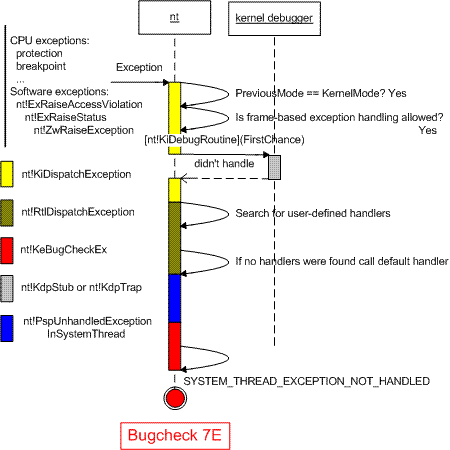
By default PspUnhandledExceptionInSystemThread function is set as a default exception handler and its purpose is to call KeBugCheckEx.
The typical call stack in dumps with 7E bugcheck is:
1: kd> k

ChildEBP RetAddr

f70703cc 809a1eb2 nt!KeBugCheckEx+0x1b (FPO: [Non-Fpo])

f70703e8 80964a94 nt!PspUnhandledExceptionInSystemThread+0x1a

f7070ddc 80841a96 nt!PspSystemThreadStartup+0x56

00000000 00000000 nt!KiThreadStartup+0x16
To see how this bugcheck is generated from processor trap we need to look at raw stack. Let’s look at some example. !analyze -v command gives us the following output:
SYSTEM_THREAD_EXCEPTION_NOT_HANDLED (7e)

This is a very common bugcheck. Usually the exception address pinpoints the driver/function that caused the problem. Always note this address as well as the link date of the driver/image that contains this address.

Arguments:

Arg1: 80000003, The exception code that was not handled

Arg2: f69d9dd7, The address that the exception occurred at

Arg3: f70708c0, Exception Record Address

Arg4: f70705bc, Context Record Address

EXCEPTION_RECORD:  f70708c0 -- (.exr fffffffff70708c0)

ExceptionAddress: f69d9dd7 (driver+0x00014dd7)

   ExceptionCode: 80000003 (Break instruction exception)

  ExceptionFlags: 00000000

NumberParameters: 3

   Parameter[0]: 00000000

   Parameter[1]: 8a784020

   Parameter[2]: 00000044

CONTEXT:  f70705bc -- (.cxr fffffffff70705bc)

eax=00000001 ebx=00000032 ecx=8a37c000 edx=00000044 esi=8a37c000 edi=000000c7

eip=f69d9dd7 esp=f7070988 ebp=00004000 iopl=0 nv up ei pl zr na pe nc

cs=0008  ss=0010  ds=0023  es=0023  fs=0030  gs=0000 efl=00000246

driver+0x14dd7:

f69d9dd7 cc              int     3

STACK_TEXT:

WARNING: Stack unwind information not available. Following frames may be wrong.

f7070998 f69dfbd1 80800000 00000000 8a37c000 driver+0x14dd7

00000000 00000000 00000000 00000000 00000000 driver+0x1abd1
We see that the thread encountered the breakpoint instruction and we also see that the call stack that led to breakpoint exception is incomplete. Here we must dump the raw stack data and try to reconstruct the stack manually. System threads are started with the execution of KiThreadStartup function. So let’s dump the stack starting from ESP register and up to some value, find startup function there and try to walk EBP chain:
1: kd> dds esp esp+1000

...

...

...

f7070a04  f7070a40

f7070a08  f71172ec NDIS!ndisMCommonHaltMiniport+0×375

f7070a0c  8a37c000

f7070a10  8a60f5c0

f7070a14  8a610748

f7070a18  8a610748

f7070a1c  00000058

f7070a20  00000005

f7070a24  00000004

f7070a28  f7527000

f7070a2c  00000685

f7070a30  f710943a NDIS!ndisMDummyIndicatePacket

f7070a34  00000000

f7070a38  8a610778

f7070a3c  00010748

f7070a40  f7070b74

f7070a44  f7117640 NDIS!ndisMHaltMiniport+0×21

f7070a48  8a610990

…

… (intermediate frames are omitted to save space)

…

f7070d7c  e104a338

f7070d80  f7070dac

f7070d84  8083f72e nt!ExpWorkerThread+0xeb

f7070d88  894d0ed8

f7070d8c  00000000

f7070d90  8a784020

f7070d94  00000000

f7070d98  00000000

f7070d9c  00000000

f7070da0  00000001

f7070da4  00000000

f7070da8  808f0cb7 nt!PiWalkDeviceList

f7070dac  f7070ddc

f7070db0  8092ccff nt!PspSystemThreadStartup+0×2e

f7070db4  894d0ed8

f7070db8  00000000

f7070dbc  00000000

f7070dc0  00000000

f7070dc4  f7070db8

f7070dc8  f7070410

f7070dcc  ffffffff

f7070dd0  8083b9bc nt!_except_handler3

f7070dd4  808408f8 nt!ObWatchHandles+0×5f4

f7070dd8  00000000

f7070ddc  00000000

f7070de0  80841a96 nt!KiThreadStartup+0×16

f7070de4  8083f671 nt!ExpWorkerThread
The last EBP value we are able to get is f7070a04 and we can specify it to the extended version of k command together with ESP and EIP value of crash point:
1: kd> k L=f7070a04 f7070988 f69d9dd7

ChildEBP RetAddr

f7070998 f69dfbd1 driver+0x14dd7

f7070a40 f7117640 NDIS!ndisMCommonHaltMiniport+0x375

f7070a48 f711891a NDIS!ndisMHaltMiniport+0x21

f7070b74 f71196e5 NDIS!ndisPnPRemoveDevice+0x189

f7070ba4 8083f9d0 NDIS!ndisPnPDispatch+0x15d

f7070bb8 808f6a25 nt!IofCallDriver+0x45

f7070be4 808e20b5 nt!IopSynchronousCall+0xbe

f7070c38 8080beae nt!IopRemoveDevice+0x97

f7070c60 808e149b nt!IopRemoveLockedDeviceNode+0x160

f7070c78 808e18cc nt!IopDeleteLockedDeviceNode+0x50

f7070cac 808e1732 nt!IopDeleteLockedDeviceNodes+0x3f

f7070d40 808e19b6 nt!PiProcessQueryRemoveAndEject+0x7ad

f7070d5c 808e7879 nt!PiProcessTargetDeviceEvent+0x2a

f7070d80 8083f72e nt!PiWalkDeviceList+0x1d2

f7070dac 8092ccff nt!ExpWorkerThread+0xeb

f7070ddc 80841a96 nt!PspSystemThreadStartup+0x2e

00000000 00000000 nt!KiThreadStartup+0x16
This was the execution path before the exception. However when int 3 instruction was hit then processor generated a trap with interrupt vector 3 (4th entry in interrupt descriptor table, zero-based) and the corresponding function in IDT, KiTrap03, was called. Therefore we need to find this function on the same raw stack and try to build stack trace for our exception handling code path:
1: kd> dds esp esp+1000

f70703b4  0000007e

f70703b8  80000003

f70703bc  f69d9dd7 driver+0x14dd7

f70703c0  f70708c0

f70703c4  f70705bc

f70703c8  00000000

f70703cc  f70703e8

f70703d0  809a1eb2 nt!PspUnhandledExceptionInSystemThread+0x1a

f70703d4  0000007e

...

...

...

f7070418 f707043c

f707041c 8083b578 nt!ExecuteHandler2+0×26

f7070420 f70708c0

f7070424 f7070dcc

f7070428 f70705bc

f707042c f70704d8

f7070430 f7070894

f7070434 8083b58c nt!ExecuteHandler2+0×3a

f7070438 f7070dcc

f707043c f70704ec

f7070440 8083b54a nt!ExecuteHandler+0×24

f7070444 f70708c0

…

… (intermediate frames are omitted to save space)

…

f7070890  f7070410

f7070894  f7070dcc

f7070898  8083b9bc nt!_except_handler3

f707089c  80850c10 nt!`string’+0×10c

f70708a0  ffffffff

f70708a4  f7070914

f70708a8  808357a4 nt!CommonDispatchException+0×4a

f70708ac  f70708c0

f70708b0  00000000

f70708b4  f7070914

f70708b8  00000000

f70708bc  00000001

f70708c0  80000003

f70708c4  00000000

f70708c8  00000000

f70708cc  f69d9dd7 driver+0×14dd7

f70708d0  00000003

f70708d4  00000000

f70708d8  8a784020

f70708dc  00000044

f70708e0  ffffffff

f70708e4  00000001

f70708e8  f7737a7c

f70708ec  f7070934

f70708f0  8083f164 nt!KeWaitForSingleObject+0×346

f70708f4  000000c7

f70708f8  00000000

f70708fc  00000031

f7070900  00000000

f7070904  f707091c

f7070908  80840569 nt!KeSetTimerEx+0×179

f707090c  000000c7

f7070910  80835f39 nt!KiTrap03+0xb0

f7070914  00004000
The last EBP value we are able to get is f7070418 so the following stack trace emerges albeit not accurate as it doesn’t show that KeBugCheckEx was called from PspUnhandledExceptionInSystemThread as can be seen from disassembly. However it does show that the main function that orchestrates stack unwinding is KiDispatchException:
1: kd> k L=f7070418

ChildEBP RetAddr

f7070418 8083b578 nt!KeBugCheckEx+0x1b

f707043c 8083b54a nt!ExecuteHandler2+0x26

f70704ec 80810664 nt!ExecuteHandler+0x24

f70708a4 808357a4 nt!KiDispatchException+0x131

f707090c 80835f39 nt!CommonDispatchException+0x4a

f707090c f69d9dd8 nt!KiTrap03+0xb0

1: kd> uf nt!PspUnhandledExceptionInSystemThread

nt!PspUnhandledExceptionInSystemThread:

809a1e98 8bff            mov     edi,edi

809a1e9a 55              push    ebp

809a1e9b 8bec            mov     ebp,esp

809a1e9d 8b4d08          mov     ecx,dword ptr [ebp+8]

809a1ea0 ff7104          push    dword ptr [ecx+4]

809a1ea3 8b01            mov     eax,dword ptr [ecx]

809a1ea5 50              push    eax

809a1ea6 ff700c          push    dword ptr [eax+0Ch]

809a1ea9 ff30            push    dword ptr [eax]

809a1eab 6a7e            push    7Eh

809a1ead e8f197edff      call    nt!KeBugCheckEx (8087b6a3)
At the end to illustrate this bugcheck I created the following UML sequence diagram (trap processing that leads to KiDispatchException will be depicted in another post):
- Dmitry Vostokov -